Q&A with Leah Palestrant – Executive Director of the Springboard Fellowship
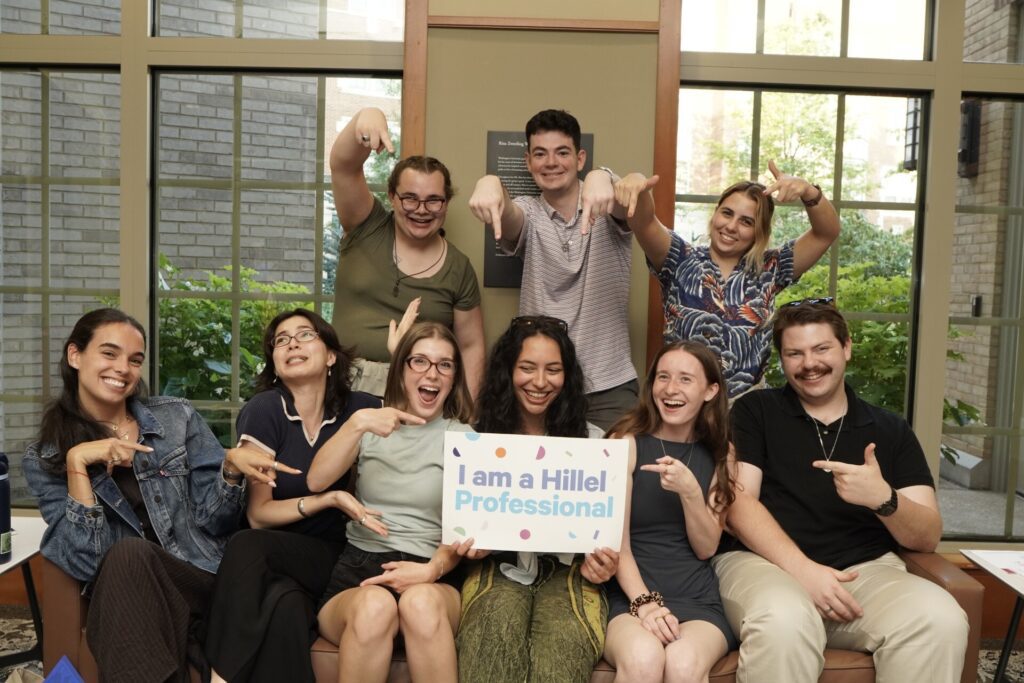
Leah Palestrant is Hillel International’s executive director of the Springboard Fellowship. A champion of early-career inspiration and growth, Leah shared her reflections on the outsized impact of the fellowship on Hillels across the United States and Canada.
What is the Springboard Fellowship and why does it matter?
Leah Palestrant: Springboard is a selective, two-year, post-grad fellowship for people who care deeply about Jewish life and want to be leaders in it. Fellows work full-time on campus at Hillels across North America, but they’re also part of a cohort of peers who are learning and growing together as early career professionals.
Why it matters is simple: the early years of a person’s career shape them deeply. Springboard gives recent graduates real responsibility and real support at the same time. Rather than being thrown into a job and told to “figure it out,” Springboard Fellows get coaching, professional development, mentorship, and a community that has their backs. That combination is rare — and it’s what turns a first job into a meaningful launchpad.
What drew you to working with Springboard before you came to Hillel?
Palestrant: Honestly? The people.
Before I officially joined Hillel, every interaction I had with Springboard Fellows and alumni stood out. They were thoughtful, values-driven, curious people and they were always asking big questions about leadership, community, and impact. They were consistently looking for purpose, growth, and connection.
I was also drawn to the idea that Springboard treats early-career professionals as leaders in the making, not entry-level staff. That belief — that investing in great talent really matters — aligned deeply with how I think about leadership and the future of the Jewish community.
What is the most meaningful aspect of the fellowship for you?
Palestrant: The cohort, without question.
There is something incredibly powerful for the fellows about knowing they are not doing this work alone. Fellows are spread across campuses and communities, but they’re connected to one another in a really intentional way. Over time, that cohort becomes a professional network, a sounding board, and very often, lifelong friends.
Springboard also layers in coaching, professional development, and funding that early-career professionals rarely have access to elsewhere. That combination sends a clear message: you matter, your growth matters, and we’re investing in you.
Why is it so critical to have this early-career cohort for Jewish professionals?
Palestrant: This is a critical inflection point in a young person’s career development trajectory — the opportunity to make a real, meaningful impact on the lives of students while having a support network will hopefully inspire them to see themselves as Jewish leaders beyond Springboard.
Springboard creates a bridge between being a student and becoming a professional. It gives people space to explore leadership, try out new things, learn from mistakes, and build confidence, all while having a cohort and professionals supporting you. When we do that well, people don’t just stay in the Jewish professional sector, they thrive.
It also pushes the Hillel movement forward. Early-career professionals bring fresh ideas, creativity, and a deep understanding of what this generation is actually looking for in Jewish community. When we listen to and invest in that, everyone benefits.
Can you share an interaction you had with a fellow that changed the way you think about early-career development?
Palestrant: One thing I hear from fellows again and again is some version of: “I care deeply about this work — and I don’t want to lose myself in it.”
That honesty has really shaped how I think about early-career development. Gen Z isn’t asking to work less because they’re less committed; they’re asking to work sustainably. They want clear expectations, healthy boundaries, and permission to be full humans while doing meaningful work.
Springboard creates space for that. Through coaching and cohort conversations, fellows learn how to advocate for themselves, how to set boundaries without guilt, and how to build habits early that prevent burnout later. Seeing fellows name what they need — and grow into leaders who model that for students and colleagues — has reinforced for me that supporting work-life balance isn’t a “nice to have.” It’s essential for developing leaders who can thrive in this work long-term.
Can you share an example of a fellow who had an outsized impact on their campus in a way that inspired you?
Palestrant: I’ve seen fellows create spaces where students who never thought they were “Jewish enough” suddenly felt like they belonged at Hillel. I’ve seen fellows reimagine engagement in innovative ways that felt authentic to their campus culture — and they inspired students to show up!
I’ve also watched fellows use Springboard as a meaningful transition point in their career trajectory: some discovered a passion for Jewish education and went on to rabbinical school, others realized they wanted to build long-term careers in Jewish nonprofits, and some have moved into significant leadership roles surprisingly quickly. We even have a Springboard alum who became an executive director of a campus Hillel just a few years after completing the fellowship. That’s incredible — and it speaks to what’s possible when early talent is nurtured well.
What impact do you hope to see both for students and for fellows in the next 10 years of Springboard?
Palestrant: Ten years from now, I hope Springboard alumni are everywhere — leading organizations, shaping communities, serving as Jewish educators, and stepping into lay leadership roles with confidence and clarity.
I also hope the program continues to model a different way of thinking about early-career professionals: not as temporary support, but as innovative, creative leaders who are actively shaping the future of Jewish life. The landscape is changing fast, especially on campus. The people who can adapt, imagine new possibilities, and lead with values are often those closest to the moment.
If Springboard continues to be a launching pad for those leaders — and a place where people feel supported, challenged, and deeply connected — then we’re doing something right.
Learn more about the Springboard Fellowship and the impact the fellows have on campus and beyond.