Wearing All of My Identities on My Sleeve: Celebrating Jewish Disability Awareness and Inclusion Month
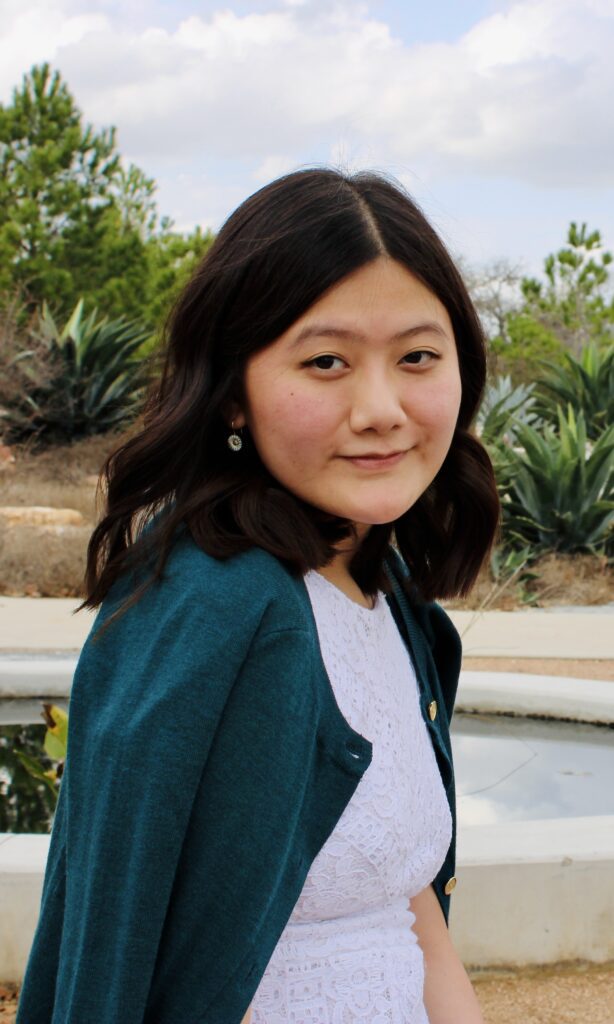
This month is Jewish Disability Awareness and Inclusion Month. In celebration of the diversity of Jewish identities and Jewish people who have disabilities, Ling DeBellis, a graduate student at Rice University, shared her story of proudly living all of her identities as she moves through life.
I was born in southern China, near the Vietnam border. At only a few weeks old, I was found abandoned and severely malnourished. Doctors believe I may have contracted a polio-like neuromuscular virus. To this day, I don’t have an official diagnosis. I navigate the world using various mobility aids, including an electric powerchair, but despite these mobility limitations, nothing stops me from living my full life.
Eventually, I was adopted by amazing parents in Minneapolis, where I loved being an only child. We’re very close, and my family’s wide range of identities has always been a part of my life. You could say we are technically an interfaith family, but it never felt that distinct growing up.
My mom describes herself as “loosely, culturally Jew-ish,” and my dad comes from a Catholic background. Faith was always present in our home, but it wasn’t rigid or singular. It wasn’t about reading scripture or attending services, none of that. Rather, it was about being there for one another, being present and conversing over shared meals, and giving back to the communities around us. Faith was something you could question, return to, or step toward slowly.
Some of my earliest memories reflect that openness. I remember visiting a Reform synagogue as a very small child and feeling unexpectedly drawn to the service. I couldn’t have explained why at the time. I just remember it feeling meaningful, like something was quietly waiting for me there.
As I got older, my sense of curiosity about the world and my own story deepened. In high school, I wanted to learn more about my genetic background. Part of that came from living with a disability without a clear diagnosis. Part of it was simply wanting to understand where I came from. I didn’t find any biological relatives, but my mom’s own genetic testing revealed that her ancestors in Eastern Europe had been targeted by pogroms and forced to convert. That discovery opened something new for both of us. We began exploring our Jewish story together, historically, culturally, and personally, and it felt less like uncovering something foreign and more like recognizing something that had been there all along.
That’s how I found my way to Hillel at Rice University.
Hillel became a place where I could sit with a very Jewish question: What does it mean to be Jewish? There was no pressure to arrive at a clean answer or to commit to a single definition. I could explore, experiment, and pay attention to what resonated. That freedom mattered. It allowed me to show up as I was, without needing to justify my questions or my complexity.
Today, I’m pursuing a PhD in health psychology at Rice, studying how stress affects the body, from mental health to immune functioning. In a post-pandemic world, that work feels especially relevant. Much of my research focuses on spousal caregivers of people living with Alzheimer’s/dementia, examining how the chronic stress of caregiving affects long-term health outcomes.
For my dissertation, I’m especially interested in an emerging field called sociogenomics, or social genomics. At its core, it explores how social and environmental stressors can influence gene activity. Your DNA sequence doesn’t change, but which genes are turned on or off can shift based on your experiences. One of the central questions in this research is why two people can experience the same stressor and respond so differently.
Again and again, research points to one powerful resilience factor: community. Social support. A sense of belonging. Studies of religiosity and faith communities consistently show that when people feel seen, supported, and connected to something larger than themselves, their health outcomes improve. Purpose matters. Meaning matters.
For me, Hillel is part of that story. It’s where I found community and where I met some of my closest friends. It’s a place where I don’t have to compartmentalize who I am, where my academic interests, my disability, my Jewish identity, and my relationships all get to exist together.
I tend to be pretty open about my identities and wear them on my sleeve. All of them. Not because it’s easy, but because I believe that showing up honestly creates space for others to do the same.
So I show up as myself. Fully. And if that doesn’t work for everyone, that’s okay. I’ve learned that the right communities don’t ask me to be smaller. They make room for me to be exactly who I am.