Insights for the Seder: Throughout Generations, We Are Here
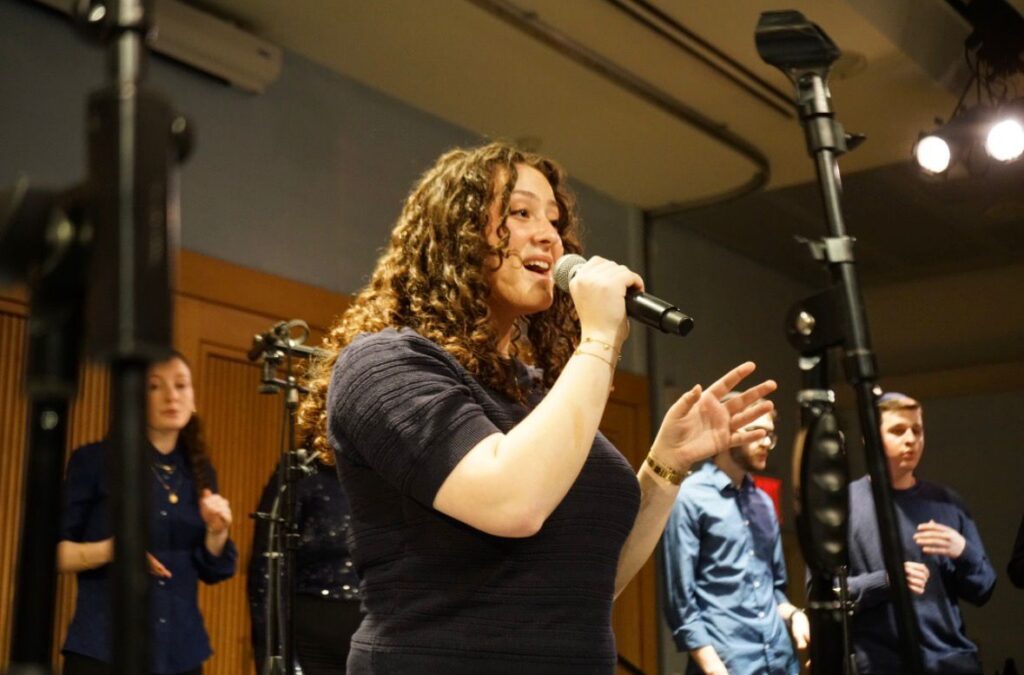
Eliana Birman is a second-year student at Barnard College, studying cognitive science and music. In honor of Passover, she shared moments of insight from her time at Hillel that she’s bringing to her Seder table this year.
There is a line in the Passover Haggadah that is often sung at the Seder,“Ve’hi she’amda la’avotenu v’lanu,” a paragraph that reminds us in every generation, there are those who rise up against the Jewish people — and in every generation, we survive. Often, when we think about the persecution that the Jewish people have faced, we think of big moments in history: the Holocaust, the Spanish Inquisition, or the October 7th attack against Israel. But “every generation” isn’t a symbolic nod to those big moments. It’s a real reflection of each generation’s experience with persecution — and resilience. And it may be closer to home than we realize.
As a college student, I discovered my family’s story, one I had barely known before.
My father was born in 1973 in Buenos Aires, Argentina, into a third-generation Argentinian Jewish family. Just three years later, in 1976, a military junta overthrew the government and began a violent campaign that included “disappearing” dissidents who aligned with the opposition. People taken from their homes, from buses, from universities, never to be seen again. According to estimates, up to 30,000 people “disappeared” during this time.
What struck me most was learning how disproportionately Jews were targeted. Around three thousand, nearly 10%, of those who were targeted by the government were Jewish, even though Jews made up less than 1% of the population. Some were suspected dissidents, but many were targeted simply for being Jewish. My family didn’t wait to find out if they would be next. In 1976, my grandparents fled Argentina with my three-year-old father and moved to Israel. The risk of staying — of disappearing into silence and persecution — was too great.
My grandparents went on to have four children and 13 grandchildren. They spent years teaching in Jewish day schools and volunteering in Israel and the United States, helping educate and shape the lives of so many Jews — including mine.
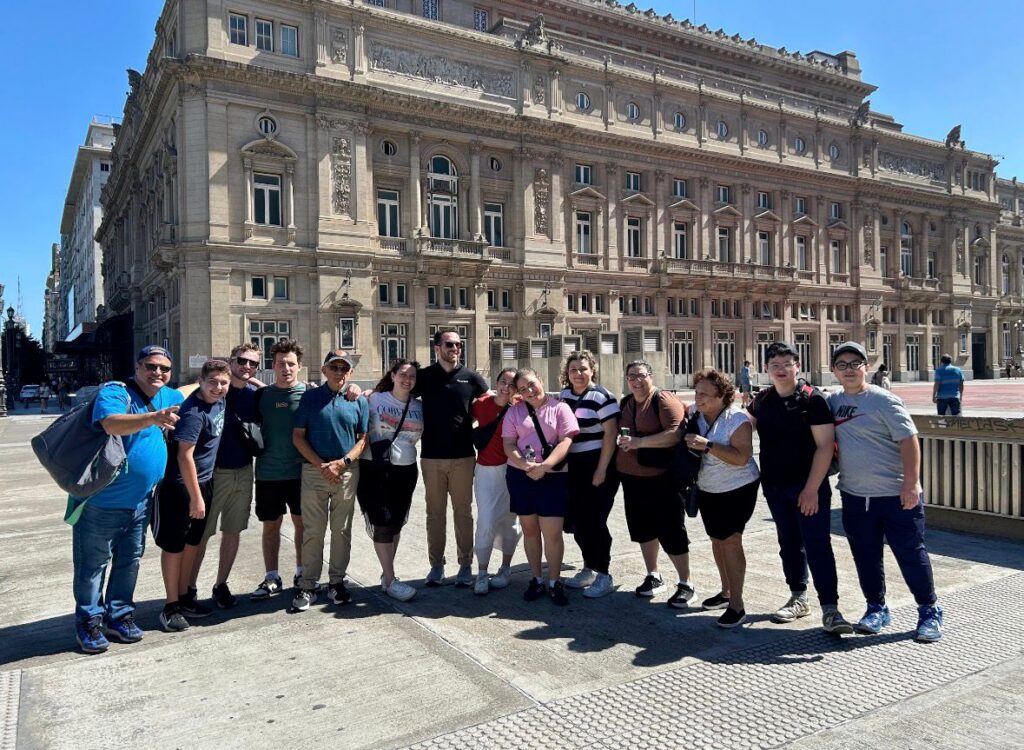
Last winter break, my family returned to Buenos Aires to revisit our history. We saw the neighborhoods where my grandparents grew up, the shul where they were married, and the museums commemorating the desaparecidos, or “the missing,” and Jewish victims of the junta’s purge. Standing in those spaces, the story that had once seemed distant suddenly felt so immediate.
At the same time, my own Jewish identity was being shaped in a very different kind of environment: my university campus. As a college student during an especially difficult period, I experienced firsthand what it meant to be visibly, unapologetically Jewish in a space where that can feel challenging. I began to speak up more directly for Israel and my Jewish community, participating in the Hillel International Content Creators Forum and other opportunities within Hillel and beyond. Through these experiences, I learned not only how to speak up, but why it matters.
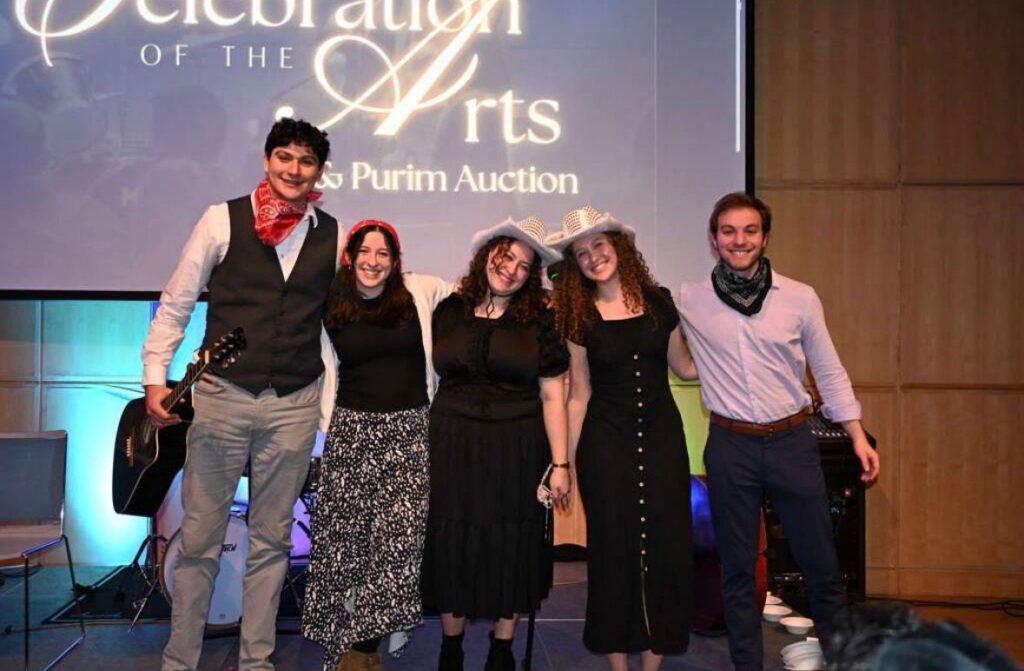
Columbia Barnard Hillel is central to my Jewish growth and confidence. It gave me a community where I felt supported and proud to express my Jewish identity, even when doing so openly on the broader campus felt harder. It pushed me to engage more deeply — with Israel, with Jewish history, and with my own family’s story. Advocacy, for me, is not separate from identity; it grows from the deep roots that make us who we are. The more I learned about my family’s history, the more I felt a responsibility to share, to educate, and to stand confidently in who I am.
My family’s story is not the kind of history we usually name when we list moments of Jewish persecution and resilience. But it’s part of the same pattern that the Haggadah points to — a lived piece of history that every Jewish family carries with them: a story of fear, of survival, and of rebuilding through perseverance.
In another section of the Haggadah, we are asked to see ourselves as if each of us personally left Egypt. For me, that invitation has taken on a more concrete dimension. I am the daughter of a man who escaped a regime that wanted him to vanish. I am the granddaughter of people who chose Jewish life over the safety of silence. My presence on campus today — as a leader, as an advocate, and as a Jew — is the direct result of those choices.
This Passover, when I sing the words, “ve’hi she’amda,” I’ll be thinking about my family — and all the family stories like ours that remind us what the journey from survival to thriving really looks like. I’ll also be thinking about the role that communities like Hillel play in helping us find, understand, and take pride in those stories, even in challenging moments. The community and voice I found on campus is just the latest chapter in a very long book of resilience and joy that leads us to say, “Throughout generations, they have tried to silence us, but we are still here.”