A Time for Return: Teshuvah, Pluralism, and the Year Ahead
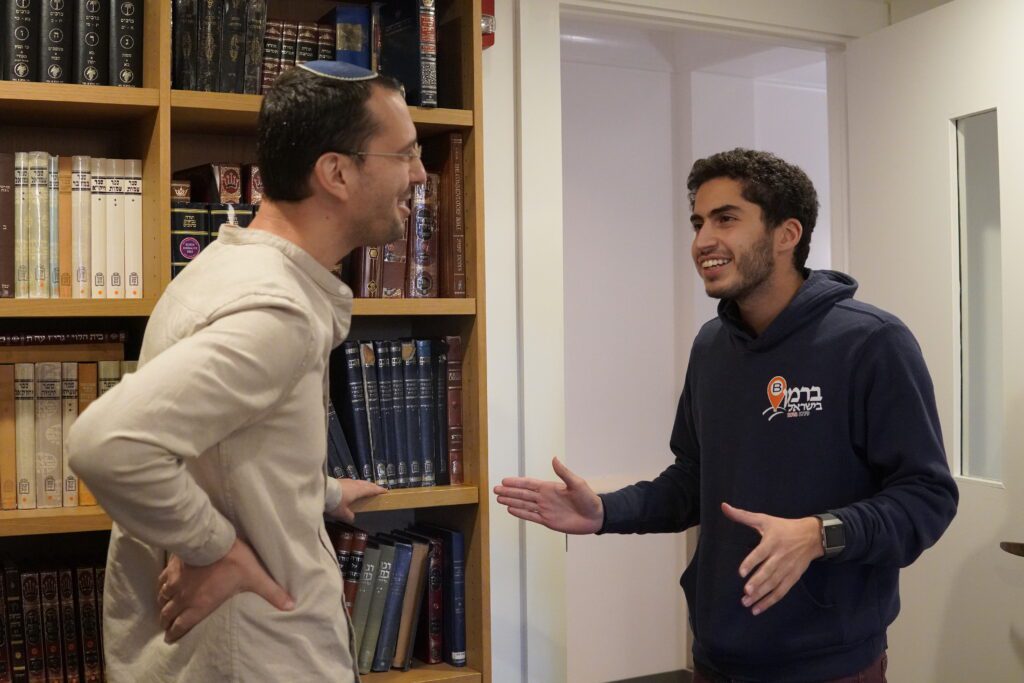
Each year, the beginning of a new academic year coinciding with a new Jewish year leaves us wondering — what can we learn from each new beginning to inspire reconnection, growth, and well-being for the year ahead? In the first installment of our High Holiday series, “A Time for Return”, Rabbi Ben Berger, senior vice president of Jewish education, community, and culture at Hillel International, offers guidance on returning to each other and to ourselves amid challenging conversations.
As the new academic year begins and Rosh Hashanah approaches, we find ourselves standing at a threshold — a time between what was and what could be.
This moment, on campus and in Jewish life more broadly, is charged. In conversations with students and Hillel colleagues, I hear the mix of excitement and uncertainty. We’re stepping into a new year, and into a world where the lines feel sharper, the stakes feel higher, and the spaces between us can be harder to cross.
Rosh Hashanah, and the season of teshuvah, offer another path. It’s frequently noted that teshuvah is often translated as “repentance,” but its deeper meaning is return. It’s about the courage to revisit our choices, repair relationships, and reconnect with what matters most. It’s also about acknowledging what cannot be undone, and choosing how to move forward with more integrity, compassion, and purpose.
Lately, I’ve been thinking about the story we’re writing on campus — what it means to be a Jewish student (or staff member, or rabbi, or educator) in a world that feels increasingly polarized and reactive. And how teshuvah might offer us not just a personal spiritual roadmap, but a communal one as well.
We live now in a world that, just a few years ago, many of us couldn’t have imagined — today marked by disruption, polarization, and grief. Some of what we’ve lost, we won’t get back. Some of the changes are irreversible. That doesn’t leave us stuck, rather it invites us to move forward. Not blindly, but thoughtfully. Not alone, but in relationship. We may not be able to return to what was, but we can still build something sacred in the world as it is.
This is the deeper work of teshuvah. It’s not about erasing the past or pretending everything is fine. It’s about acknowledging what’s broken and choosing, day by day, to repair what we can. To renew what still holds life. To create new possibilities when the old ones have closed. On campus, that might look like students reaching across lines of difference, participating in multi-faith bridge building and choosing dialogue and curiosity over silence or hostility — especially in a time when disagreements can so easily harden into anger or even violence. Teshuvah invites us to meet those new thresholds not with fear, but with integrity and hope.
The liturgy of this season offers a simple, powerful plea, “,הֲשִׁיבֵנוּ ה’ אֵלֶיךָ וְנָשׁוּבָה” “Hashiveinu Adonai eilecha v’nashuvah” — Return us to You, God, and we will return.
Teshuvah isn’t always something we can do alone. Sometimes we need help returning — to ourselves, to one another, to the values and communities that sustain us. It’s not about snapping back to how things were. It’s about returning to the kind of people we want to be, even in a changed world.
For students arriving, or returning, to campus, that kind of return can feel very real. Maybe you’re stepping into a Jewish space for the first time in a long time. Maybe you’re wondering if there’s room for someone like you — with your questions, your politics, your background, your story. Maybe you’re already deeply involved, but you’ve felt the sting of disagreement or exclusion, even from people you care about.
What if teshuvah could help us hold those moments not as failures or rejections, but as invitations?
Teshuvah doesn’t demand perfection. It just asks us to return.
That work can take many forms. It might mean meeting with your Hillel well-being professional who can help on that inward journey to make space for your own return and returning to communities. It might mean the work of creating community through the support and guidance of mentors and educators, and through building relationships with people who will become lifelong friends. Through these efforts, teshuvah becomes not just an individual practice, but a shared journey of growth and renewal.
And at its best, Hillel is a place where people share that journey across difference — not by ignoring those differences, but by committing to learn through them. Students participating in cohort learning like the Jewish Learning Fellowship or Kol Yisrael deepen their understanding of our people’s story — where we come from, how we’re connected and how Jewish tradition calls us to turn both inward, toward self-examination, and outward, toward each other. That’s what real pluralism looks like. It’s not pretending we all agree, or flattening our identities to make things easier. It’s something harder and more holy. It’s the work of showing up, again and again, with curiosity and compassion and a willingness to keep learning. It’s the spiritual discipline of staying in relationship, even when it would be easier to walk away.
And that’s teshuvah, too.
So as the year begins, I want to offer a blessing — for all of us:
May we have the courage to return.
Return to ourselves, with honesty and gentleness.
Return to each other, even when it’s awkward or hard.
Return to the work of building Jewish community — not just as a comfort zone, but as a place of growth, learning, and repair.
And return to the deepest truth of this season: that change is possible, and connection is sacred.
May this be the year we walk through the year, not alone, but together. Shanah tovah u’metukah — may it be a good and sweet year.