Self-Care is Torah Too
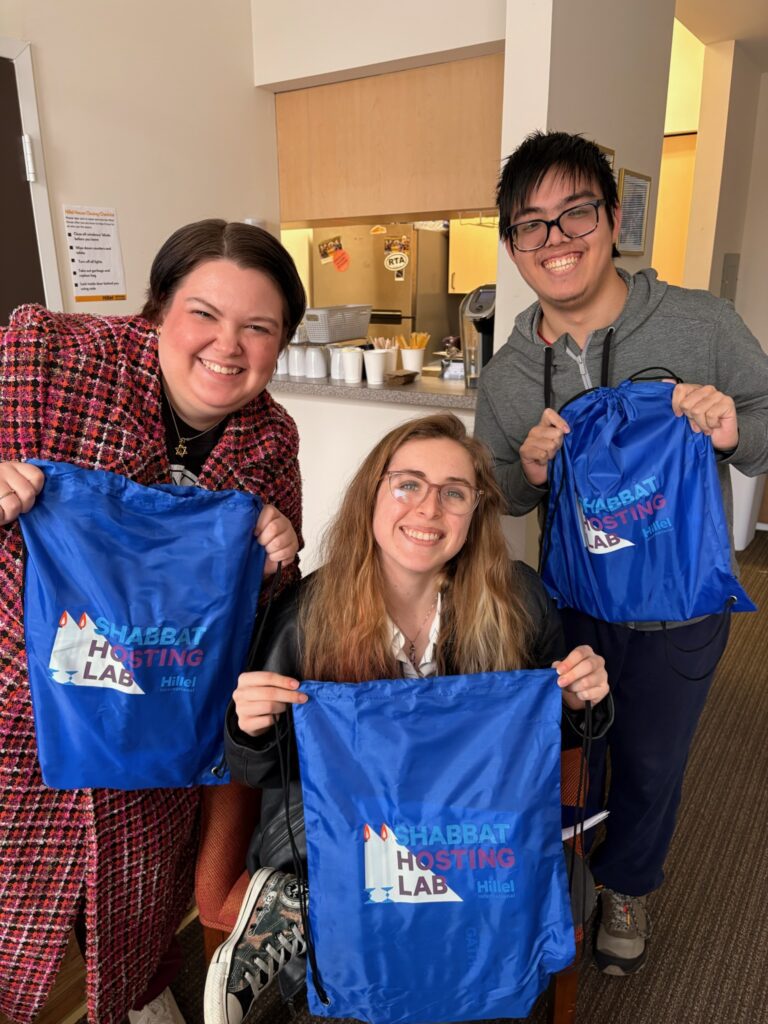
Cal Newmann is a student at Virginia Commonwealth University (VCU) and the president of VCU Hillel. They shared their story in celebration of Jewish Disability, Awareness, Acceptance, and Inclusion Month.
Before I began attending events at Hillel, I rarely interacted with the Jewish community where I live. I was raised in a multifaith household, and it wasn’t until my early 20s, during the COVID-19 pandemic, that I finally found the time and space to connect with my Jewish heritage.
When Hillel’s then-executive director approached me about getting involved on campus a year later, I was ecstatic. I didn’t even realize there was a Jewish organization at Virginia Commonwealth University. I jumped right in, and I haven’t looked back.
Because of my disability, I’m rarely able to go to synagogue. My sleep disorder makes it so I need to be in bed before most services start, and my chronic pain makes sitting in one place for too long prohibitive. Hillel has given me a way to fully participate in my Jewish community. It also offers me the chance to share what I’ve been given: acceptance, connection, and a true sense of belonging. Through Hillel, I’ve met many other Jewish students, including other disabled students, and that has made a huge difference in my life – reminding me that I’m not alone.
I’m also a little older than most college students, which can make it hard to find people my age at a four-year institution. Through Hillel, I’ve been able to connect with Jewish students and members of the Jewish community who feel closer to where I am in life. As student president, I’ve also had the chance to step into leadership and help others who are just beginning their own journeys to find their footing, the way I once did.
Right now, I’m participating in a Shabbat Hosting Lab cohort, and I love the spirit behind it: making Shabbat your own. As a student with a heavy workload, as well as a disability, the message of accessibility in Jewish practice really resonates with me. The process of exploring what Shabbat means in my life has been powerful, and I’m excited to host some non-traditional Shabbat gatherings with Jewish friends in a Discord community I’m part of.
Another part of Judaism I’ve embraced has been learning about the principle of pikuach nefesh, preserving life. Jewish law doesn’t just allow me to take care of myself – it requires it.
The best representation of pikuach nefesh that I’ve experienced is how I’ve learned to navigate observing Yom Kippur. Because of my disability, I can’t fast on Yom Kippur. For a long time, I worried that meant I was doing something wrong, or that I wasn’t “Jewish enough.” But I’ve come to understand that practicing differently doesn’t make me a bad Jew. It means I’m observing with intention.
A rabbi once offered this framing for observing Yom Kippur to me: instead of putting cream and sugar in my coffee, take it black. Or better yet, drink water. That advice helped me let go of guilt. Sometimes I feel like I’m missing the point of Yom Kippur, the idea of afflicting oneself. Then my own body reminds me that I live with affliction every day. The meaning of the holiday, for me, becomes something else: reflection, humility, and care. I’ve taken this lesson with me into my everyday life as well.
I’m endlessly grateful for Hillel as a place of belonging. Being student president these past few years has helped me build leadership skills, meet other Jewish students, and most importantly, make new friends.
Even though I’m a senior and will be graduating at the end of spring, I’ll still be around for another year as part of my master’s program. I’m genuinely looking forward to what comes next.