Across Ukraine, Hillel Offers Refuge Amid War and Loss
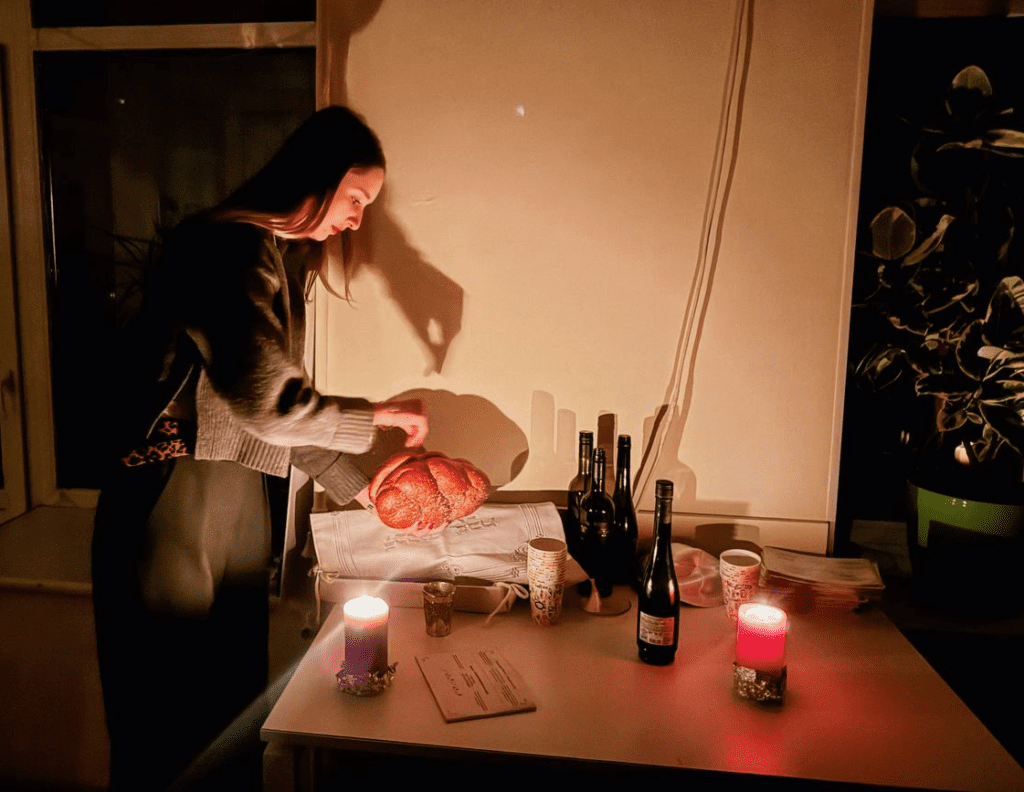
In Ukraine, Jewish college students and young adults are building Jewish lives in the shadow of war – a daily reality since Russia’s full-scale invasion into the country four years ago this month. Amid constant danger, loss of loved ones, and attacks on infrastructure, they try to maintain a semblance of normalcy, even as almost 15 thousand Ukrainian civilians have been killed and just over 40 thousand wounded since the start of the war, according to the United Nations Human Rights Monitoring Mission in Ukraine. These young adults attend Shabbat dinners against the backdrop of air raid sirens, volunteer with Hillel around the clock to deliver food to those in need, and lead programming with hundreds of participants despite threats to their security.
For these students, Hillel CASE is more than a place to gather. It is a refuge and a reminder that Jewish life can endure, even in the darkest moments.
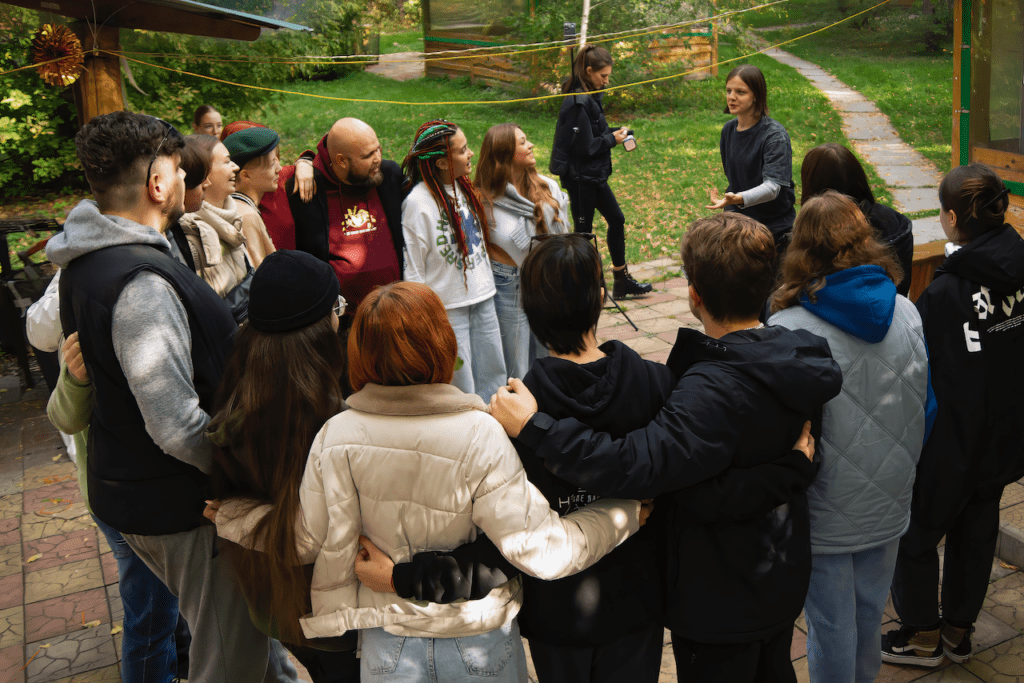
“The war has profoundly affected our students both physically and psychologically,” said Lesia Firsanova, director of Hillel Kyiv. “Many live with ongoing safety risks, including air raid sirens, disrupted sleep, displacement, and unstable living conditions. Mentally, students experience chronic anxiety, grief, emotional exhaustion, and difficulty imagining the future.”
It’s not hard to understand why the future seems so uncertain. Since Russia first launched its invasion, Ukraine has been completely transformed. Civilian deaths are reported almost daily, and there are extensive disruptions to electricity, heating, and water supplies.
“Many of our students have experienced significant losses because of the war,” said Alyona Kolpina, director of Dnipro Hillel. “Some have lost their homes, others have lost friends, neighbors, or people they knew from their communities. Even when the loss was not directly within their family, the impact has been deeply personal and painful.”
“It’s very difficult to describe,” said Osik Akselrud, the regional director of Hillel CASE (Central Asia and Southeastern Europe). “ No heat, no water. No light. It’s unbelievable. But we keep working.”
Even as three Hillel centers were destroyed by missile attacks, Hillel has remained a lifeline for Ukrainian Jewish students, creating spaces where they can speak openly about what they’re going through, find connection and support, and have Jewish experiences that are nourishing and worth showing up for.
“Being together in community has helped many students process their grief and feel that they’re not carrying it alone,” Kolpina said, adding, “For our students, Jewish community provides continuity, identity, and comfort during chaos. In times of war, traditions like Shabbat, holidays, and shared learning remind them who they are and what they belong to. It gives them strength, hope, and a sense that they are not facing this reality alone.”
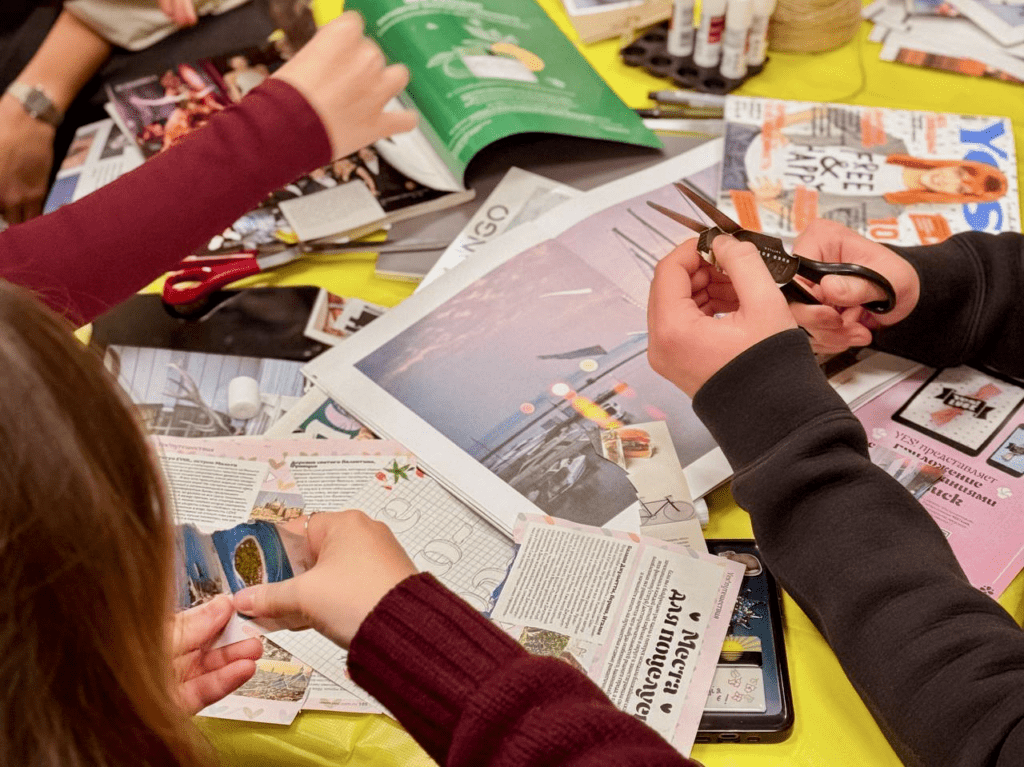
In Dnipro, where the Hillel building was destroyed by a Russian airstrike in June 2024, students lost a stable home that they relied on. In response, Hillel professionals in Dnipro designed Rooted Together, a program that blends nature-based mindfulness with Jewish rituals that center on reflection, transition, and connection.
The program was run as a weekend retreat, creating intentional distance from daily wartime stresses. It combined mindfulness, creative reflection, shared meals, and concluded with Havdalah to mark the transition in a way that drew on Jewish rhythms. Students also built skills to notice distress and support one another once they returned home.
In Ukraine’s capital, Hillel Kyiv has been a place for consistency, emotional safety, and a sense of belonging. Their Res(e)t initiative, a Shabbat-inspired project the team designed to help Jewish students unplug and regulate their nervous systems, was created in response to the heavy burdens they bear.
“Hillel Kyiv became the place where I could finally unleash my emotions,” shared participant Anna B. “I learned that slowing down is not giving up — it’s how I survive.”
For students displaced from frontline or occupied regions, programs like Res(e)t have been life-changing.
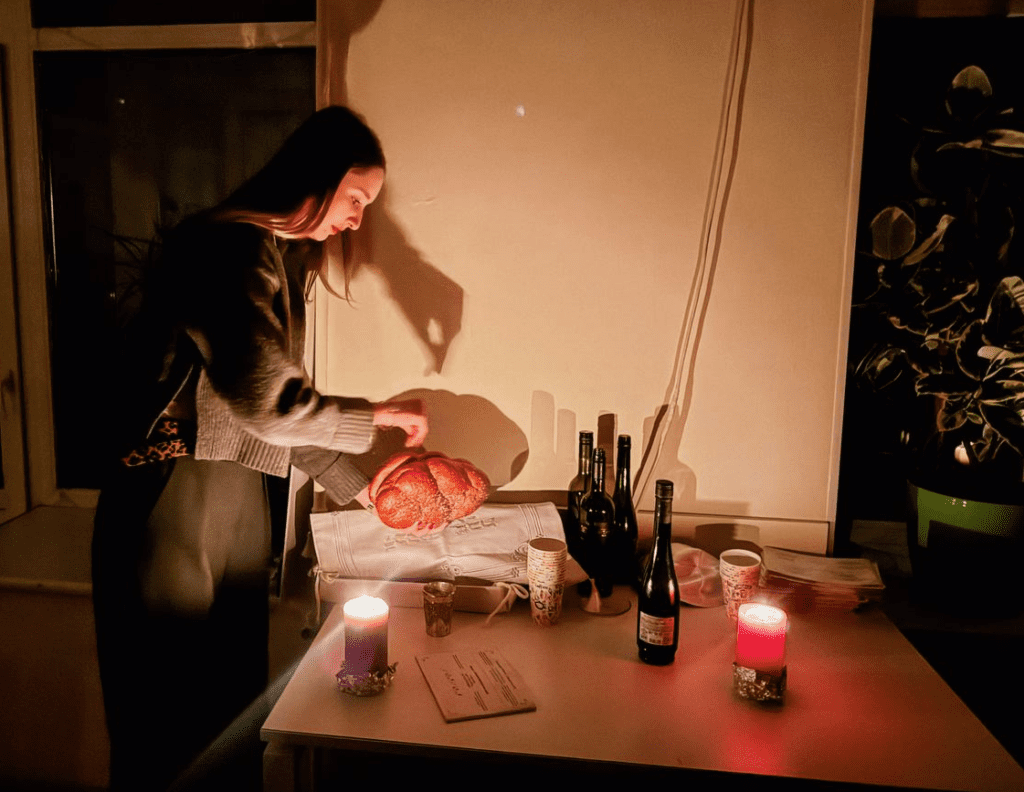
“I didn’t understand how much I needed to stop until someone created a space where stopping felt safe,” one participant shared. Stefan L., another Hillel Kyiv participant, added, “In a time when everything feels uncertain, Hillel Kyiv gives me stability and belonging. It reminds me that community is a source of energy, and it’s not only about electricity.”
One of the biggest shifts in Hillel programming in Ukraine has been the expansion of volunteer opportunities. Putting aside their individual pain and distress, students have shown up in large numbers to support their communities, distributing food packages and bringing holiday celebrations to neighbors who cannot leave their homes.
“Our students are getting a feeling of responsibility for Jewish communities and for Jewish life,” Akselrud said. “It’s very important, from my point of view. These are our stories.”
“I’ve spent 30 years in Hillel, and for me, Hillel is my life, everything,” Akselrud continued. “And before the war, I felt that Hillel [was] a very important Jewish organization for young adults, doing great things. But during the war, I have no words. Before, some people would ask, ‘What is Hillel?’ But everybody in Ukraine now knows what Hillel means. They know Hillel’s students, Hillel’s activities. Everybody knows .”