Advocacy Summit Brings Jewish Students to Wisconsin to Connect and Grow as Leaders on Campus and Beyond
When I taught high school with Teach for America at an inner-city school in Washington, D.C., I saw many challenges facing my students. I also saw a deep disconnect between their issues and the big picture challenges on which policymakers, just a few Metro stops away, seemed to focus. But I didn’t know how to get the attention of those leaders, or how to become one myself.
In my first months as the director of community relations at the UW Hillel Foundation, I met Jewish students who often expressed feeling the same way. They were frustrated by campus administrators, their campus groups, and political leaders. They wanted to affect meaningful change within their own Hillel communities as well. They had ideas and wanted to speak up, but didn’t know how or to whom. Others were often the only Jewish voice in one of these spaces, which can be exhausting — and lonely.
At the same time, I was meeting with administrators, staff, and advisors about improving policies to make campus more welcoming, addressing speakers or events that negatively targeted Jewish students, and building cultural events to include a Jewish voice. Those campus professionals shared that decisions were most often motivated by “what they hear from students” or “the current political environment.”
I realized that if I was going to improve campus climate, those leaders needed to hear directly from the students that Hillel represents — and that we should support those students to take on leadership positions where they can impact the decisions being made.
That raised important questions: How do we inspire and empower Jewish students to put themselves forward as advocates — for themselves, their communities, and the issues they care about? How do we involve them in Jewish and secular spaces and topics? What does that look like on campus and in their future careers? How do we find relevant and relatable examples to model for students?
Those were the questions I had in mind when I planned the Student Advocacy Summit in collaboration with Campus Impact Advisors from Rutgers Hillel, Michigan Hillel, and The Ohio State University Hillel. With support from Hillel International professionals and a Regional Student Gatherings grant, we were able to bring together students from eight campuses across the Midwest and New Jersey.
I hosted the summit at UW Hillel, knowing my local connections and relationships would make it accessible for students to experience real-world advocacy examples on multiple levels.
The Summit wasn’t designed to revolutionize campus environments or push a specific issue or agenda. Instead, it addressed three major goals for student leadership:
- We want to empower more Jewish students to take on leadership roles across campus and after graduation.
- We need a clear path for Jewish students to feel comfortable bringing their full Jewish selves into those leadership positions.
- Hillel and Jewish communities on campus will benefit when we have a deeper bench of students ready, willing, and able to build diverse relationships and communicate their values and identities.
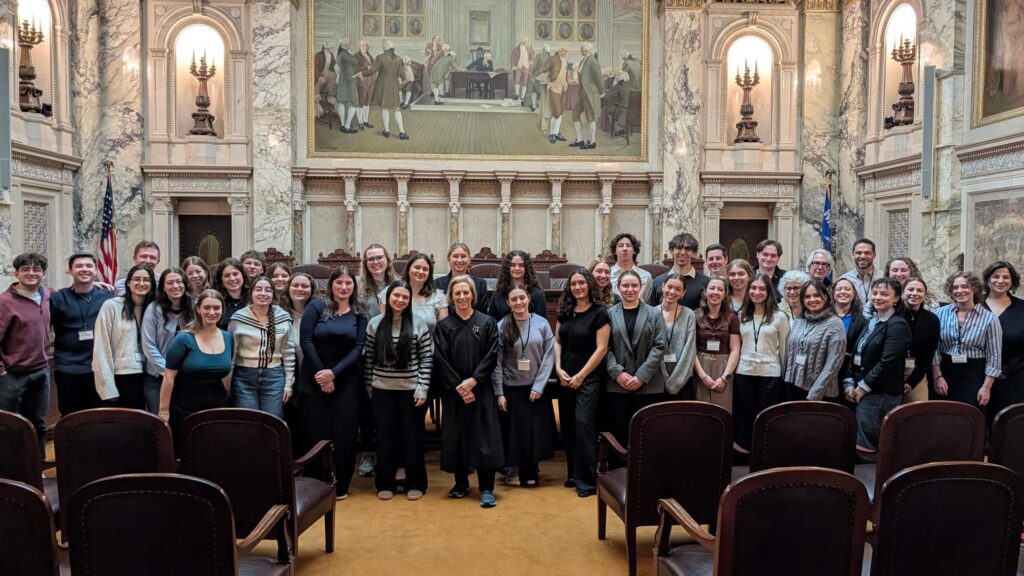
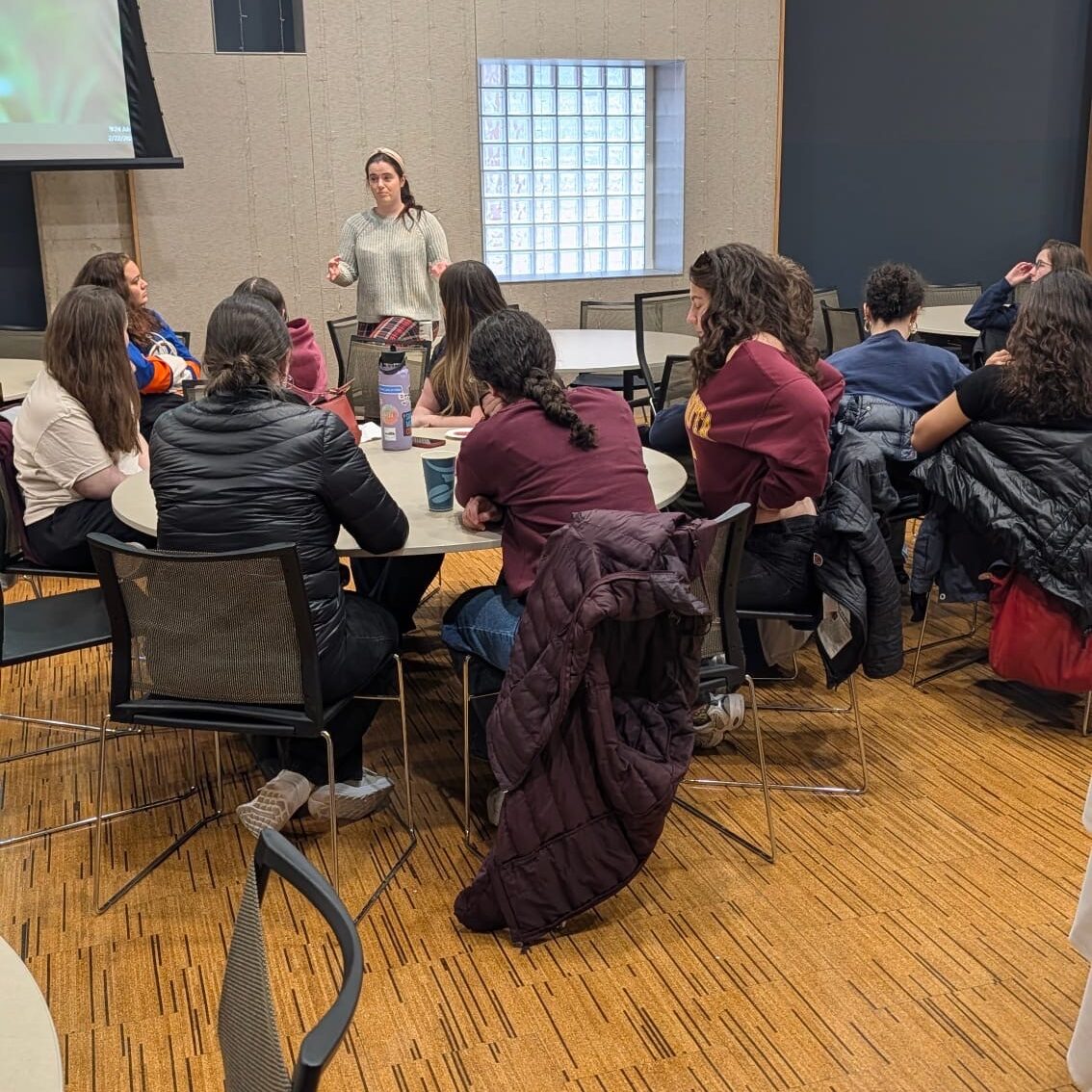
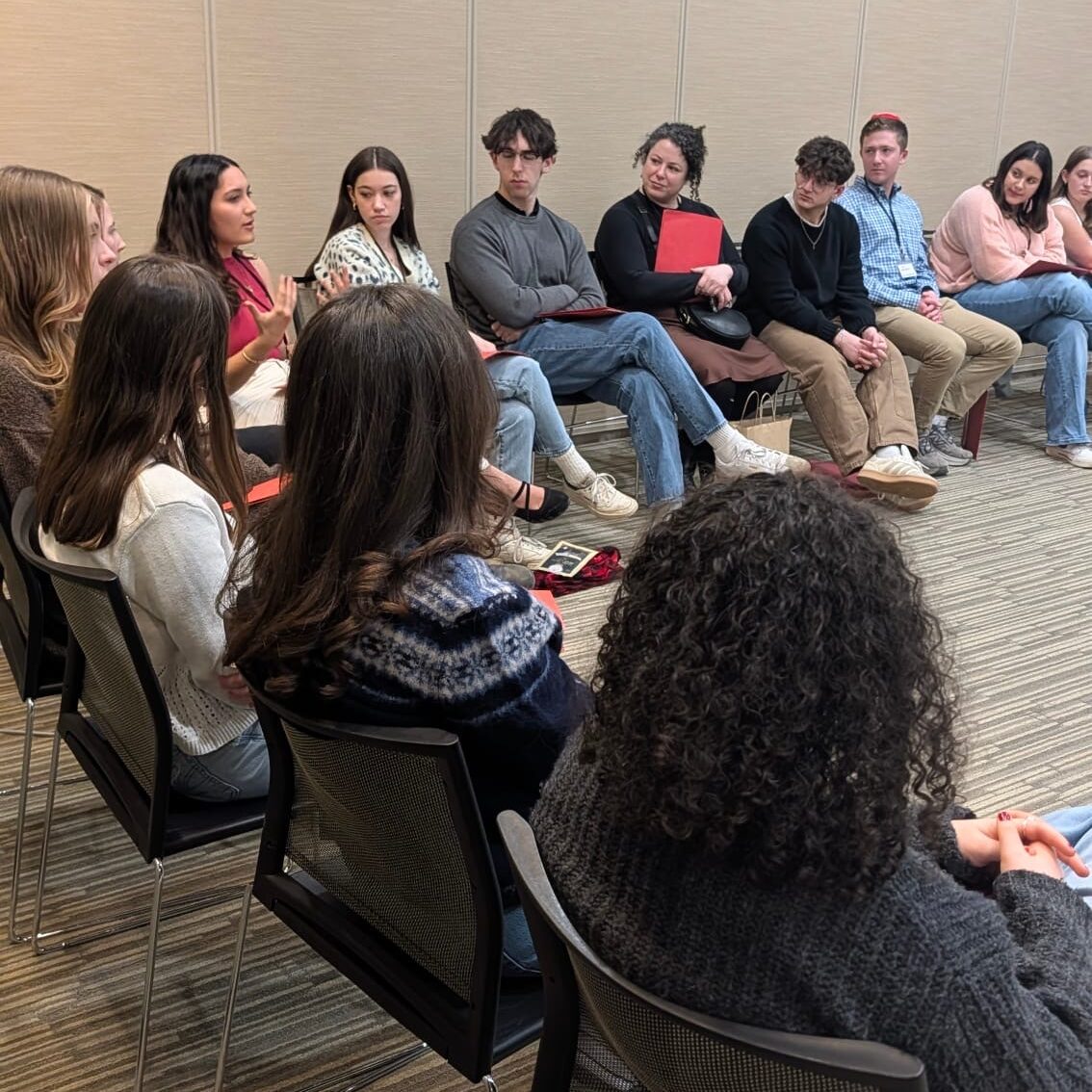
Over the course of the weekend, 40 students participated in programming, workshops, conversations, and exploration sessions, all designed to empower them to pursue advocacy and leadership opportunities on campus and beyond.
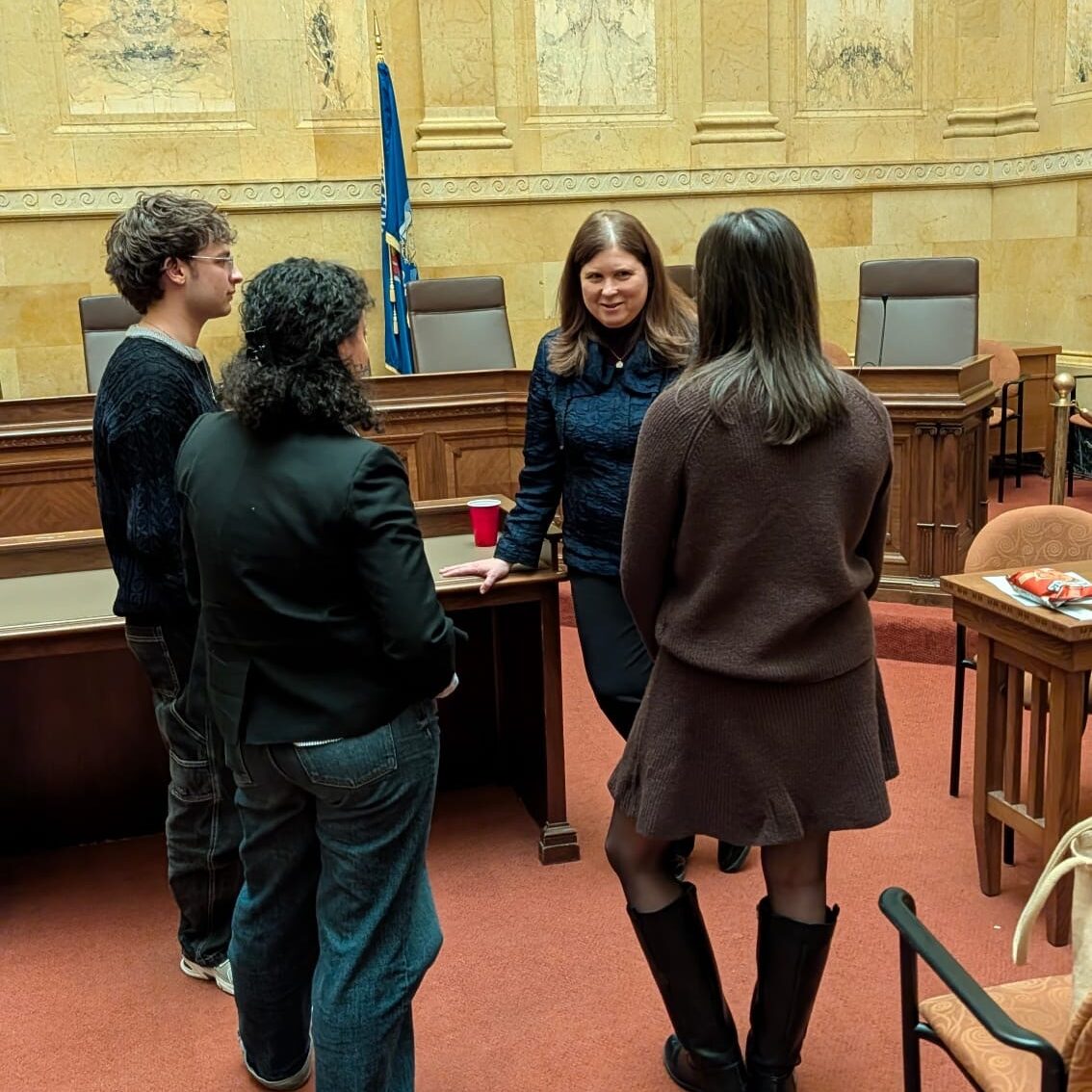
We spent time at the state Capitol building, had conversations with Jewish leaders including Wisconsin Supreme Court Chief Justice Jill Karofsky, State Cabinet Member Kathy Blumenfeld, State Representative Lisa Subeck, and Jewish on Campus CEO Julia Jassey. UW lobbyist, and Maccabee Task Force alum Kennedy Borman also provided a diverse and practical perspective.
Students learned how to tell their own stories in a way that connects with others and brings in issues they’re passionate about. They spoke about building coalitions across differences and communicating strategically. We also discussed case studies, tough issues on campus, our own values, and made concrete action plans for bringing this experience back to campus. And we shared Shabbat together at our Hillel, along with a UW-Madison hockey game and time to explore Madison.
My hope is that every student who attended the Summit came away with four things, including a:
- Connection to another student who can understand and support their work.
- New perspective or idea from someone they met.
- Practical skill they feel inspired to apply in their own lives.
- Role model or mentor further along in their advocacy journeys, and an understanding of how their Jewish identity can inform — not inhibit — their ability to advocate for important causes.
The students who came to Madison this weekend arrived with passion and a genuine desire to be heard. Together, we built a bridge between that energy and the tools, relationships, and confidence needed to act on it. Everyone left with a plan, or at least a next step, for putting what they learned into action as they bring their full Jewish selves into their work as advocates — on campus and off. And if we also gained a few new fans to Badger hockey and cheese curds along the way — well, that’s just good advocacy on my part.