Asian Jewish Shabbaton Brings Students Together to Celebrate Identity and Belonging
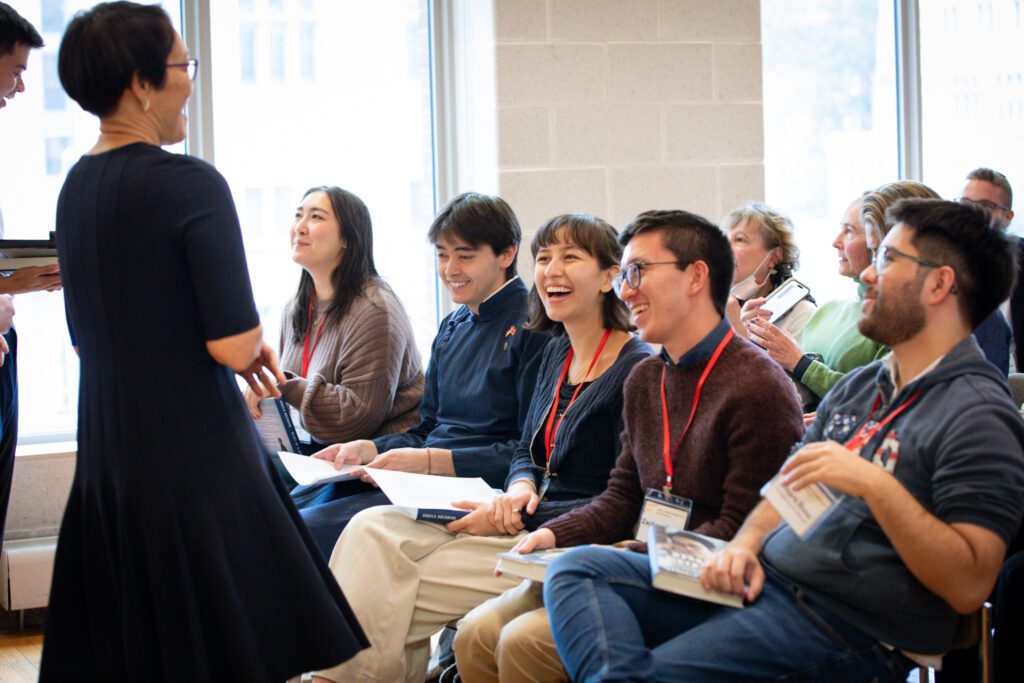
500 students from 13 colleges and universities across the Northeast gathered at Yale University’s Slifka Center for Jewish Life in late October for their first-ever Asian Jewish Shabbaton, a weekend dedicated to exploring Jewish and Asian identities, culture, and belonging.
The two-day gathering, organized by the Asian Jewish Union at Yale, in partnership with Hillel International and Asian Jewish student groups from several universities, offered students an opportunity to gather with others for a weekend of community building and Jewish learning – headlined by Rabbi Angela Buchdahl, the first Asian American rabbi ordained in North America and senior rabbi of Central Synagogue in New York City.
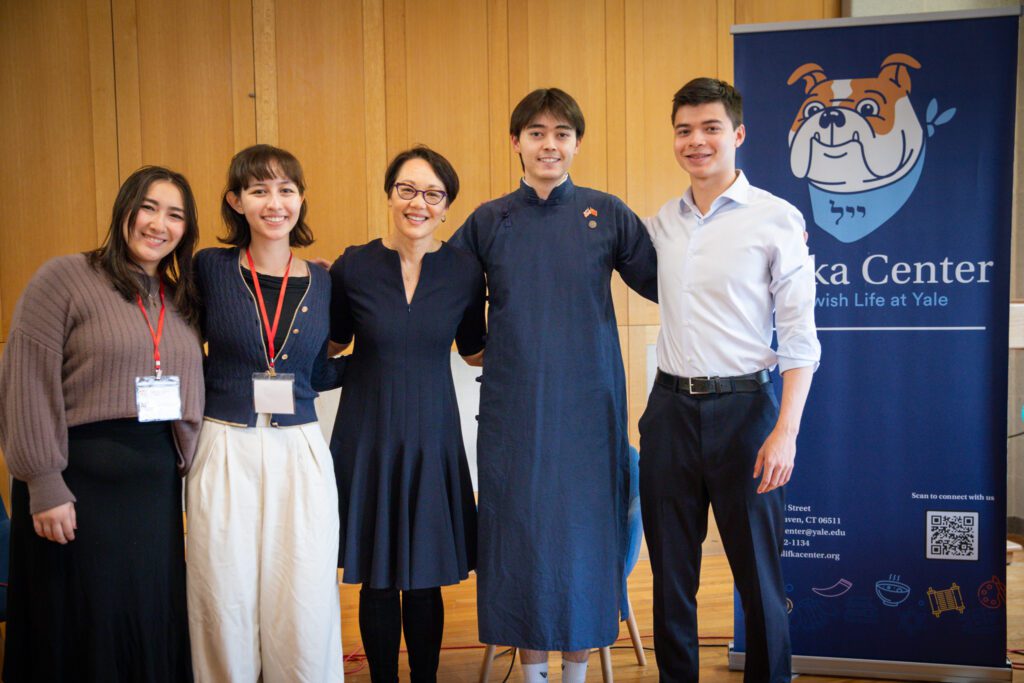
“The Shabbaton is a celebration of the fullness of students’ Asian Jewish identities. At Slifka, we support students in bringing their unique identities and traditions to everything they do,” said Rachel Leiken, associate Jewish chaplain at Slifka Center for Jewish Life at Yale. “We have been delighted to work with stellar student leaders in creating this program where they have shared deeply from their diverse Asian Jewish backgrounds, growing up both around the U.S. and in Asia. In doing so, their diverse perspectives have enriched our entire Jewish community.”
Zach Pan ’27 and Benjamin M. Nuland ’27, founders and co-presidents of the Asian Jewish Union at Yale, developed the idea for the Shabbaton. They envisioned a weekend that would celebrate Jewish Asian culture while inspiring students to launch similar communities on their own campuses.
What began as a small idea grew quickly. Through Hillel International’s Regional Student Gatherings Grant Program, an initiative that empowers local Hillels to design and host cross-campus experiences led by students, the organizing team secured a grant to bring students from over a dozen universities, including NYU, Brown, and Princeton, to New Haven. Yale students volunteered to house visitors and transform their Slifka Center into a welcoming space that reflected the diversity of Asian Jewish life.
“Yale’s Asian Shabbaton made a union of improbable Jewish stories,” said Zach Pan, who co-led the planning process. “And [it] expanded the big tent of Judaism amidst pressure and uncertainty on our college campuses.”
“We created our Regional Student Gatherings Grant Program to catalyze exactly the type of innovative, cross-campus and cross-Hillel initiative embodied by this Asian Jewish Shabbaton,” said Adam Lehman, president and CEO of Hillel International. “This is a wonderful example of what happens when students come together to celebrate their unique identities and shared Jewish values.”
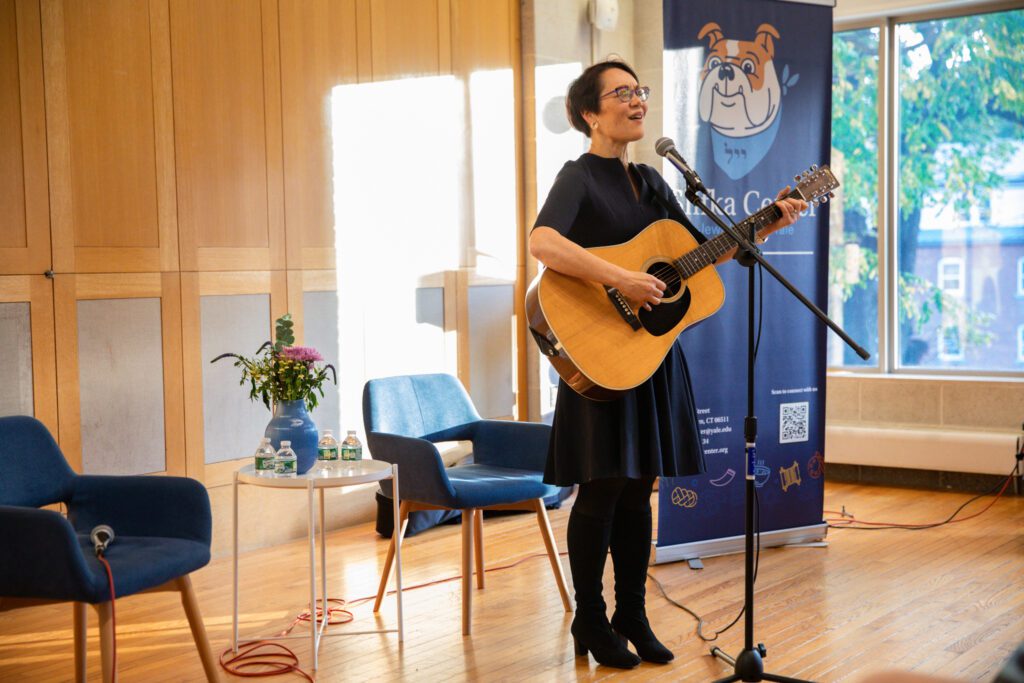
In addition to Shabbat services, which were led by Rabbi Buchdahl, other highlights from the weekend included shared meals featuring Asian dishes inspired by students’ family recipes, a board game share, a performance by Yale’s Jewish a cappella group Magevet, speed friending, and two events with Asian Jewish leaders: a book talk with Rabbi Buchdahl, who discussed her recent memoir, and a conversation with Hon. Florence Y. Pan of the U.S. Federal Court of Appeals, the first Asian American judge in Washington, D.C.
Throughout the weekend, students spoke about the power of finding others who understood their experiences without needing explanation. Many described years of being the only Asian Jew in Jewish spaces — or the only Jewish person in Asian ones.
“Not only was this experience so special to me, but it was so validating, knowing that I wasn’t the only Asian Jew,” said Aasia Gabbour, NYU ’26. “As a unique community, we all have had such similar experiences and that made it so easy to bond with each other right away. This weekend was very inspirational for continuing to plan Asian Jewish programming on my own campus.”
That sense of connection was echoed by other participants who found deep meaning in conversations over Shabbat dinner, learning sessions, and small-group discussions.
“I was surprised at how deeply we connected over just 48 hours,” reflected Brooke Cohen, Brown University ’26. “While we all came from different Asian backgrounds, we connected not only through our Judaism, but also by sharing a distinctive Jewish Asian identity. It was moving to realize that experiences I previously felt were unique to me were shared with this bigger group.”
Cohen added that, in many Jewish spaces, she’s used to standing out, but not at this Shabbaton. “It was wonderful being in a community this weekend where that didn’t make me special,” she said.
In addition to fostering community, the Shabbaton created space for leadership and learning. Students discussed representation within Jewish life, shared ideas for campus programming, and reflected on how their intersecting identities enrich Jewish communities.
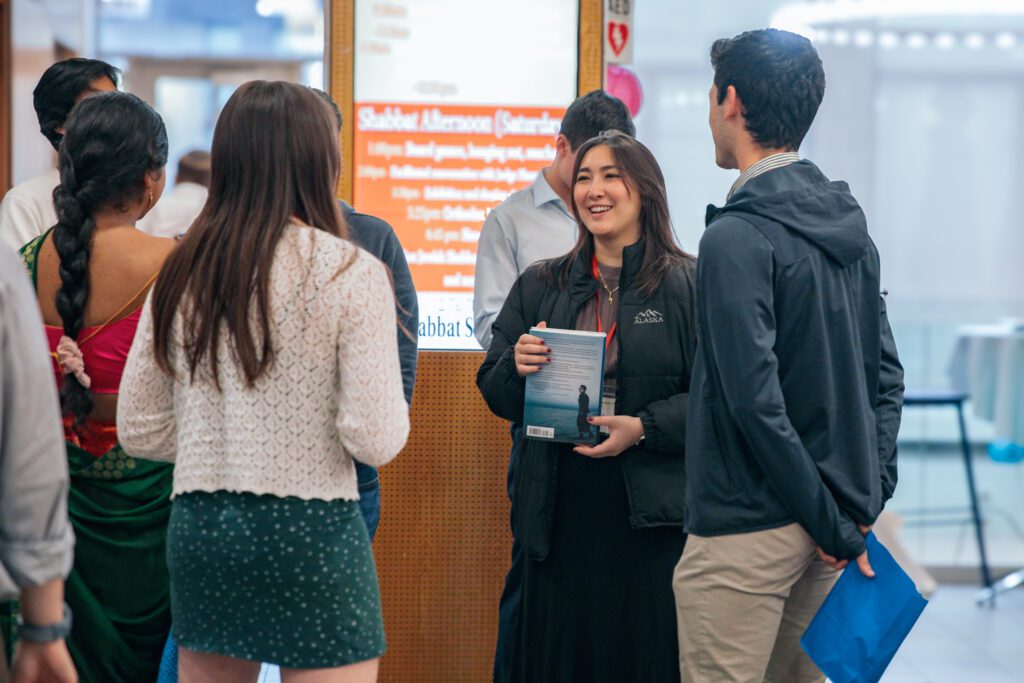
“For me, the Asian Jewish Shabbaton was a profound opportunity to connect with a network of Asian Jewish leaders and their stories — each offering a piece in charting a new pathway for defining Asian Judaism,” said Benjamin M. Nuland, Yale ’27. “It was more than just an event; it was a moment of dialogue between Asia and Judaism, between Asian and Jewish communities, and between honoring our heritage and shaping a new mosaic of what a distinct Asian Jewish culture can be.”
Students expressed gratitude for the sense of visibility and community they experienced as the weekend came to a close. For many, it was the start of something larger, a possible blueprint for how Jewish spaces can continue to grow in inclusivity and representation.
For the organizers, Pan and Nuland, that ripple effect is exactly the point. What began as a campus project can now form a broader network of Asian Jewish students who are shaping the future of Jewish life one conversation, one Shabbat, and one shared meal at a time.