At the New England Regional Leadership Summit, the Warmth of Connection Beats the Winter Cold
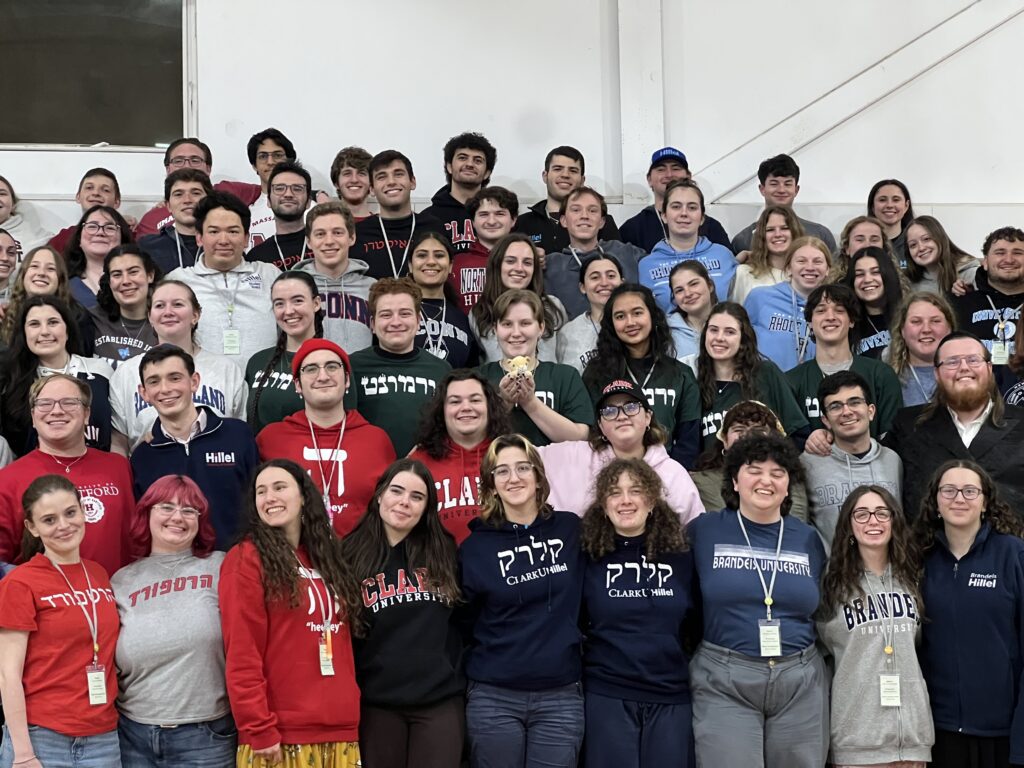
Winter in New England can be snowy and cold — but at the New England Regional Leadership Summit, jointly led by the Hillel Council of New England and Northeastern Hillel, and funded by a regional student gathering grant from Hillel International, students stayed cozy and most importantly, connected.
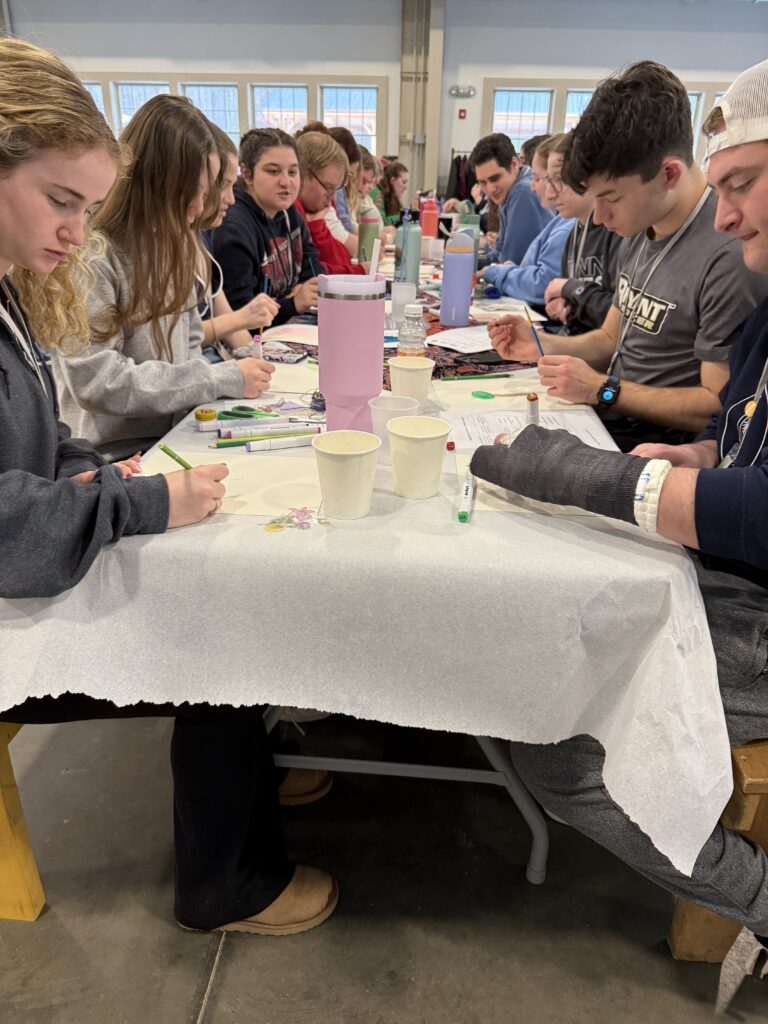
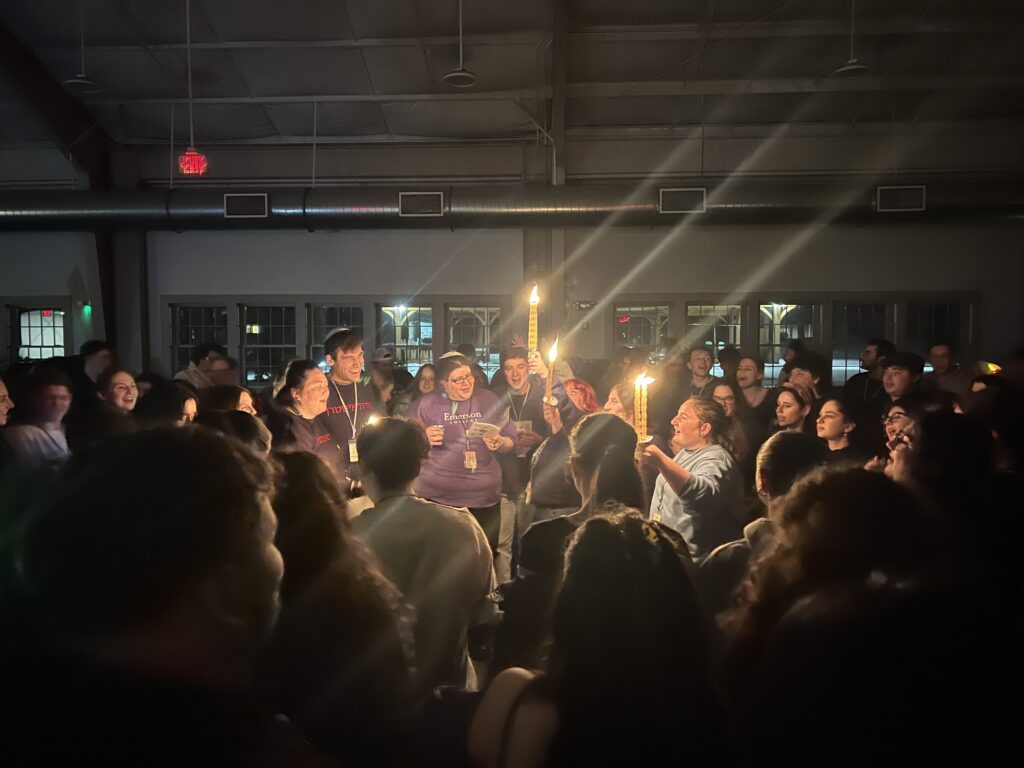
This past weekend, more than 100 students from 23 different campuses across New England gathered for a weekend of community-building, leadership development, and Jewish joy. Camp Ramah in Palmer, Massachusetts provided the perfect backdrop for Friday night and Saturday morning Shabbat experiences, which included multiple prayer opportunities as well as options like yoga, movement, art, and Torah study. Every experience gave students from different schools the chance to make new friends in open-hearted, joyful spaces.
“Coordinating and leading this regional gathering has been a dream come true,” said Julia Cottrell, assistant director of Hillel Council of New England. “Working for a multi-campus Hillel has allowed me to see the benefit of gathering students from different campuses in the same place and allowing them the space to build connections, share leadership best practices, and hear about how other campuses approach the work of building Jewish community.”
Leadership programming formed the core of the retreat experience, with a combination of opportunities for the whole group to come together and smaller sessions where students chose topics they wanted to dive into more deeply. In the “Values at Our Core” session, students explored the roots of values, what makes a value “Jewish,” and how our values drive impactful human interactions and community-building.
That program laid the groundwork for a subsequent session, “At the Crossroads of Both/And: Exploring the Value of Pluralism,” where participants explored a question facing many Jewish communities right now: What if compromise isn’t something to accept, but something to pursue? Students discussed the ways that tension, competing desires, and prioritizing values can serve as generative forces, and then, through case study and peer reflection, they were able to explore and consider the ways they show up in the face of complexity.
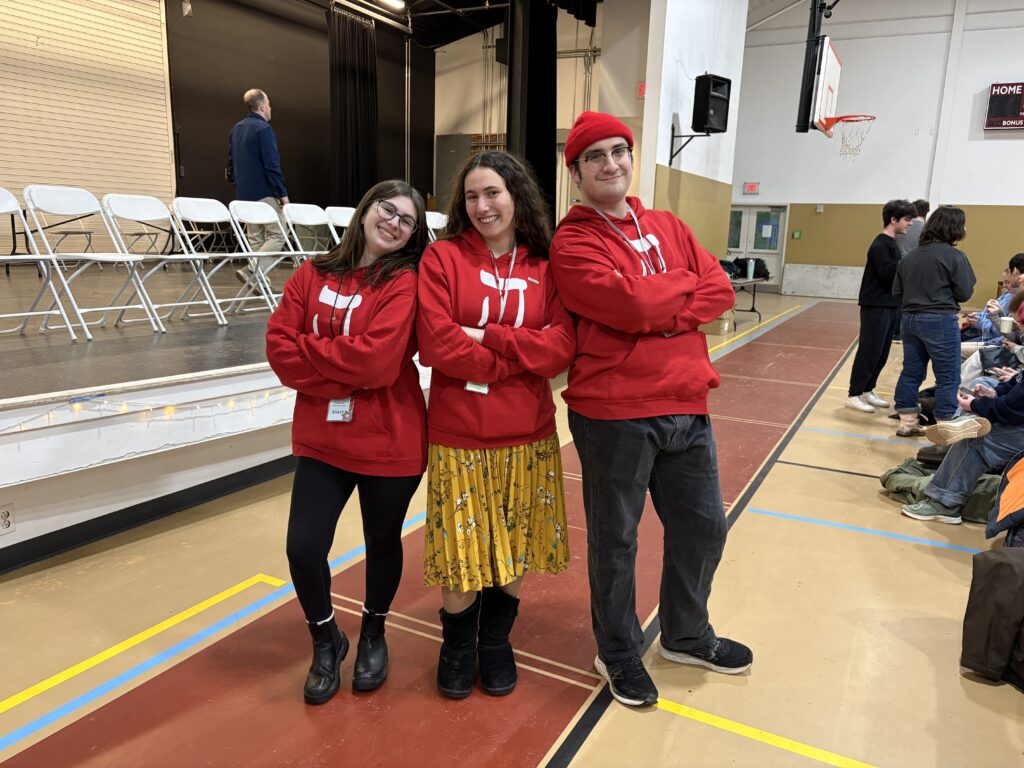
Students also came together in cohorts crafted to bring together students with shared backgrounds and leadership experiences. Cohorts met several times throughout the gathering and were co-led by a student leader and a campus Hillel staff member, and are now keeping in touch through curated WhatsApp groups to continue learning together.
“Leading a cohort at the leadership summit was meaningful to me because it gave me the opportunity to facilitate some difficult, yet critically important conversations,” said Elijah Fraiman, a third year student at Tufts University. “We were able to learn from each other [about] how our Hillels work, and where other Hillels can model the kind of work we hope to bring forth on our own campuses.”
Later, students had the option of attending one of several programs, each focused on a different aspect of leadership, community, and Jewish life. In “Viewpoints Project: How Can I Disagree Curiously?” participants learned skills for engaging across differences, and practiced asking better questions, disagreeing curiously, and uncovering shared values even when viewpoints differ. And in a joint session with Repair the World, students were able to talk about Jewish service learning, participate in a service program, and plan their own Jewish service project, a possible first step to becoming a Repair the World Service Ambassador.
Other programs focused on the ways Jewish student leaders can support and care for the students their Hillels serve, as well as leveling up their Shabbat experiences on campus. Students were invited to honestly name the barriers they face in creating meaningful Shabbat programs, and then — through storytelling, creative brainstorming, and rapid prototyping — reimagined what Shabbat on campus can become.
“I got to share my experiences and take away new lessons from others,” said Samantha Janes, a third year student at Bentley University. “Overall, I had an amazing experience and am so thankful to grow with a diverse group of Jewish students.”
“It was so clear how much every student leader wanted to learn from the leaders around them, and I can’t wait to see the impact they make on campus based on the connections they made at this retreat,” added Samantha Brody Marks, Springboard Fellow at Boston University Hillel.
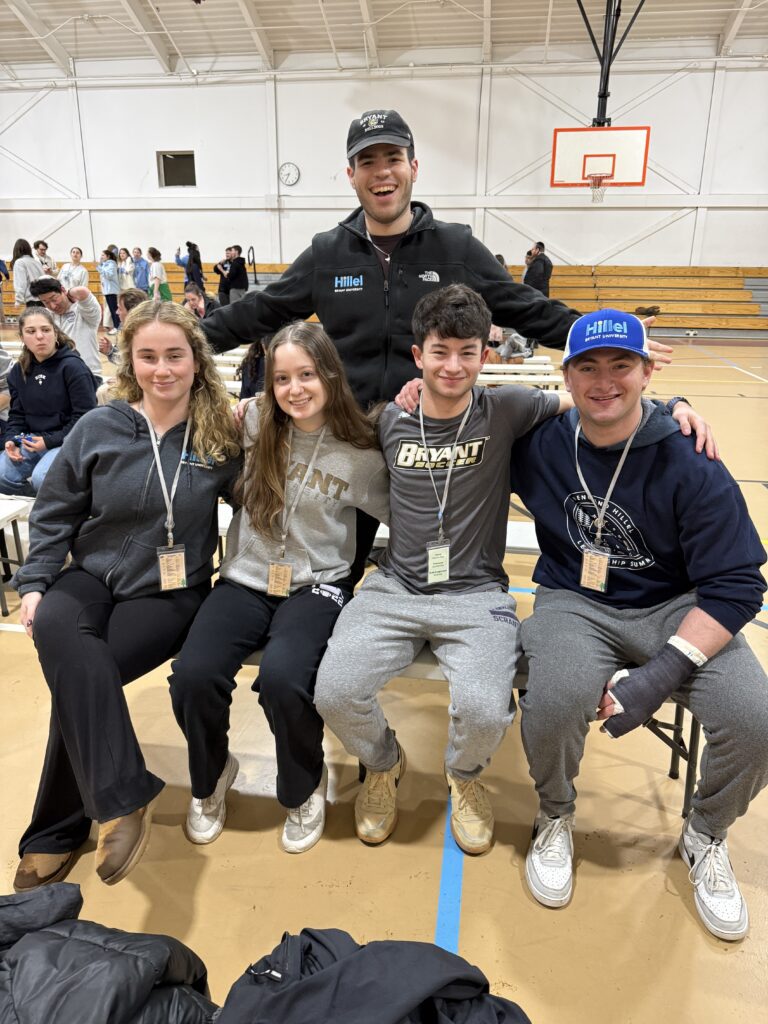
Throughout the weekend, students also had plenty of time to chat, exchange ideas, and learn from one another as much as from the session leaders.
“It’s so powerful to see students throughout the leadership summit form connections across campuses through Shabbat experiences and leadership discussions,” Cottrell said. “I’m looking forward to seeing how those connections will be sustained after the gathering, and what those students will do next.”
When students have more opportunities to engage in joyful, meaningful Jewish experiences, they feel a stronger sense of belonging within their campus Jewish community — and that, after all, is what Hillel is all about.