Celebrating Shabbat at Hillel
Shabbat is a weekly holiday in the Jewish religion that celebrates the transition of one week into the next. Some Jewish people also observe Shabbat as a day of rest, taking the day to pause in that transition. Customarily, we wish “Shabbat shalom” or “a peaceful Shabbat” to welcome in a time of peace and reflection. Many Hillels on campus celebrate Shabbat by gathering together, hosting prayer services, and sharing meals.
Featured Shabbat Stories:





What is Shabbat?

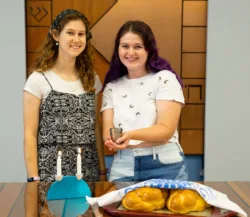
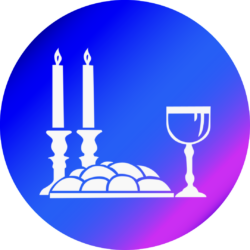
Shabbat, which begins at sundown on Friday and lasts through nightfall on Saturday, is the weekly day of rest for the Jewish people. Traditionally, Shabbat begins with lighting candles and continues on with a Sabbath meal, including wine (or grape juice) and challah, a braided bread. Each Saturday morning, the weekly Torah portion is read aloud. People may spend time together with their friends and family, enjoying a day of relaxation, rest, and connectedness.
When Shabbat ends on Saturday evening at sundown, a havdalah (separation) ceremony uses wine (or grape juice), spices, and a braided candle to help separate from Shabbat and enter a new week. After the blessing and other prayers, we wish each other shavua tov, a good week.
How is Shabbat Celebrated at Hillel?

While every Hillel celebrates Shabbat differently, you can likely expect a gathering of students who might participate in prayers together, and a shared dinner, led either by a Hillel professional, a fellow student, or community rabbis.
No matter where you’re in school, you can expect a welcoming, warm community of folks who are excited to celebrate with you. If you’re interested in attending, reach out or check out the Hillel on your campus!
Shabbat resources:

From A-Z, here’s what you need to know about Shabbat:
Shabbat is celebrated every week, starting at sunset on Friday and ending with Havdalah at sundown on Saturday.
Different Jewish communities celebrate Shabbat differently, which is why your experience felt unique! The variations you see, from the musical style and language used in prayer to the specific cultural foods served at the dinner table, could be based on observance type, geographic heritage, or the specific host and location of the gathering. All these aspects are deeply rooted in cultural traditions that span thousands of years, and the most wonderful part is that you’re always free to make your own meaningful customs, too!
Challah is a special bread eaten on ceremonial occasions such as Shabbat and major Jewish holidays. Ritually acceptable challah is made of dough from which a small portion has been set aside as an offering. Ashkenazi challah is typically enriched with eggs, sugar, and oil, and it’s braided. The essential flavor of wheat flour is the defining feature of Sephardic challah, so it is often unsweetened. Mizrahi Jews may bless flatbreads like lavash, pita, and laffa on Shabbat.
Grape juice or wine are used, in combo with a blessing to sanctify the day and set it apart from the rest of the week. Jewish tradition also values pairing celebratory moments with celebratory foods – like wine, delicious meals, and good bread.
While every Hillel celebrates Shabbat a bit differently, you can likely expect a gathering of students that will say and sing a few prayers and a dinner experience, led either by a Hillel professional, a fellow student and/or group of students, or community rabbis.
Celebrating Shabbat with Hillel on your campus doesn’t usually require a dress code! Many students wear jeans and a t-shirt, sweater, or other casual attire. If you want more specifics, reach out to the staff or student leaders on your campus (or pro-tip: check out photos from their Instagram).
“Shabbat Shalom” is directly translated from Hebrew to be “a peaceful Shabbat” used to wish someone a joyous and peaceful experience as they welcome or observe Shabbat, a time dedicated to rest, reflection, and community. In other communities, you may hear other iterations of the greeting. In predominantly Ashkenazi communities, you may hear “Gut Shabbos” which translates to “a good Shabbat” or in Sephardic communities, you may hear “Shabát Alegre” meaning “Happy Shabbat”.
Like most other traditions and practices for Shabbat, the way that the remaining time spent during Shabbat (yes — it’s a whole 25 hours!) can also vary by custom or tradition. Some students may spend time deep in religious practice and prayer, while others may use this time of rest to be in nature, hang out with loved ones and friends, or simply relax in whatever way is meaningful for them.
Havdalah is a short Jewish ritual ceremony performed at nightfall on Saturday that officially marks the conclusion of the Shabbat and the beginning of the new week. The word Havdalah itself means “separation” or “distinction,” referring to the act of distinguishing between the holy time of Shabbat and the ordinary, working time of the week. The multi-sensory experience of Havdalah, including wine or grape juice, sweet smelling herbs or spices, and a large candle, help ground our physical selves as we begin a new week.
Shavua tov translates directly from Hebrew to “a good week” and is typically exchanged after Havdalah, the ceremony held on Saturday night (after nightfall) that formally separates the sanctity of Shabbat from the ordinary week that follows. It is used to wish friends, family, and community members a blessed, successful, and peaceful week ahead. In predominantly Ashkenazi communities, you may hear “Gut Voch” or in Sephardic communities, you may hear “Semána Buena,” both also meaning “a good week”.
The Torah portion read on Shabbat morning is called the Parashat HaShavuah or parashah (weekly portion), which is a specific chapter read in order from the Torah. The tradition is designed so that by reading one portion every week, Jewish communities around the world complete the entire Torah over the course of a full Jewish year.