How Two California Campuses Honored Holocaust Remembrance Day
Every year on January 27, the anniversary of the liberation of the Auschwitz-Birkenau concentration camp in 1945, Jewish communities and their allies around the world observe International Holocaust Remembrance Day.
As the years go by and there are fewer Holocaust survivors who can tell their stories firsthand, Holocaust Remembrance Day becomes more important to ensure that the truth and legacy of the Holocaust is never forgotten. Here’s how Jewish students at Hillels on two California campuses marked this day — and what the program organizers hope participants will remember.
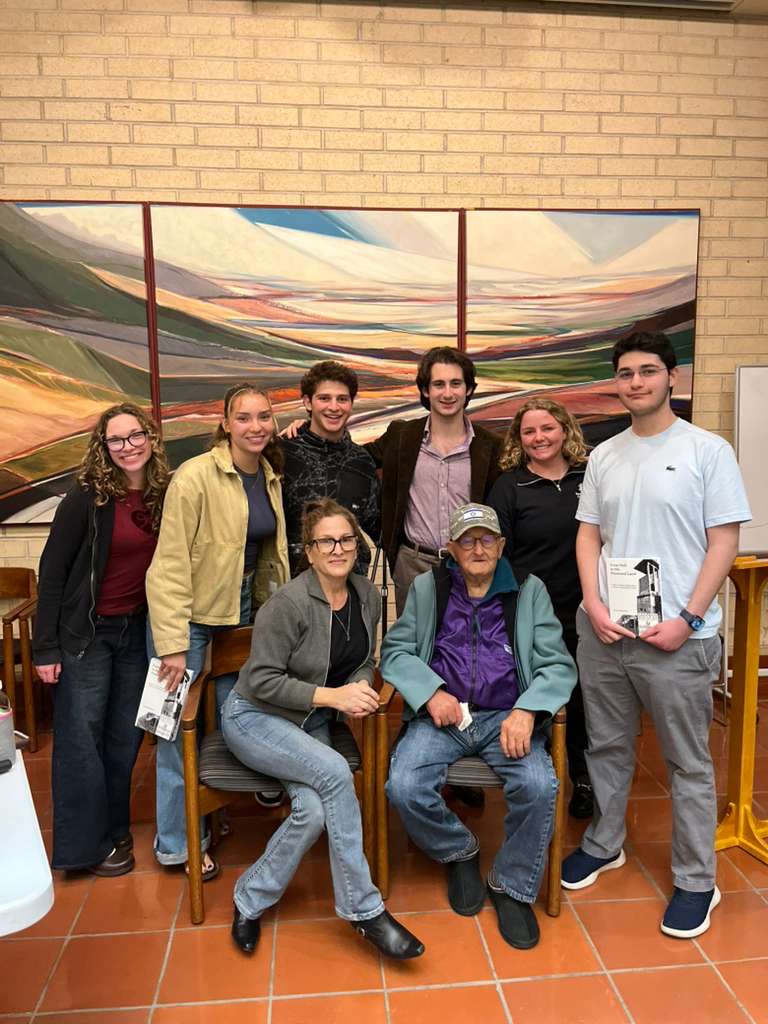
An Evening with Sam Silberberg at Claremont Hillel
At Claremont Hillel, which serves the seven institutions that make up the Claremont Colleges, students gathered to hear firsthand testimony from Holocaust survivor Sam Silberberg.
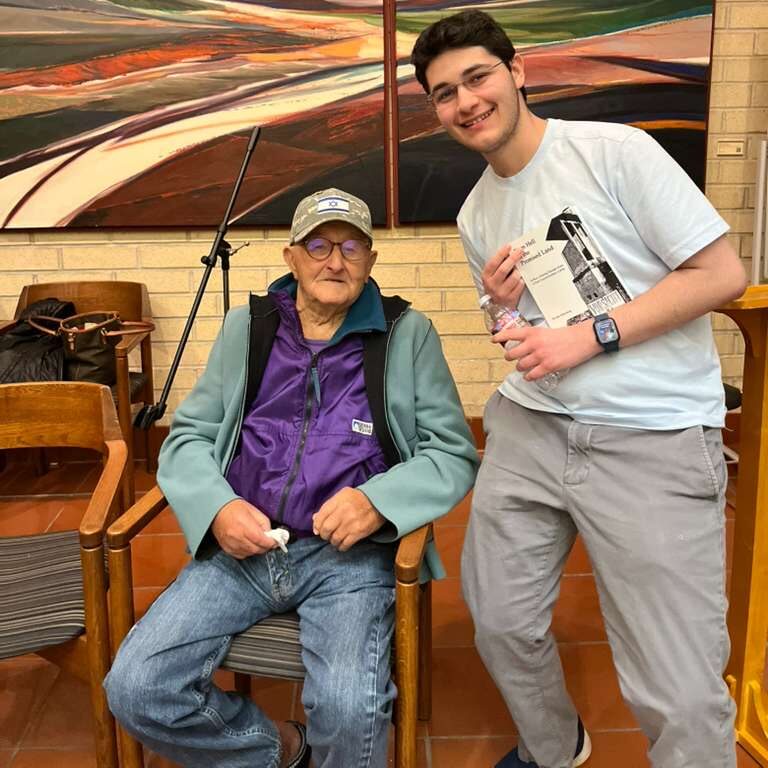
Born in Poland, Silberberg was only nine years old when the Nazis invaded his hometown. He survived forced labor, multiple concentration camps, and a death march before the war’s end. Now living in Orange County, Sam joined the Claremont Hillel community to share his story of resilience, survival, and hope. Students had the opportunity to engage directly with his living history, honor the memory of the Holocaust, and reflect together as a community on our responsibility to confront antisemitism and injustice.
“What’s most meaningful to me about this program is the privilege of hearing directly from a Holocaust survivor who not only endured unimaginable trauma, but has chosen to dedicate his life to education and remembrance,” said Nika Makhervaks, a second-year student at Harvey Mudd College, the Israel Leadership Network (ILN) representative for Claremont Hillel, and one of the lead organizers of the event. “Listening to Sam’s story transformed the Holocaust from something distant or abstract into something deeply human and personal.”
In planning the event, Makhervaks hoped that Silberberg’s strength, courage, and willingness to share his experiences would remind students of the importance of preserving survivor testimony and honoring their legacies while they still have the chance to learn from them.
“I hope the program helps them understand the Holocaust not only as a historical event, but as a lived reality whose lessons are still deeply relevant today,” Makhervaks said, noting that today’s college students are likely among the last generations who will have the privilege of hearing directly from Holocaust survivors. Sam’s story, she said, highlights the consequences of silence, indifference, and hatred, while also demonstrating extraordinary resilience and courage.
“My hope is that students leave feeling a responsibility to remember, to speak out against antisemitism and all forms of injustice, and to carry these stories forward so that the lessons of the past are never forgotten or repeated,” she said.
Hearing from Survivors at University of California Irvine
Last year, University of California Irvine (UCI) hosted an event with a Holocaust survivor for Yom HaShoah — Israel’s Holocaust Remembrance Day, which is commemorated on the Hebrew anniversary of the Warsaw ghetto uprising in 1943. This year, Shir Diner, education and outreach chair of Hillel at UCI and ILN vice chair wanted to do something similar for International Holocaust Remembrance Day, but on a larger scale.
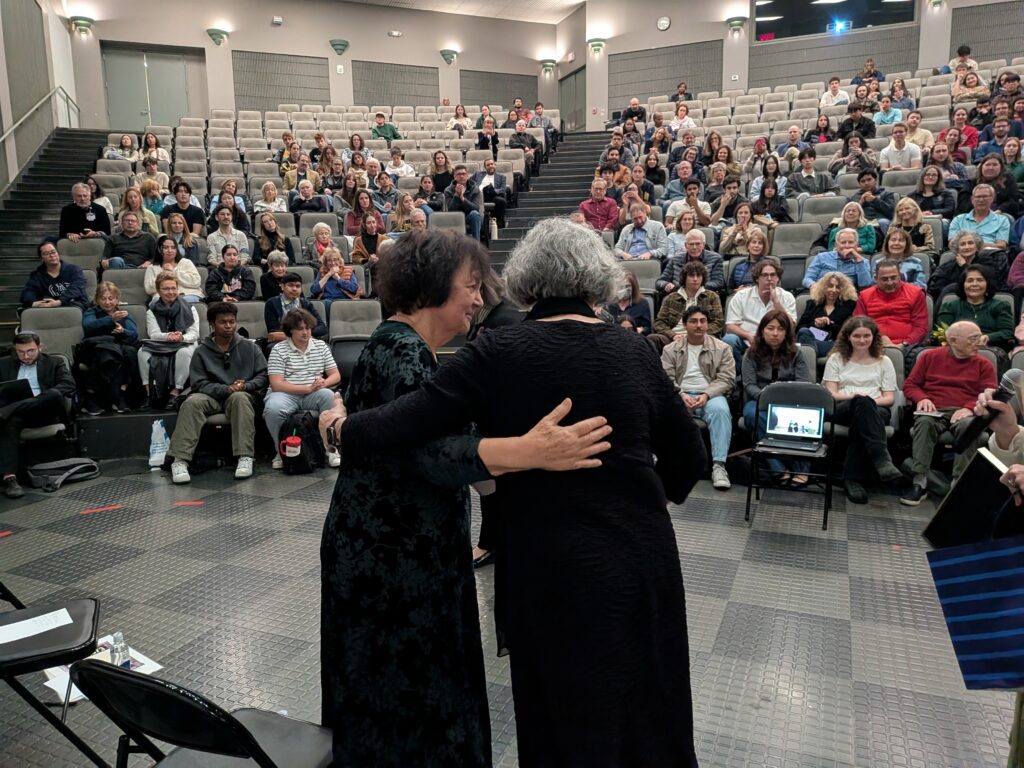
In partnership with multiple UCI departments, schools, and offices, Hillel at UCI hosted two Holocaust survivors: Zorica Sorkin, the mother of a UCI professor, and Jenny Unterman-Leijdesdorff, the grandmother of a UCI student — and brought together more than 350 people to hear their stories, the majority of whom were non-Jewish students and faculty.
“It is so easy to be apathetic toward textbooks,” said Diner. “But hearing real-life stories allows our students to be exposed to personal anecdotes, which expand their empathy while also providing them stories to pass on to others in the future.”
Born in Amsterdam, Unterman-Leijdesdorff was forced into hiding at age four alongside her sister after being separated from their parents. She survived and was liberated by Canadian forces, after which she learned her parents had been murdered in Sobibor. Her story is one of survival, loss, and memory.
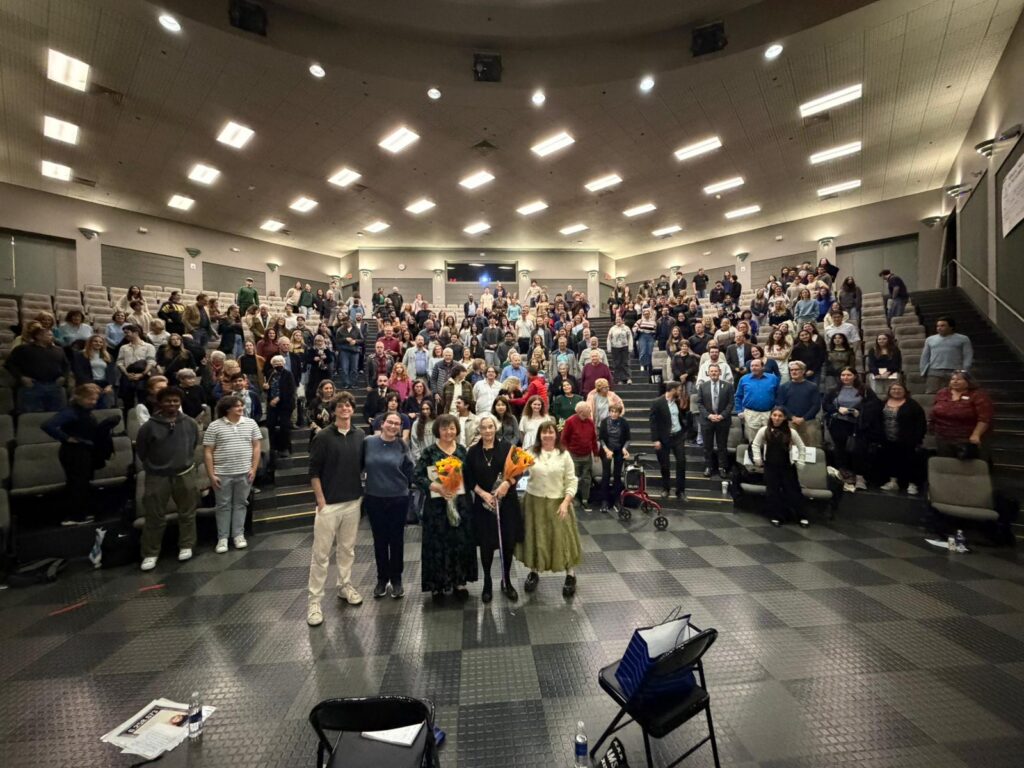
Sorkin’s story followed similar lines of survival and resilience. She was born in former Yugoslavia while her mother hid in a barn. Her father died fighting with the partisan resistance forces, and after the war, she and her mother searched for family, only to learn most of her relatives were murdered in Auschwitz. Sorkin and her mother eventually traveled to Israel.
Diner is particularly proud of how many non-Jewish students participated in the event. “We realized that the average Jewish person has heard the stories of many survivors but most non-Jewish students have never met or heard from a survivor,” she said. “We are the last generation of people able to have the opportunity to hear directly from survivors and shed light on the atrocities that occurred, so my hope is that hearing those testimonies will make a difference… and really shed light on the importance of continuing education for all.”

Thank you to everyone who planned, participated in, and learned from Holocaust Remembrance Day programs this year. May the memories of those killed always be blessed, and may we continue to honor the stories of survivors — and to tell them ourselves, so that they will never be lost to history.