How Will We Remember October 7?
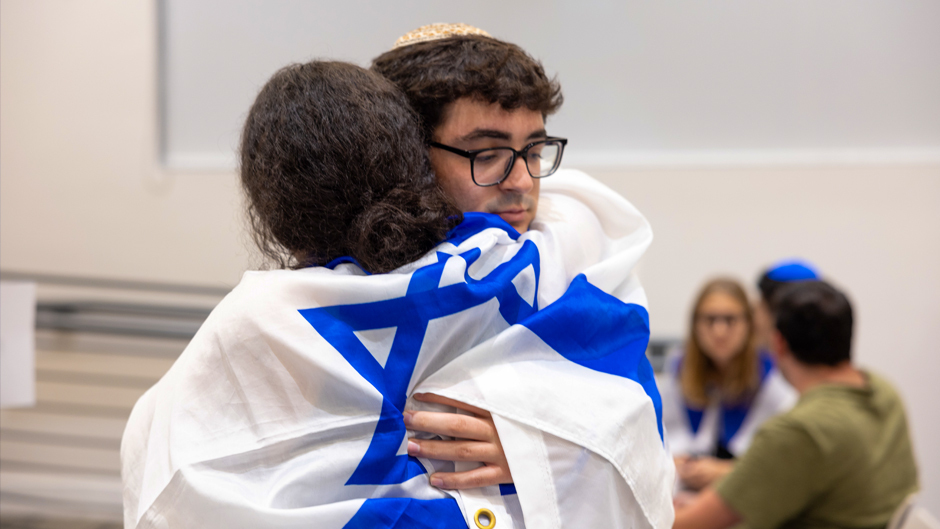
Yishai Goldflam is the vice president of development and partnerships of Hillel Israel
Jews are remarkably good at remembering events that happened thousands of years ago. Every year on Passover, we sit around a table and tell the story of the Exodus as though we ourselves had left Egypt. We fast and read Eicha on Tisha B’Av, mourning a Temple destroyed nearly two thousand years ago. We break a glass at weddings to remember Jerusalem at precisely the moment of our greatest joy. In modern times, the State of Israel has added new rituals, including sirens of remembrance on Yom HaShoah and Yom HaZikaron.
We remember because our people have always created mechanisms for that memory to be carried by future generations.
But memory, even of catastrophe, does not preserve itself. That is why I have found myself asking a question that feels both premature and urgent: How will the Jewish people remember the attacks on October 7th one hundred years from now?
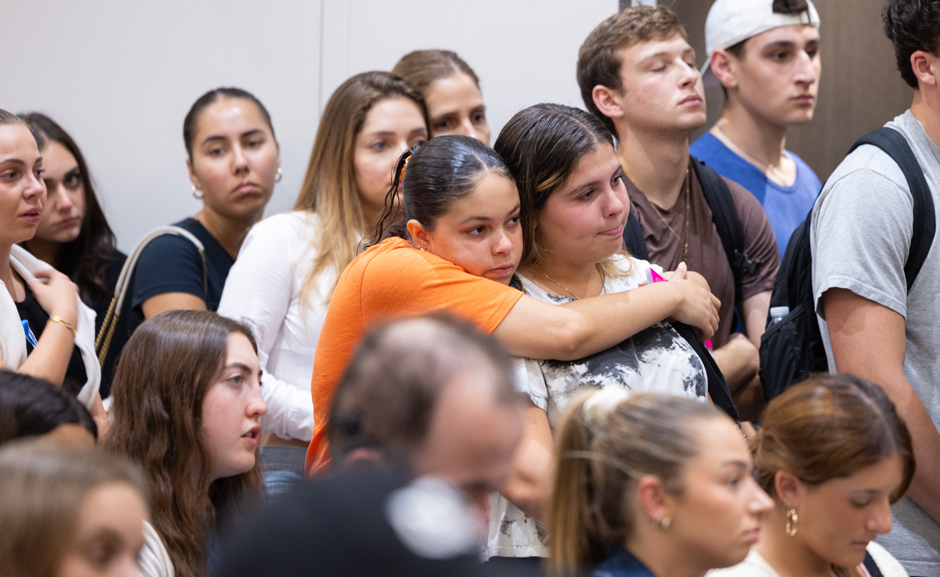
For the students we work with at Hillel Israel, that question can feel almost impossible to ask. October 7th is not yet history — it is a living, breathing present. More than 1,200 people were killed in Israel that day, with thousands more injured, as 251 people were taken hostage and held in Gaza. Our students are among those who lost friends and family members, served hundreds of days in army reserve units, were displaced from their homes, and have had their lives profoundly changed by the war that followed.
For Jews elsewhere, including on college campuses around the world, October 7th is also part of their present. It changed relationships with Israel, intensified experiences of antisemitism, altered the atmosphere at their colleges and universities, and raised difficult questions about Jewish identity, belonging, and security.
How do we capture that diversity of experiences, that pain which is still ongoing for many of our students?
We are accustomed to thinking about commemoration in terms of programming. What ceremony should we hold? Who should speak? What should students read? Should there be music, prayer, testimony, or study?
These are important questions. But there is a larger one behind them: Will October 7th become a permanent date in the Jewish calendar? And if so, what practices will allow Jews who did not experience October 7th, whose parents and grandparents did not experience it, to nevertheless feel that its memory belongs to them?
Our goal in answering this core question at Hillel Israel is not to manufacture a ritual and declare that this is how October 7th should be remembered forever, especially while the event itself is still unfolding in people’s lives. Instead, on this commemoration and in the years that follow, we hope to create spaces where Israeli students can remember, mourn, learn, and be together, while also beginning a deeper conversation about what we are choosing to carry forward.
What stories do we tell? Which values do we emphasize? What do we want a student born in 2050 to understand about the tragedy and lessons of that day? Is the enduring memory primarily one of destruction and loss? Of heroism? Of mutual responsibility? Of the extraordinary mobilization of Israeli civil society? Of the connection between Israelis and Jewish communities around the world? How do we preserve the pain without allowing pain to become the entirety of the story?
These are not merely questions about one day on the calendar. They are questions about Jewish memory itself. Usually, we inherit Jewish memory after generations have already shaped it for us. We receive the Seder, the fast, the prayer, the melody, the text. We rarely get to watch the process by which an event becomes memory.
With October 7th, we are living inside that process, which creates an extraordinary and daunting opportunity. This generation of students is not simply inheriting a memory shaped by others. They are among those beginning to shape it themselves.
What they tell one another, what they choose to commemorate, what values they draw from their experiences, and what practices emerge from this moment may all become part of the way future generations understand October 7th. In that sense, this is also an exercise in Jewish continuity: a rare opportunity to participate, in real time, in the formation of collective Jewish memory.
If we believe October 7th is a defining moment in contemporary Jewish history, then our responsibility is not only to remember it now. It is to help create the conditions in which future generations will understand what happened, what it meant, and why the Jewish people chose to carry its memory forward.