Embracing My Mizrahi Jewish Roots
Some of my favorite childhood memories were at my family’s Shabbat dinners. I can still see my grandmother, a Moroccan Jew, standing over the stove as she prepared the most incredible dishes. We were surrounded by family, heaping plates of foods like dafina, a special Shabbat stew, and moufleta, a soft chewy crepe, and more cooks in the kitchen than you could count. And every meal ended with a warm cup of Moroccan mint tea.
Those moments were about more than good food. They were my first introduction to the customs and traditions that would shape my identity as a Sephardi Jew. My family carried those traditions with them from Morocco and Libya, and I feel lucky to have grown up with so many expressions of Jewish culture and practice.

Food was always one of my favorite ways to connect with that part of my heritage. Whenever my extended family got together for Shabbat, we ate jachnun, a traditional Yemenite-Jewish pastry that bakes overnight for about 14 hours. I also grew up celebrating Mimouna, a Moroccan-Jewish tradition marking the end of Passover. Every year, the table was covered with moufleta and sfenj, Moroccan-style doughnuts. For anyone with a sweet tooth, it was heaven.
As I’ve gotten older, my appreciation for these traditions has grown into a curiosity about the history and people behind them. As a college student, I’ve started thinking about how I can carry them forward and share them with others.
That feels especially meaningful this month. November is Mizrahi Heritage Month, a time to recognize the diversity of Jewish experiences and traditions in American Jewish life. For me, it’s also a reminder that we don’t have to come from the same backgrounds or practice the same traditions to learn from one another and feel part of the same community.

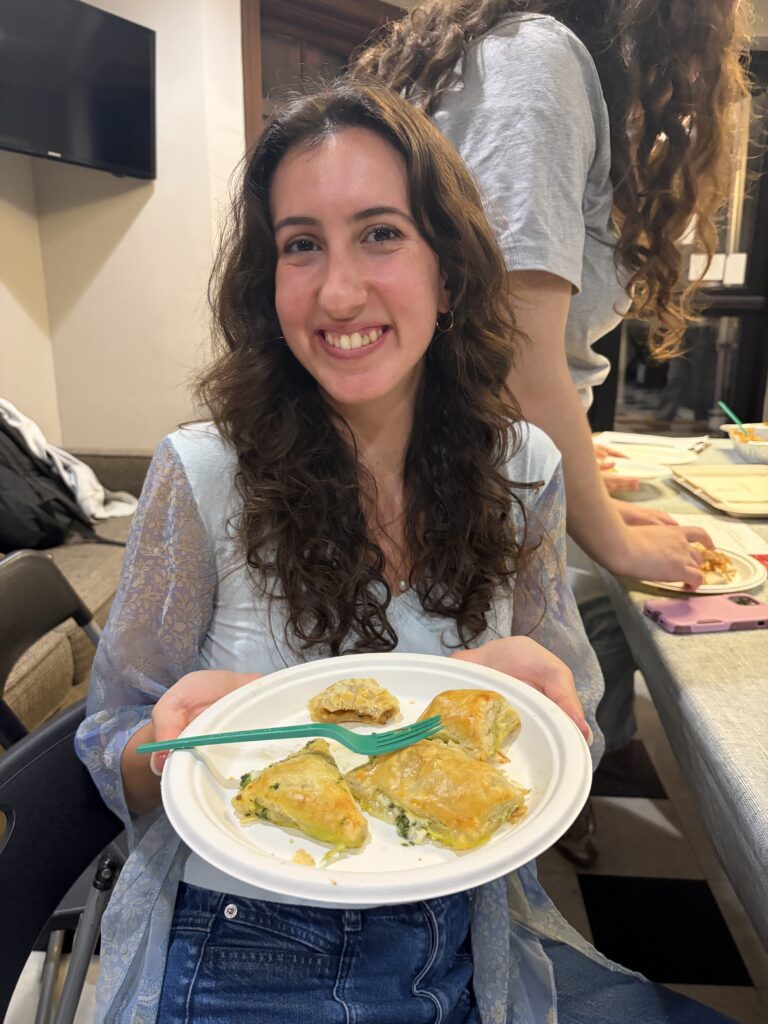
I see that in real time at the Hillel at Washington University in St. Louis, where I’m a third-year student. Recently, WashU Hillel hosted a Sephardi-Mizrahi cooking night. As we got ready to make bourekas (one of my favorite foods), we pulled up Spotify to find a Mizrahi music playlist that would energize the room. Soon, we were folding bourekas, talking and laughing with one another, and listening to Mizrahi songs I love. It was simple, and it was powerful. It reminded me of the years I spent in the kitchen with my family, only this time, I was the one sharing my Mizrahi and Sephardi traditions with my friends.
That event represents what I love about WashU Hillel, where programs like this give students room to explore and share different expressions of Jewish life. Sometimes that means returning to something familiar. Other times, it means discovering something completely new. For me, it has meant finding a place where the traditions I grew up with are welcomed and shared with friends from all walks of Jewish life.
That evening reminded me of both the joy and the responsibility of carrying my traditions forward. Sephardi and Mizrahi traditions – and all Jewish traditions – have an important place in Jewish life on campus. Whether that means introducing friends to a favorite family recipe, suggesting the playlist for your next Hillel event, or organizing a gathering of your own, there are so many ways for students to share what makes their Jewish identity unique. After all, at Hillel, you don’t have to wait for someone else to make space for your Jewish heritage. You can be the one to share it proudly.
Orlee Bracha is a student at Washington University in St. Louis.