Finding Home in the Hillel Sukkah
Courtney Saxe is a fourth-year student at the University of Arizona.
Growing up, Sukkot was a holiday I knew about, but not one I felt deeply connected to. Every year in Hebrew school, we would visit the sukkah and shake the lulav and etrog. In my mind, the entire holiday lasted about 10 minutes and involved a hut decorated with paper chains and twinkling lights.
At the time, I didn’t fully understand Sukkot as a celebration of hospitality, community, gratitude, and joy. College changed that.
Suddenly, I had more agency over my Jewish life. I explored traditions that mattered to me, reflecting on the rituals I wanted to carry forward and those I wanted to understand more deeply. Was sitting in the sukkah one of those traditions? Hillel at the University of Arizona gave me a place to find out.
Surrounded by new friends, I began to experience Sukkot differently. I learned more about the sukkah as a reminder of our ancestors’ journey through the wilderness and the temporary dwellings they inhabited along the way. And just as importantly, I began living the holiday in addition to learning about it.
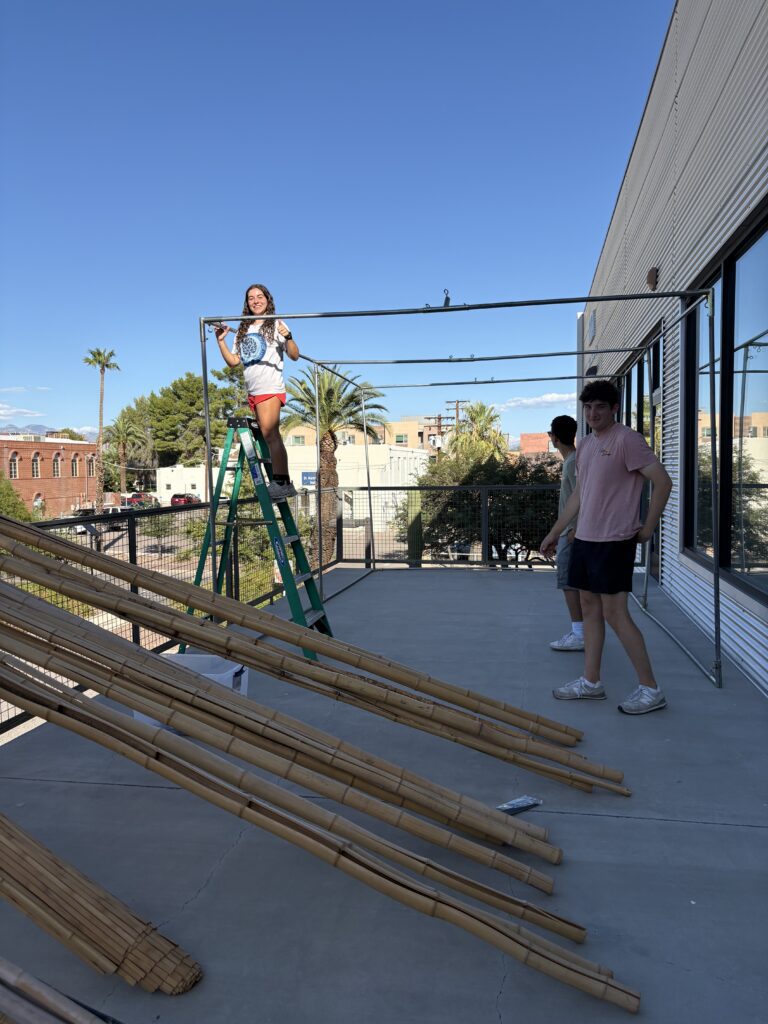
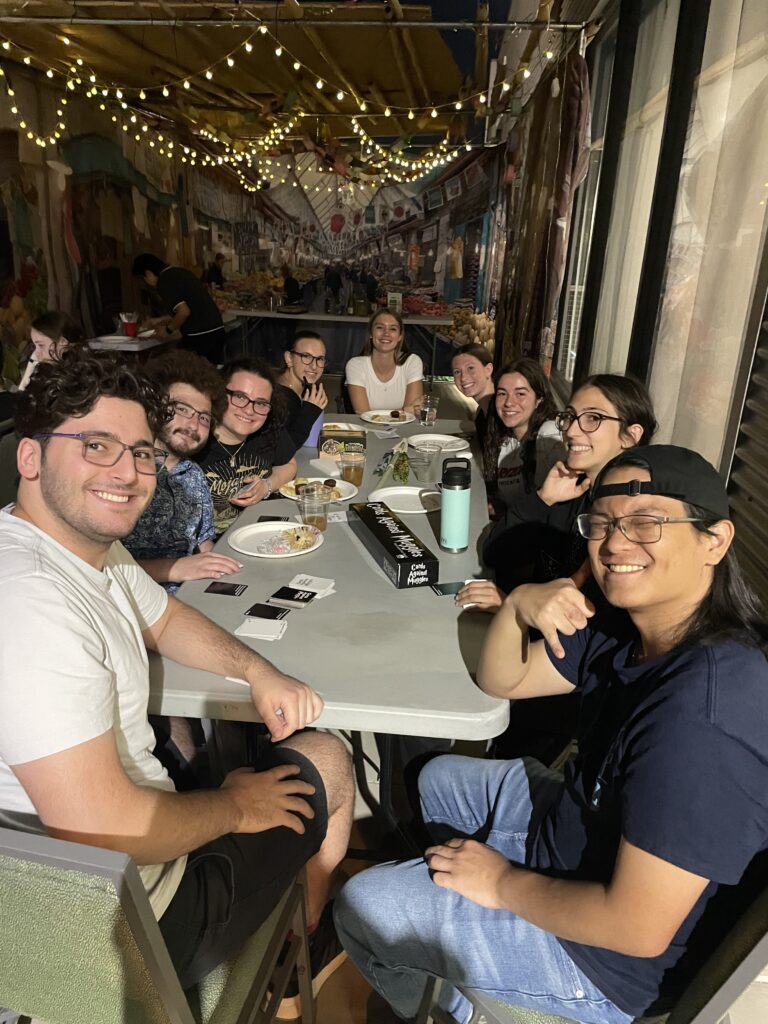
In the Hillel sukkah, we ate meals and snacks, spent time together, studied, talked, and even did homework. Each year, the sukkah became part of our everyday campus life for one week. And the more time I spent there, the more I understood that Sukkot was not simply about stepping into a ritual space. It was about what happened when people gathered inside it.
Gradually, my relationship with the holiday changed. I was going to the sukkah because I had found my own meaning and community there. And that is part of what makes Sukkot at Hillel so special.
For one week, Jewish life becomes even more visible on campus. The sukkah sits out in the open, drawing students in between classes and the rhythms of everyday college life. It turns Jewish tradition into something students can encounter not only in a service or program, but in the middle of their day.
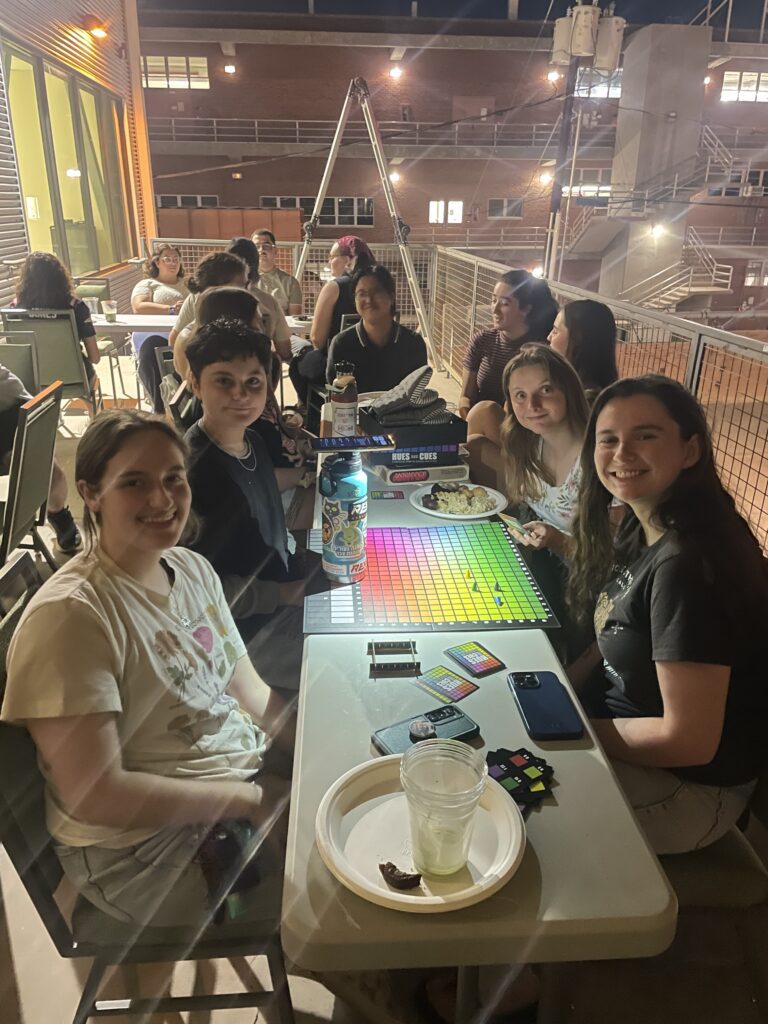
Some of my friends grew up celebrating Sukkot every year. Others stepped inside a sukkah for the first time through Hillel. Still others are still discovering which Jewish traditions to embrace and what they might mean in their own lives.
But at Hillel, all of us belong.
On Sukkot, we can come for a meal in the sukkah, shake the lulav and etrog, or simply sit with friends. Hillel gives us an opportunity to encounter Jewish tradition at our own pace and, over time, decide what to make our own.
And there is no single way to celebrate. Over the years, I’ve visited families who build sukkahs in their backyards and fill them with decorations made by their children. I’ve seen communities bring their own customs, creativity, and personality to the holiday. Through Hillel, I’ve learned that students on campuses around the world are gathering in their own sukkahs, sharing meals, celebrating, and building community.
Those celebrations may look different, but they are connected by the same tradition. For one week, Jewish students across cities, countries, and campuses step into temporary structures and create spaces of welcome and belonging.
When I think back to myself as a child sitting in the sukkah, I realize how much my relationship with Judaism has changed. Back then, I didn’t fully understand why I was there. Now, it’s my choice.
That journey, from experiencing Jewish tradition because it is handed to you to cherishing it because you have found meaning in it for yourself, is one of the most powerful things I have seen Hillel make possible.
For me, Sukkot became meaningful when it started feeling like a tradition I could enter, question, and discover. That is what I hope every student finds at Hillel: not a prescribed way to be Jewish, but the space, community, and confidence to discover what being Jewish can mean to them.