Thousands of Jewish Students Gather to Remember October 7th with Hillel
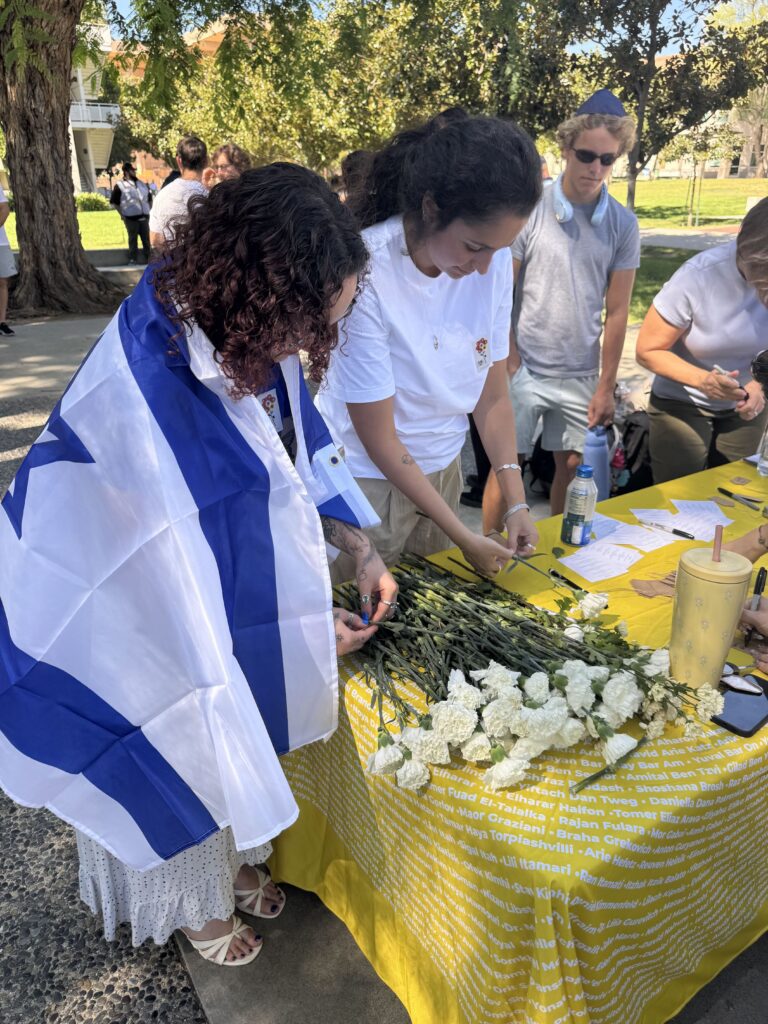
Three years ago, Jewish college students woke up on October 7th to news that would reshape their college experience. The brutal attacks on Israel came just weeks after thousands of first-year students arrived on campus, while they were still building friendships and figuring out where they belonged. As the Jewish community grieved for those killed – and as antisemitism surged in the days that followed, many students found a home at Hillel, where they came together to mourn and to find support and comfort.
Now, those first-years are seniors, the last class of undergraduates who lived through October 7th and its aftermath on campus. In the years since, many embraced leadership and advocacy, building strong and vibrant Jewish communities, organizing programs focused on Israel and Jewish education, and standing proud in their Jewish identities even during moments of challenge. This week, they joined Jewish students at Hillels across North America to remember, and to make sure the stories of those who were murdered or kidnapped on that tragic day would live on long after graduation.
Among the students who were inspired to act in support of their Jewish communities was Samara Kohn, a fourth-year student leader at Hillel of Buffalo. “After October 7th, I used my leadership skills and love for Israel to help bring the Buffalo Jewish community together. Through the last few years, I have continued to be an active member and proud Zionist,” Kohn said.
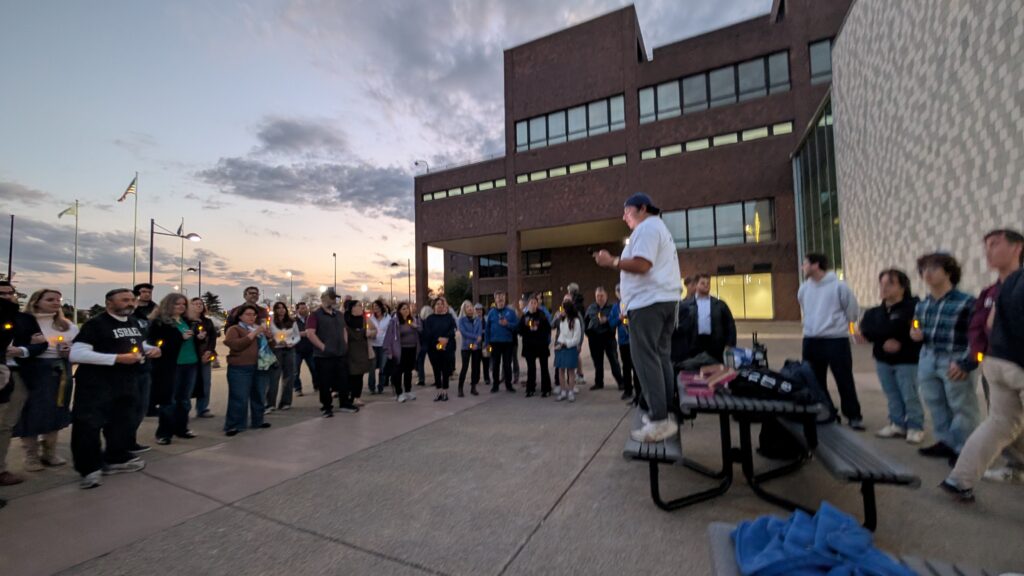
This week, Kohn and over 150 of her peers gathered for a day of reflection with Hillel of Buffalo, participated in a candlelight vigil to honor the victims of the attacks, and listened as Nova Festival survivor Atir Vinnikov shared his story of courage and recovery.
“Although the day was filled with grief, standing alongside my Jewish community and sharing these stories reminded me of the importance of remembering, supporting one another, and keeping the memories of those we lost alive,” said third-year student Tal Gavriel. “For me, honoring [my friend] Noa also meant remembering her love for happiness and dancing and carrying that spirit forward even in the darkest moments.”
“We’re focusing [this programming] on resilience, on the strength of the Israeli people as they continue to repair and rebuild their society after October 7th,” said Zack Steinberg, director of Jewish innovation at Hillel of Buffalo. “And we’re focusing on how we, as Jews in America, can be resilient as we navigate a world that has changed significantly over the past few years. We want our students to think about how we move forward with hope.”
Hope was also at the heart of a community art project a few hundred miles away, at University at Albany Hillel. Students created their own Wings of Hope, a global art project inspired by Israeli artist Livnat Kutz, who was murdered at Kfar Aza on October 7th. Kutz created the original wings out of old plastic toys, which she assembled on the wall of a bomb shelter as a symbol of resilience. Similarly, UAlbany students used found materials to create their wings and displayed them in the center campus along with stories about Kutz and other Kfar Aza residents who died on October 7th.
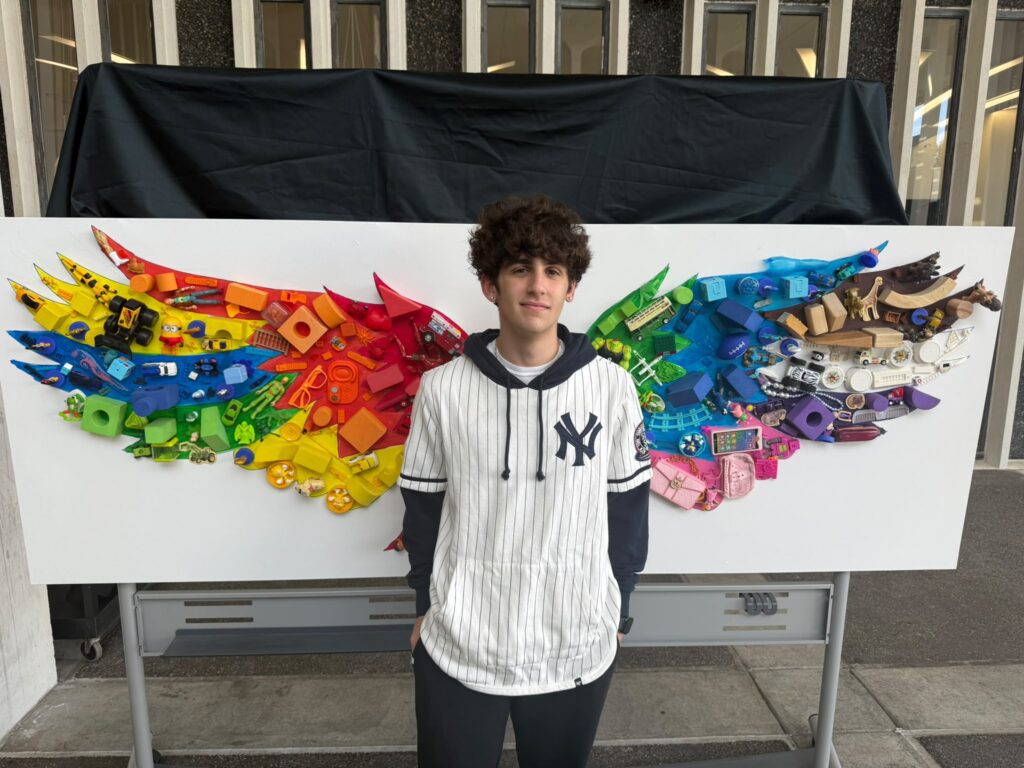
Over 100 students passed through the exhibit over the course of the day. Third-year student Jacob Miller said, “The October 7th memorial at UAlbany was an amazing celebration of the… lives that were lost and what they represented. The wings were… a beautiful representation of their amazing stories.”
The project reflected an evolving approach to remembrance, one that centers the stories of the victims while finding creative ways to carry their memories forward. “We want students to feel a connection to the people who were impacted by October 7th and to take their stories into the broader campus community and their messages of hope, community, and resilience into the world,” said Rabbi Nomi Manon, executive director of UAlbany Hillel.
For fourth-year student Amy Nichols, the years since October 7th — and powerful stories such as these — transformed her relationship with her Jewish community. “Before October 7th, I hadn’t thought about being part of Hillel or even being in any Jewish leadership position,” Nichols said. “After being introduced to Hillel programs in my junior year at UAlbany, I feel it is my duty as a young Jewish woman to be involved with my community and stand up for my Jewish family, in Israel, and across the world.”
In Illinois, that sense of connection ran through commemorations at the University of Chicago Hillel, where students and professionals reflected on how remembrance and responsibility change with time. “This year, with no hostages in captivity, we’ve made time to pause and ask what our responsibility is now,” said Jenn Gorge, associate director of UChicago Hillel. “Our programming shifted from waiting and advocating to preserving and sharing the stories of those whose lives changed forever on October 7th.”
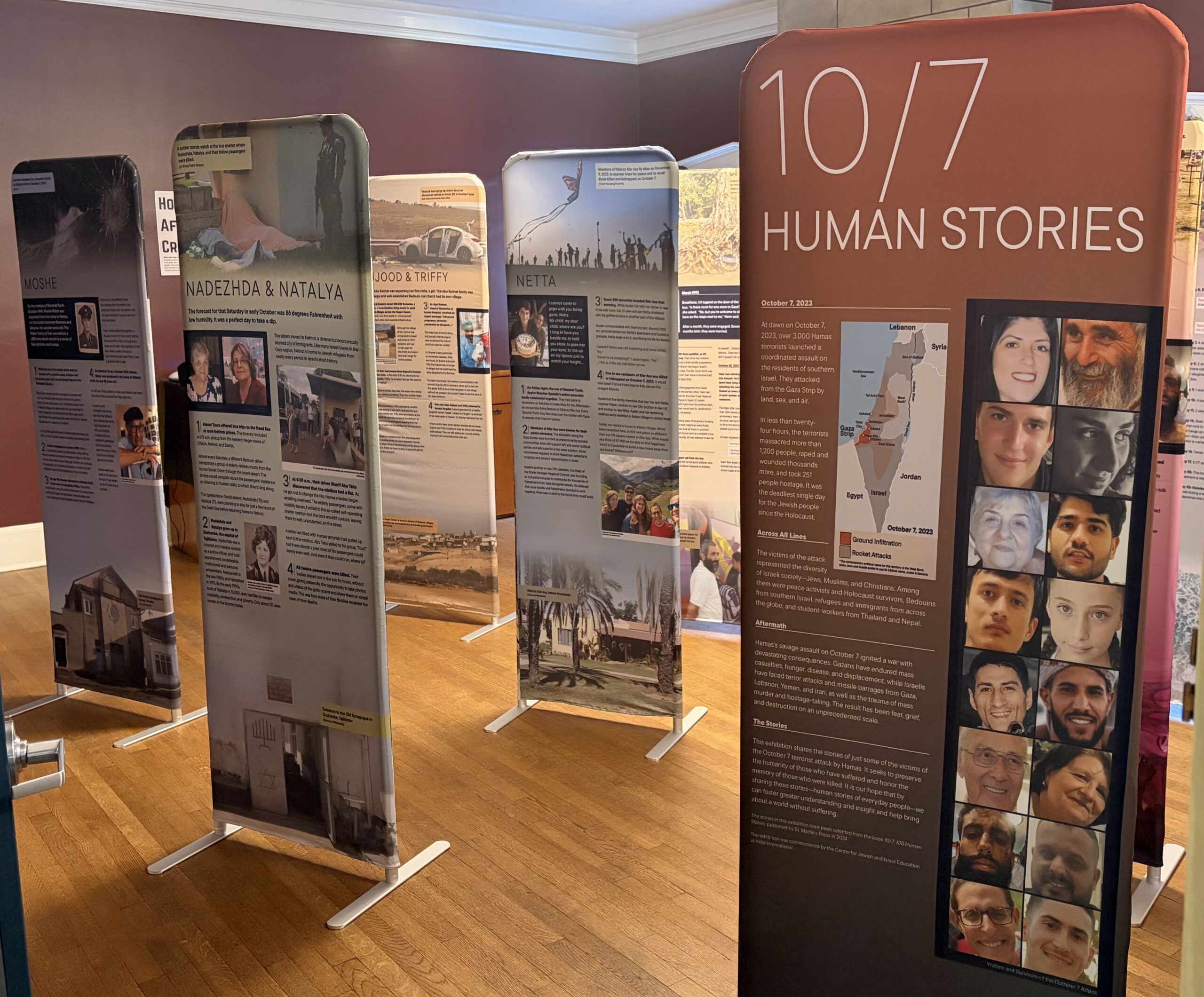
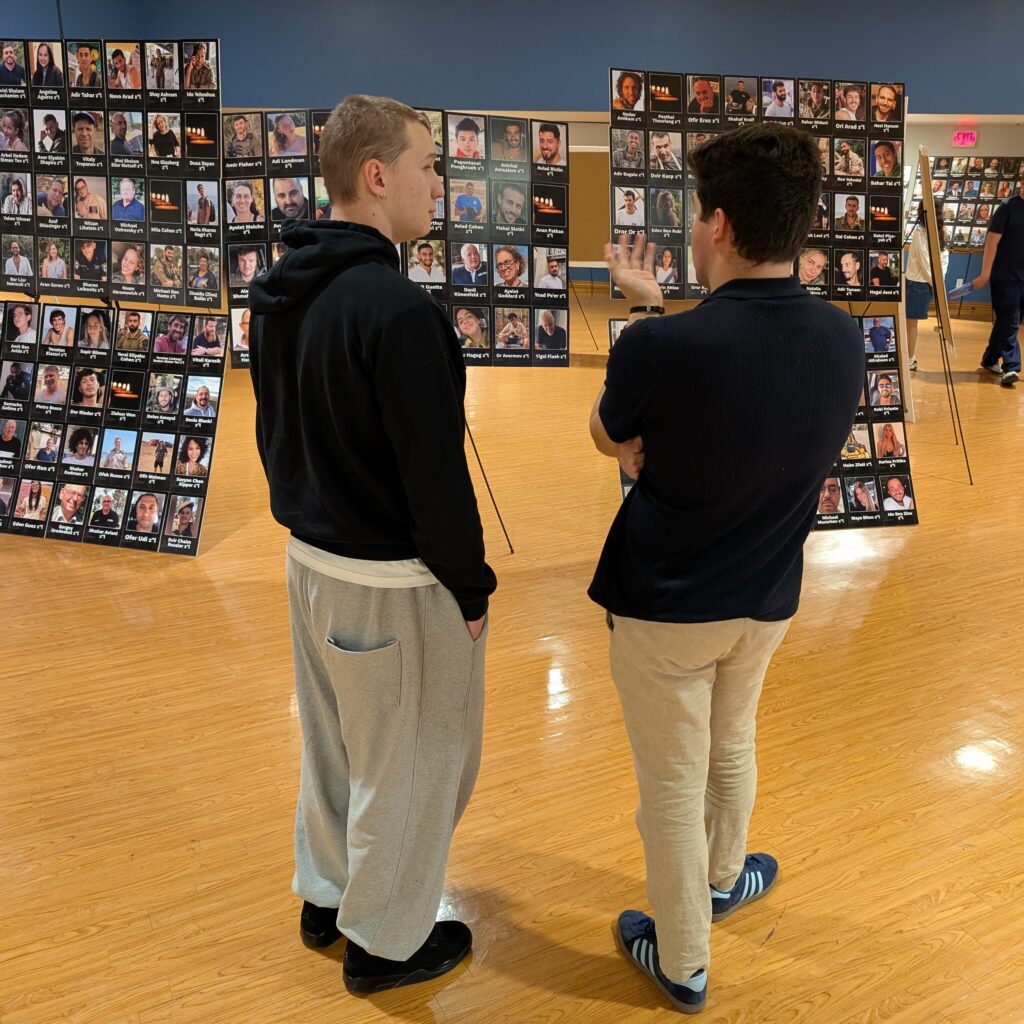
For three days, UChicago Hillel hosted “October 7: Human Stories,” a traveling exhibition developed by Hillel International and based on Israeli journalist Lee Yaron’s acclaimed book “10/7: 100 Human Stories.” The exhibit was featured at nearly 20 campus Hillels in commemoration of October 7th, and shared haunting stories of victims as well as anecdotes of human kindness, empathy, and compassion that shone through amid horror and cruelty. “October 7th made me realize that Jewish survival depends on my generation,” said Jake Rymer, a fourth-year student. “This exhibit gives us an incredible opportunity to highlight some of the experiences faced during the aftermath of October 7th. It is so important to continue sharing these stories.”
In addition to the exhibition, UChicago Hillel partnered with Jewish campus organizations to hold a commemorative ceremony and a mosaic memorial activity. Each program also featured a collection of stories, including those of former hostages who are rebuilding their lives and families who turned their grief into action.
Eva Kattan, a second-year UChicago student, hoped these moments of remembrance would help her peers develop a sense of shared responsibility and optimism about the future. “October 7th was a terrible tragedy, a day when the Jewish community mourned and wept,” said Kattan. “But on October 8th we did as we always do: we picked ourselves back up and came back even stronger.”
At Pennsylvania State University Hillel, students commemorated October 7th with both campus-wide gatherings and more intimate, quieter experiences. Earlier this week, more than 250 students heard from Omer Shem Tov, an Israeli hostage who survived 505 days of captivity in Gaza. Later, students participated in small-group discussions with specialists from TIDES, a local nonprofit that provides grief support.
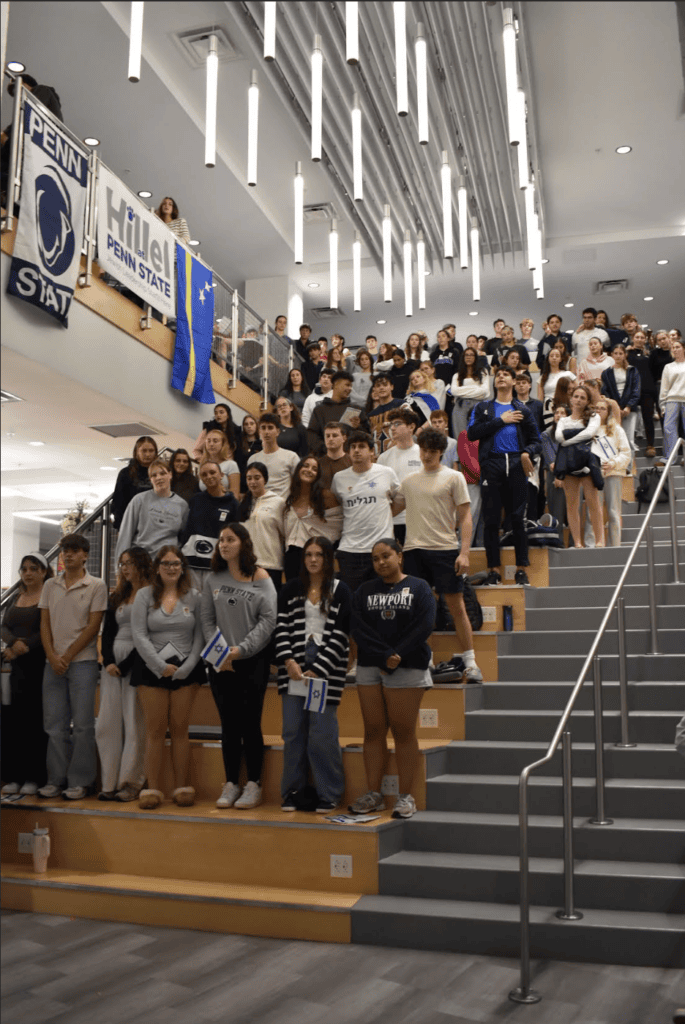
“The most meaningful part of this year’s programming is that we’re not asking students to experience October 7th in just one way,” said Robyn Markowitz Lawler, Marcus Family executive director of Penn State Hillel. “We’re giving them community, connection, Jewish strength, and also the space to sit with whatever they’re feeling.”
For third-year student Dylan Hellman, that meant reflecting on how the attacks deepened his relationship with Israel. “Waking up on October 7th and seeing family and friends under attack in a country that I love made me realize that Israel was more than just a place I cared about. It was a place I felt deeply connected to, and it made me even prouder to stand up for my religion and my people,” he said.
That same sense of pride shaped commemorations at SLO Hillel, which serves Cal Poly and the surrounding community in San Luis Obispo, California. Together with the student group Mustangs United for Israel, SLO Hillel transformed Dexter Lawn, the busiest spot on campus, into a space for remembrance. Over 300 students walked through an exhibit that told the story of each person murdered at the Nova Festival, lit a yahrzeit candle, and stepped into a virtual reality experience created in partnership with the Committee for Accuracy in Middle East Reporting and Analysis (CAMERA). In the evening, dozens of students and community members gathered at the Hillel house to hear from their Israel Fellow, Michael Schenck, and share their own memories of that day.
“This year, marking three years since the October 7th massacre, we have chosen to increase the scale of our exhibit on campus,” said Schenck. “Especially now, when some people may feel a little distant from October 7th, it is so important to keep it in the public eye, to stand up and not stay quiet.”
That call to increase public awareness about the massacre propelled fourth-year student Maya Paul into action and leadership three years ago. “October 7th fortified my Jewish leadership in so many ways,” said Paul, a member of Hillel International’s Israel Leadership Network. “I saw what was happening on university campuses around the world and wanted to do anything I could to prevent that from happening at Cal Poly. October 7th also made me want to be more passionate about my Judaism. I figured that the best way to fight back against all the antisemitism was to live proudly with my Judaism and encourage those around me to do the same.”
Rachel Newman, a second-year student who helped lead SLO Hillel’s program, was still in high school on October 7th. Now she’s among the students who are stepping up to keep the memories of those who perished alive. “Some of the people murdered on October 7th were people just like me, young people celebrating at the Nova Festival, families, and individuals simply going about their everyday lives. They could have been any of us,” Newman said. “Helping lead this program at Cal Poly is my way of honoring them and making sure their lives and stories continue to be remembered.”
Those who were on campus on October 7, 2023 will graduate later this year, but the communities they helped build will continue to support the students who come after them. This week, as they remembered, listened to and shared stories, mourned, and made space for difficult emotions, they also prepared to pass the responsibility of remembrance to the next generation of Jewish students.