Accompanying Jewish Students Through Challenge and Joy
Before coming to Hillel, I spent nearly two decades working as a chaplaincy leader in a large Jewish care system for older adults. Chaplaincy is all about helping individuals draw on their deepest values and beliefs to build resilience, and to provide accompaniment and support no matter what the situation. I entered that work because I was drawn to working with elders, and saw an opportunity to help improve their quality of life during a time of growing vulnerability. My colleagues and I built a strong Jewish spiritual care program and a chaplaincy education institute that was the first of its kind, offering chaplaincy training with expertise in Jewish patients and aging.
Hillel was important to me as a college student, and I had thought early in my rabbinate about working in Hillel. While still in senior care, I was a researcher on a study mapping Jewish chaplaincy. (Mapping Jewish Chaplaincy) It became evident that even with the increase in mental health concerns among college students post-COVID-19 in particular, chaplaincy is largely absent.
And so I pivoted to become a Hillel professional, where I recognized that college students today face high levels of anxiety, feelings of isolation, and a range of mental health concerns. Hillels have the opportunity to deepen the ways we care for Jewish students during some of the most formative and challenging years of their lives. While universities invest in students’ intellectual growth, students also need spaces where they can wrestle with questions of identity, purpose, belonging, and meaning.
That need has become more apparent in recent years. Since the October 7, 2023 attacks, many of our students have also faced antisemitism, social polarization, and difficult conversations with classmates, friends, and even family members. They are figuring out who they are and what types of communities they want to build.
As Hillel professionals, we are often among the first people students turn to when confronted with these challenges. They come to us after difficult classroom discussions, during moments of uncertainty, and when they are searching for connection. They also come to celebrate and to explore their Jewish identity, and to imagine the future they want to create.
That is why bringing my chaplaincy knowledge and leadership to the Hillel world feels so important to me — and like such a natural continuation of the work that I was doing in the world of Jewish aging.
At its core, chaplaincy teaches us how to be present with another person. It teaches us how to listen deeply, ask better questions, and create space for someone else’s experience without immediately trying to solve it. Those skills help us accompany students through moments of struggle and growth alike.
Chaplaincy is not about having the right answer. It is about helping people feel seen, heard, and supported as they find their own way forward.
Last year, Northeastern Hillel, in collaboration with McLean Hospital, launched an innovative ACPE-accredited Clinical Pastoral Education (CPE) program focused on Jewish community chaplaincy, campus life, and mental health. Hillel professionals who participate complete the clinical component of the program through their work with students on campus. The first group has four participants, each of whom is a full-time Hillel professional working on a campus in New England. Next year, we hope to grow the program to be available nationally for a group of up to eight participants.
CPE helps build Hillel professionals who are more than program organizers, caring adults, and non-profit leaders — it builds our skills to help us truly accompany a generation of young people who are often alone, and struggling with a complex world that is detached and disconnected.
In the Jewish calendar, we’re entering the period known as the Three Weeks, which leads into Tisha B’Av, a national day of mourning. This time reminds us that Jewish tradition does not ask us to ignore pain. It teaches us how to hold loss while continuing to imagine renewal. We remember destruction, but we also make space for hope. We gather the sparks that were scattered when our world broke, and find meaning again. Chaplaincy education helps us be present for students as they encounter a broken world and seek meaning and a path forward.
There is an opportunity before us on campus today. By investing in chaplaincy education, we can help Hillel professionals care for individual students with greater depth and wisdom, while building Jewish communities where students feel supported, connected, and celebrated.
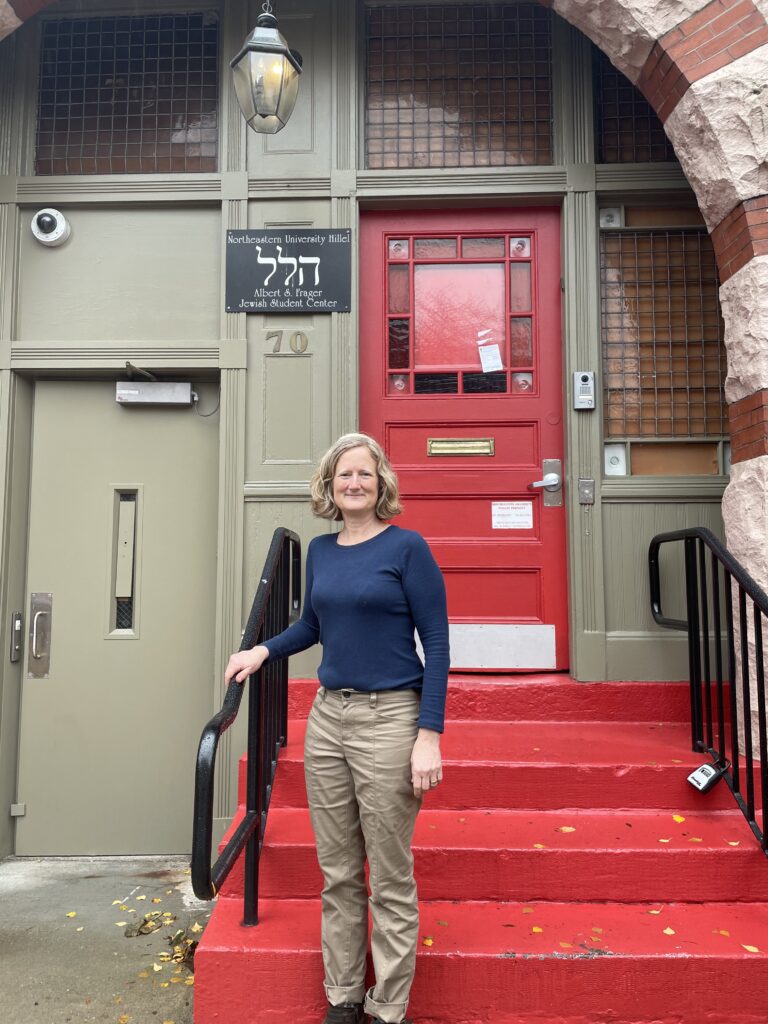
Rabbi Sara Paasche-Orlow is the executive director of Northeastern Hillel.