Black and Jewish Students Build Connections at Sports x Unity Summit
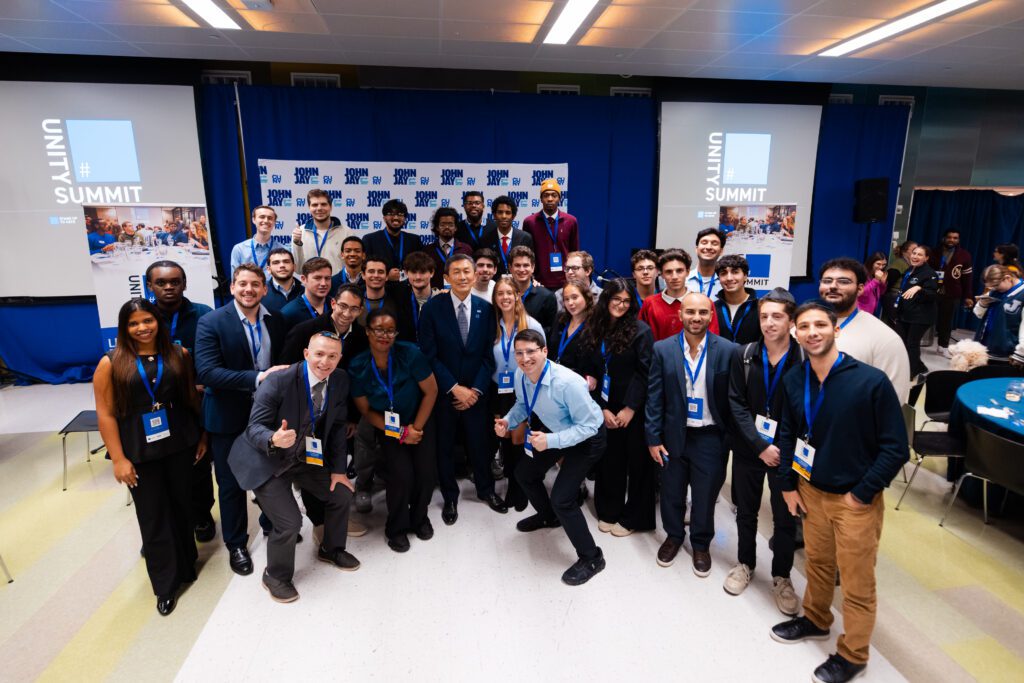
More than 100 Jewish, Black, and Black-Jewish college students from John Jay College of Criminal Justice, The City College of New York, Hunter College, and Baruch College gathered in New York City recently for the Sports x Unity Black-Jewish Summit, an evening of conversation and connection. Participants explored how the values of shared goals, empathy, and respect go beyond the world of sports and help build relationships across differences.
The summit, held at John Jay College of Criminal Justice, was hosted in partnership with Hillel International, Blue Square Alliance Against Hate (BSA), UNCF, and eight major sports leagues, including the NBA, NFL, and MLB. The evening continued an ongoing series of dinners that have crisscrossed the country to build empathy and understanding across campus communities. This summit, which emphasized in particular the role sports can play in bringing people together, featured Pro Football Hall of Famer Andre Tippett along with leaders from BSA and Hillel International.
“In this room tonight, I see people with different backgrounds, but one shared goal. Anyone who has been part of a great team knows that’s where real strength comes from,” said BSA President Adam Katz during his opening remarks. “Nobody asks the people in the locker room to share the same upbringing or perspective. In fact, teams are often strongest when people bring in different life experiences and strengths.”
For Katz, the summit offered an opportunity to reflect on the long-standing relationship between Black and Jewish communities. He recalled the courage of Civil Rights Movement activist James Chaney, who was Black, and White Jewish activists Andrew Goodman and Michael Schwerner, all of whom were killed in 1964 by the Ku Klux Klan while registering Black voters in Mississippi. Their story helped raise the Civil Rights Movement to a national level, Katz explained, serving as a reminder of what communities can accomplish when they stand together in pursuit of a shared goal – and an important lesson we can apply today.
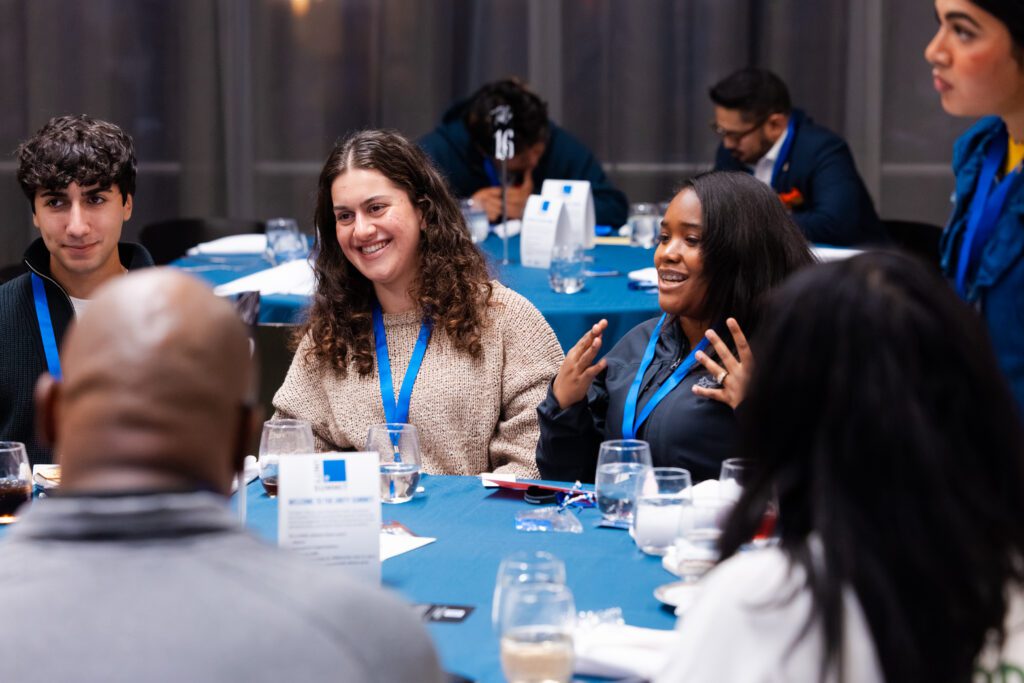
Following his opening remarks, Dani Levine, senior director of social impact for Hillel International, facilitated a series of roundtable discussions designed to highlight shared experiences and inspire students to think deeply about how those points of connection could be an avenue for change. Through these guided conversations, students asked questions, shared their experiences, and spent time getting to know one another. They listened and learned, all the while considering how they could keep the momentum going and continue these conversations on their own campuses.
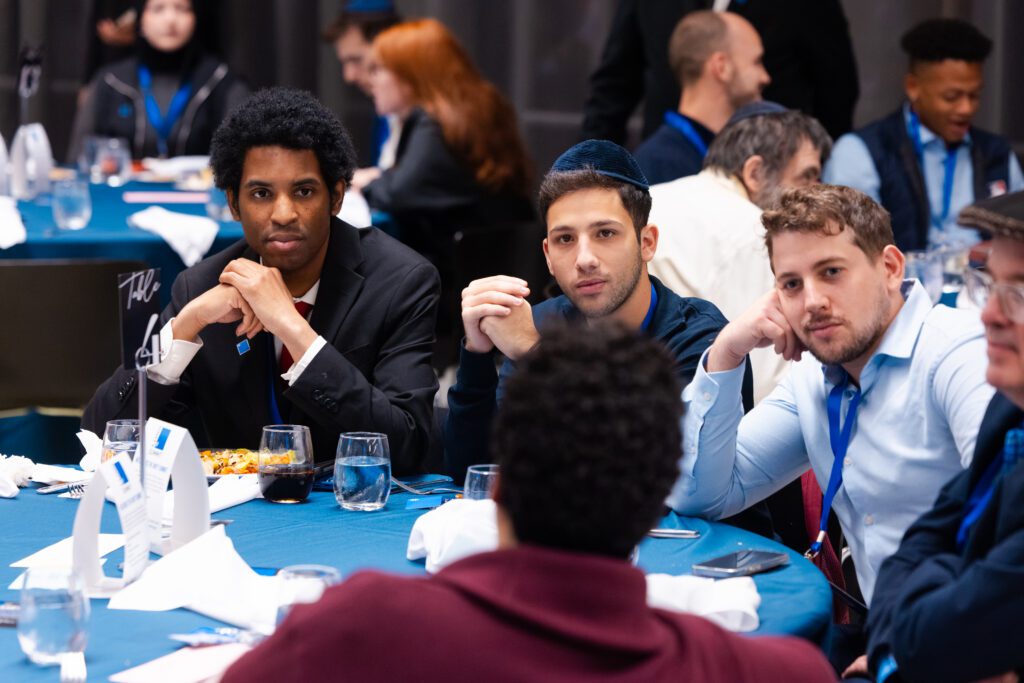
“Everyone was able to talk and speak about their experiences and backgrounds. There was so much talking, everyone respected each other, and it really shows how important social interaction like this is,” said Hever Lizama, a student at John Jay College for Criminal Justice.
Necati Karabulut, a student at Baruch College, added that the conversations were reflective of “how closely related the Black and Jewish experience are.” The discussions were part of a larger effort to equip this next generation of leaders with the relationships, understanding, and confidence to strengthen their campus communities. While conversations begin at a Unity Dinner, they are intended to catalyze continued dialogue and collaboration. For students who want to continue with more structured time together, BSA and Baruch Hillel are offering a stipended fellowship for students to continue learning and building relationships about the Black and Jewish experiences.
“We’re not just hoping students leave with a better understanding of one another,” said Sarah Fried, Hillel International’s chief external affairs officer. “We want them to leave with relationships they can build on, and the confidence to bring other people into those relationships.”
The evening concluded with remarks from Andre Tippett, who played for the New England Patriots for 11 seasons. Tippett shared how his Black and Jewish identities have shaped his understanding of community, faith, and resilience. “People sometimes assume those identities pull against each other,” Tippett said. “For me, they’ve always been woven together, and they’ve made me who I am.”
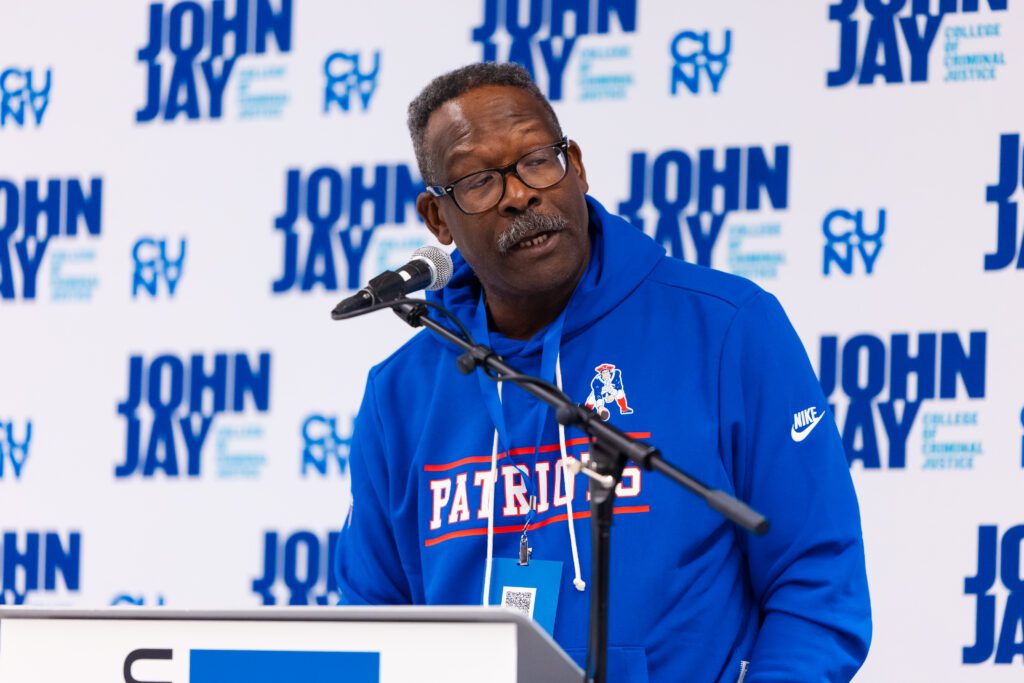
Drawing on his experience as a football player, Tippett encouraged students to lead with empathy and embrace people from different backgrounds. “Real leadership doesn’t start when you get a title,” Tippett said. “It starts with the willingness to listen. It starts with the courage to engage with someone whose experience is different from your own.”