Starting the Year with a Living Conversation with Jewish Texts
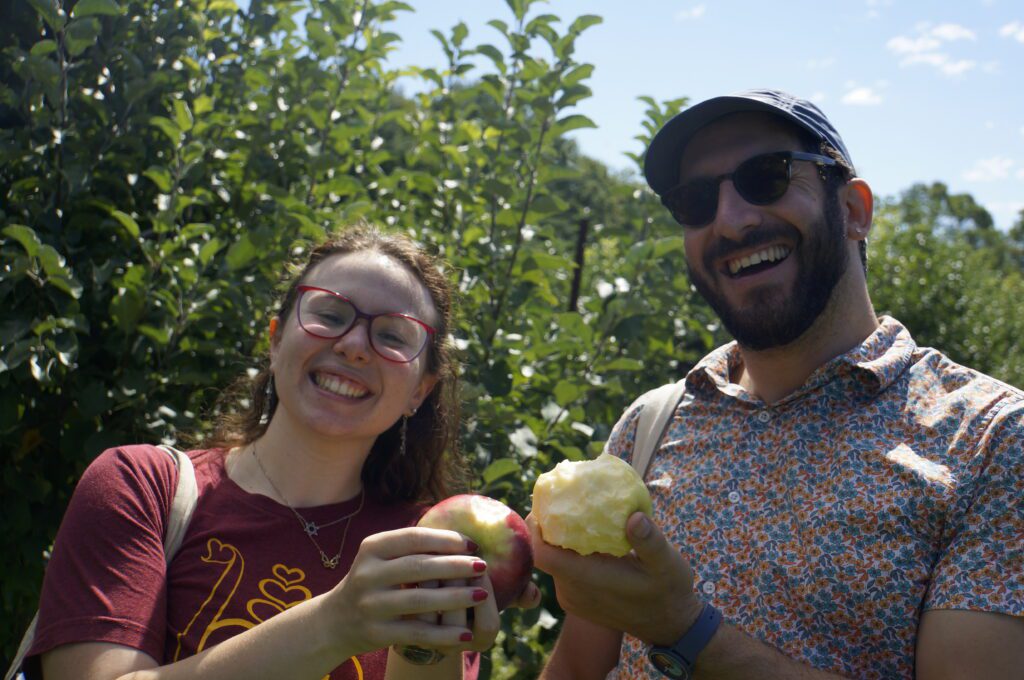
For Rabbi Alex Goldfarb, there is nothing static about Judaism. Torah is a conversation, learning is a relationship, and music should be playing in every room. And every Jewish college student, no matter their background, has something to add to age-old conversations about Jewish identity, text, and tradition. “The Jewish bookshelf is very much alive,” he said.
Just weeks into Rabbi Alex’s first semester as the Hadar Campus Rabbi at UMass Hillel, Rosh Hashanah and Yom Kippur are bringing the community together around those conversations. The timing feels fitting. First-year students are finding their footing, and returning students are settling back into campus life, all as the Jewish new year begins. “The newness is all around,” he said. “Everybody’s getting started with the school year. It feels like maybe the most honest way to actually start a new school year is with a new year.”
More than anything, Rabbi Alex is excited to experience the holidays alongside his students. “I get to accompany students through the High Holidays,” he said. “I have the chance to experience this high point in the calendar together as our first experience together.”
Through the High Holidays and beyond, Rabbi Alex wants students to become what he calls learners with a capital “L”: people who see Jewish learning not simply as something they study, but as something that belongs to them. “Being in conversation with our texts is the root of what I’m trying to do,” he said. That means helping students develop a relationship with Jewish tradition that isn’t about how much Hebrew they know or what kind of Jewish education they had growing up. He wants each student to be able to say, “I am a Learner. I am someone who does this learning at every stage of my life.”
And there is no place he would rather do that work than on a college campus. “College students are so much fun,” Rabbi Alex said. “The openness to new experience and the openness to a spiritual path is stronger in college than maybe at any other point in one’s life.”
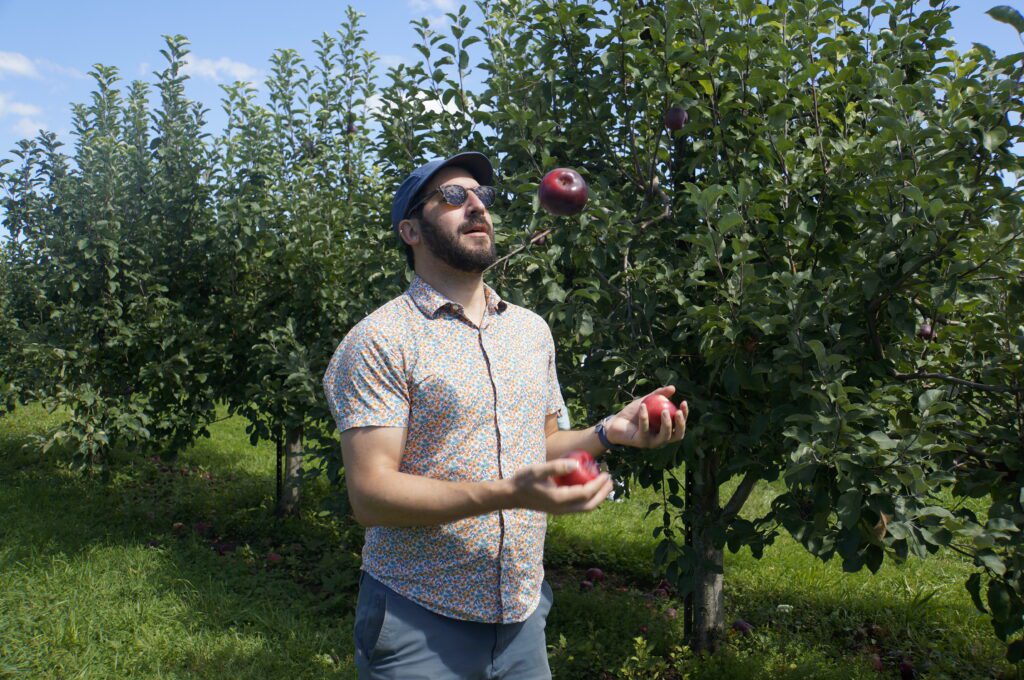
Rabbi Alex is one of three rabbis joining campus Hillels in the Northeast through a new partnership between Hillel International and the Hadar Institute. The campus pilot brings Hadar’s approach to pluralistic Jewish learning and ritual into Hillel communities, complementing Hillel’s rich and existing Jewish education programs and staff, and giving students more opportunities to engage deeply with Jewish tradition. Rabbi Alex is serving at UMass Hillel, Rabbi Noam Blauer joins Rutgers University Hillel, and Rabbi Lindsay Goldman will serve at New York University Hillel.
“I am thrilled that we have this opportunity to partner with Hadar and bring the deep well of Torah, ritual excitement, and leadership presence to campus,” said Danielle Kranjec, Hillel International’s associate vice president for Jewish education. “Having more kinds of Jewish educators and rabbis on campus gives students more opportunities to find the person, community, and Jewish experience where they can feel truly seen and belong.”
“Hadar brings serious Torah study, meaningful Jewish practice, and genuine community into the places where Jewish life is already taking shape,” said Rabbi Micha’el Rosenberg, director of Hadar on Campus. “Partnering with Hillel International lets us bring that approach directly into the vibrant Jewish life already flourishing on these three campuses. Our hope is that this collaboration becomes a lasting bridge, one that deepens students’ relationship to Torah and to one another and, over time, brings Hadar’s approach to Jewish life, learning, and practice to even more campus communities.”
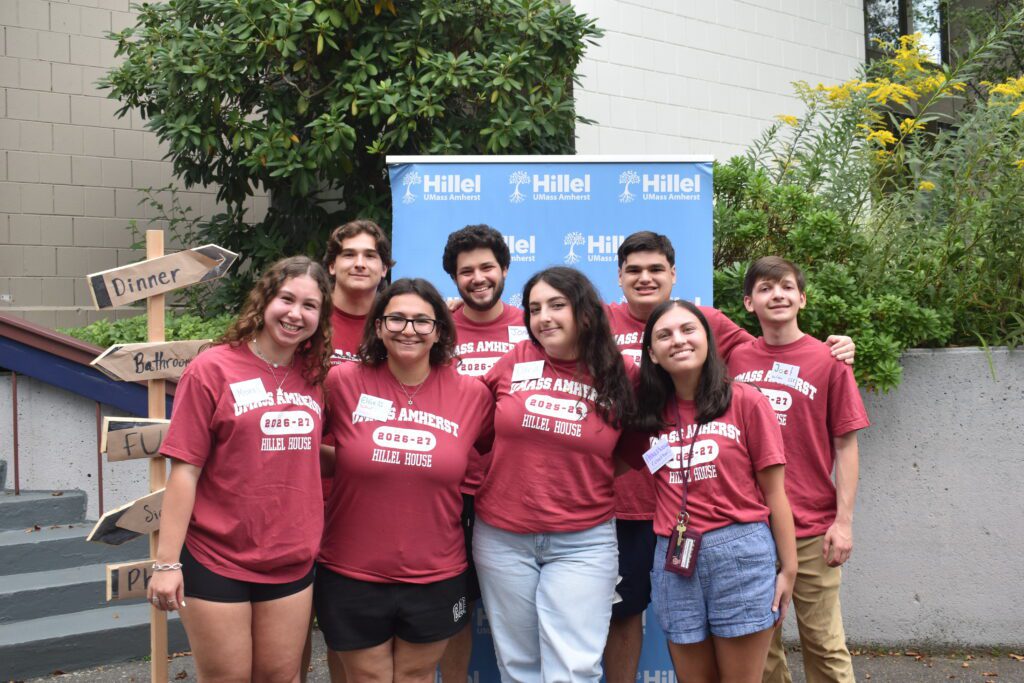
At UMass Hillel, Rabbi Alex will teach classes and learning cohorts, mentor student leaders, support student committees, and serve as a pastoral and spiritual resource. “Together, we are investing in the continued growth of Jewish learning, mentorship, and religious life at UMass — all of which are so important to our student community,” said Rabbi Aaron Fine, executive director of UMass Hillel.
I am looking forward to working with Rabbi Alex this year,” said student Matthew Koltenuk. “In our meetings so far, he has brought a love for music and community, and enthusiasm about growing the UMass Jewish community. I’m excited to see the many ways he will help support every student, group, and community at UMass Hillel.”
For Rabbi Alex, chavruta, the Jewish practice of learning with a study partner, offers a way to practice being in relationship with another person, with yourself, with God, and with generations of Jewish thinkers. “Learning in chavruta is a mechanism for learning how to be in relationship,” he said. “All of these different sorts of relationships we have, I think, come out in the process of learning text.”
That expansive view of Jewish life has been taking shape for most of Rabbi Alex’s career, although the path that brought him to UMass was hardly conventional.
Raised between Conservative and Modern Orthodox communities in the Washington, D.C. area and a self-described “child of Camp Ramah,” Rabbi Alex found his way into Jewish education as a college student. He went on to build Amir, a Jewish garden education nonprofit that helped young people connect Jewish tradition with the natural world.

Then his path took an unexpected turn: he spent three years in Somaliland, where he co-founded a sustainable fishing company and was struck by a culture deeply rooted in communal care that he described as “a society that runs on the chesed committee.” The experience prompted him to reflect on his desire to continue supporting the Jewish community, and he was ordained this past May at Hebrew College.
At UMass Hillel, Rabbi Alex hopes to weave Torah more deeply into an already thriving Jewish community. “Being able to infuse that Jewish communal space with Torah is the goal for me,” he said.
As 5787 begins, Rabbi Alex hopes students will come to see Jewish tradition as something that belongs to them, not simply something handed down by generations before them. He describes the “uplift and excitement” that come when people realize “they have a stake in this, and they also can contribute to the ongoing unfolding of Torah.” That is the Judaism he wants students at UMass to encounter: alive, communal, joyful, and still unfolding. “If we can get a few of those in the course of 5787,” he said, “I’d call it a pretty good year.”