Bringing History to Life for Yom HaShoah
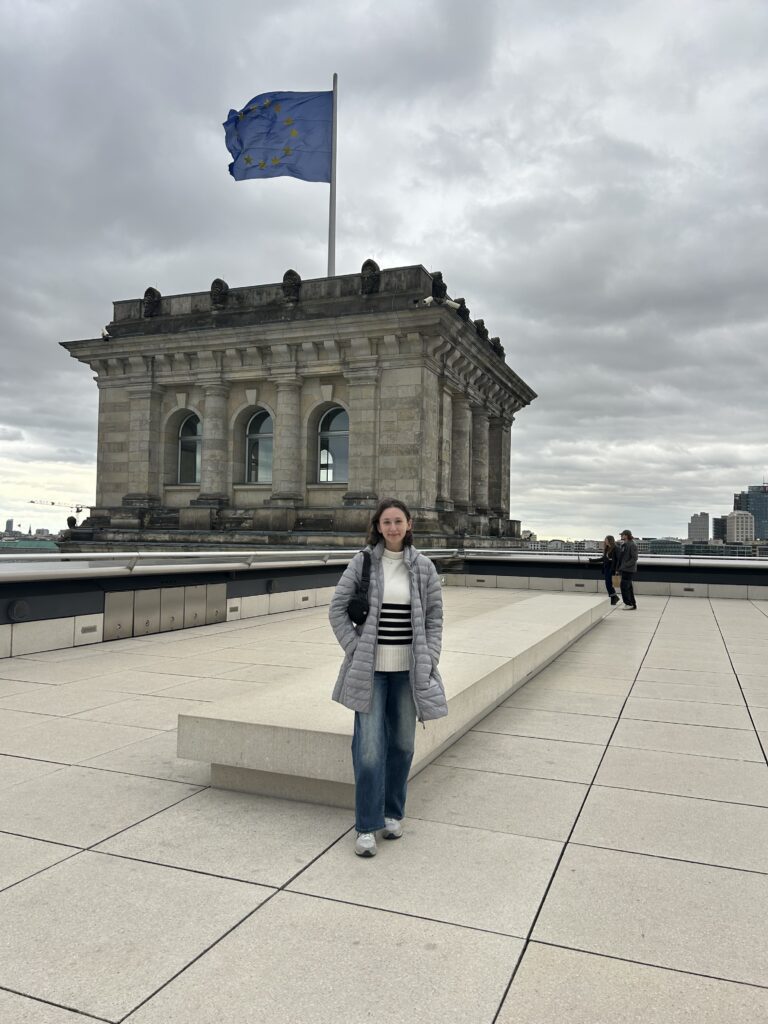
Kate Hartman is the Springboard Fellow at George Mason University Hillel. In commemoration of Yom HaShoah, she shared the work she is doing to guide her students in remembering and honoring the millions of men, women, and children murdered during the Holocaust.
When I was a student at Rollins College, I participated in a spring break trip to Krakow, Poland to learn about the Holocaust. On a cold Friday evening, my peers and I packed into the Krakow JCC with other college and Hillel groups to share Shabbat dinner together. One of these groups came from George Mason University, where I now work as the Springboard Fellow. Meeting the group that night was inspiring, and it influenced my decision to work at Mason because I could see the strong commitment to Holocaust remembrance among the students and staff.
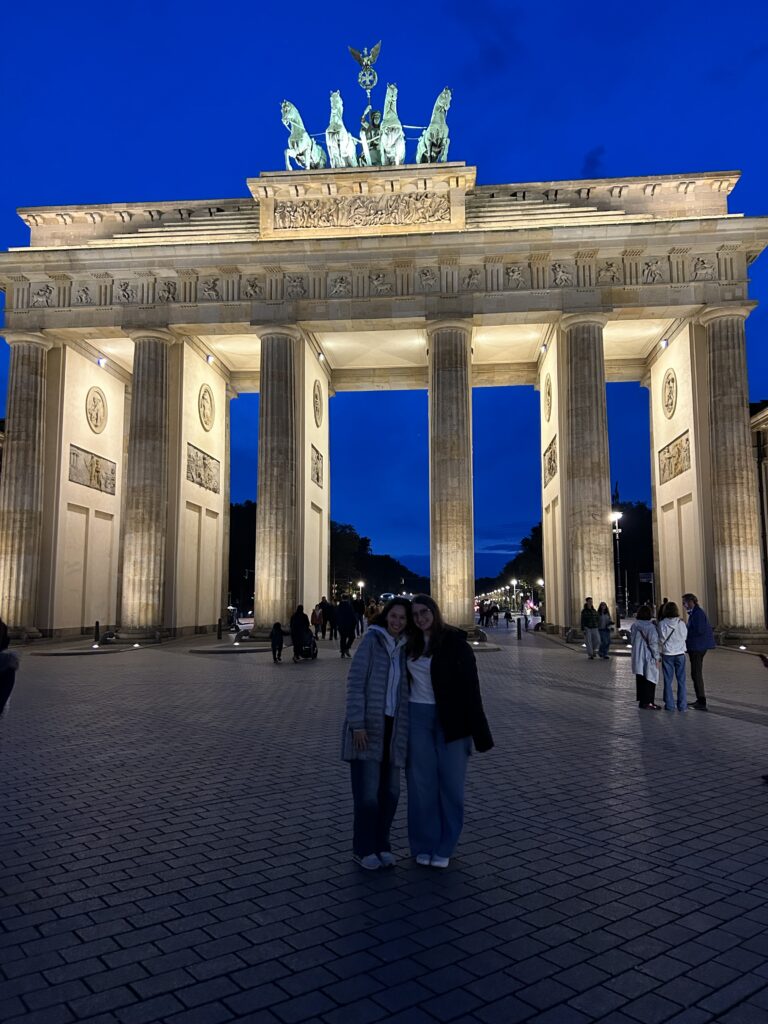
Now, as we mark Yom HaShoah, some of my own Hillel students have returned from a trip to Poland with George Mason’s Judaic studies department. As someone who has been to Poland and Germany to study the Holocaust, I know there is no deeper way to learn about this tragedy and mourn the victims. But I also know not every student will have the opportunity to travel abroad during college to witness this history firsthand.
This sparked my vision of creating a Holocaust education experience that felt immersive – I wanted to replicate the feeling of walking through the streets of Berlin, modeling a trip I took last year when I used professional development funds to continue my Holocaust studies in Germany.
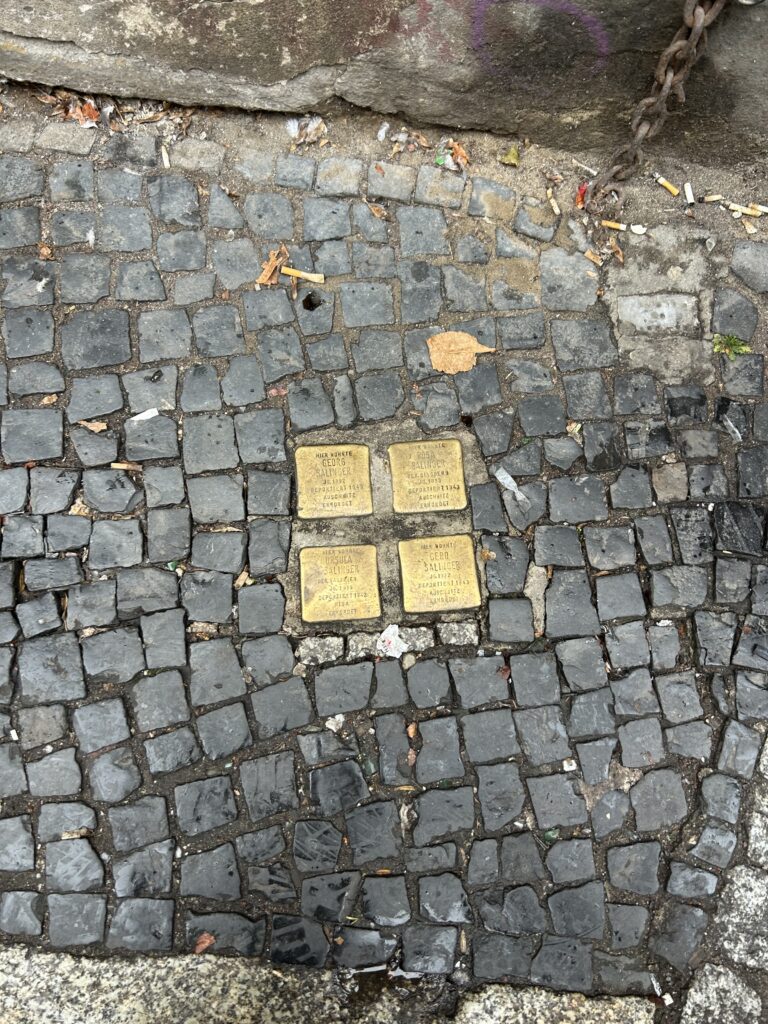
So, in January, I created a gallery walk on campus of stolpersteine (stumbling stones) that line the streets of Germany and other countries affected by the Holocaust. These small, golden plaques mark where people once lived before they were taken from their homes and murdered. I recreated the streets by printing pictures of what the buildings look like, marking each with their respective stolperstein. Most of the victims who lived in these homes were families with two or three children. I researched all of them in the stolpersteine database, creating a biography for each person. Along the way, I discovered one black-and-white family photo, and a recent article about the stolpersteine being vandalized with spray paint.
One student who was moved by the gallery experience told me he felt the experiences of these victims had been lost by time. He struggled with people’s lives being reduced to a small plaque in the ground. This brought home for me why our remembrance of the Holocaust is so important – and why it’s sometimes so difficult to preserve these memories. After all, I had researched eight families and two individuals for this gallery, and only found one picture.
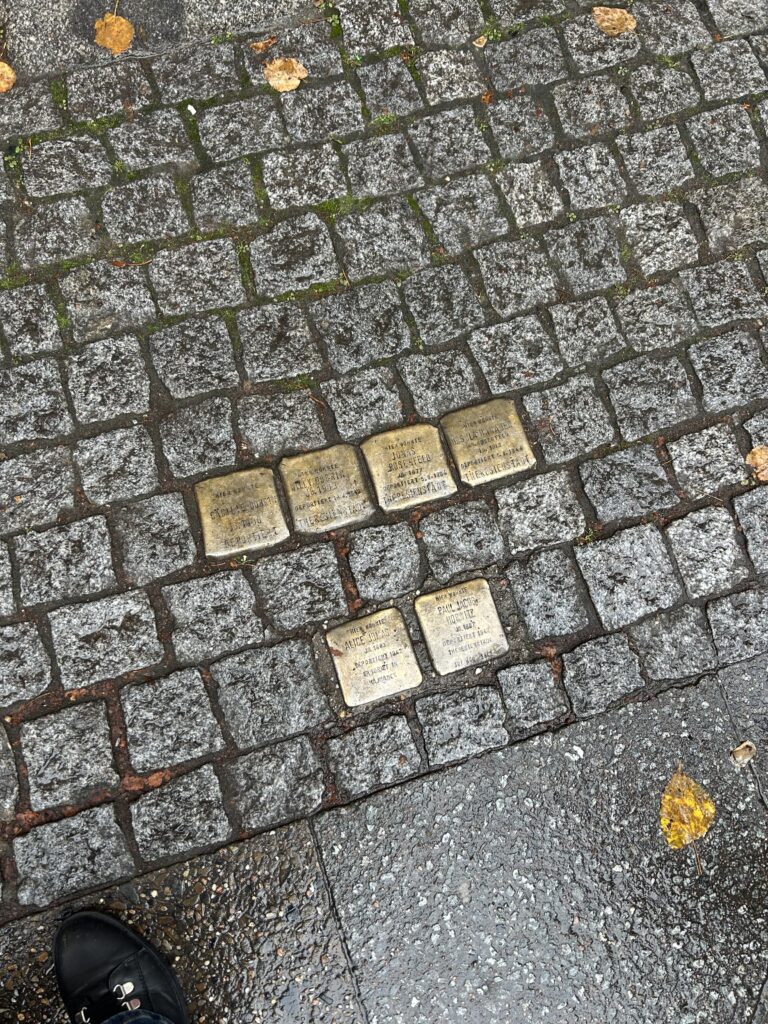
Nevertheless, as Jewish people, it is our solemn responsibility to honor the lives lost in the best way we can. Paying tribute to those who were stolen from us is not just about recounting the atrocities committed by the Nazi regime, but remembering the vibrancy of Jewish life past and present, including the individuals and their stories.
This material can be difficult to process, and I heard that feeling echoed by many of my students. For me, these moments of remembrance are similar to the experience of attending a funeral. Emotions are high, and sometimes, it is hard to find the words to describe what you have seen or how you are feeling. As students filled the room for the gallery walk, reflective silence sometimes accompanied them and I let each student choose if and how they wanted to engage in discussion.
To commemorate Yom HaShoah, we are again displaying these materials for a remembrance event – adding candle lighting, playing the sounds of the siren, and holding two minutes of silence as is the practice in Israel.
Yom HaShoah is not only an opportunity to remember our history, but to honor the lives lost and remember each person’s story.