Celebrating Asian Jewish Life
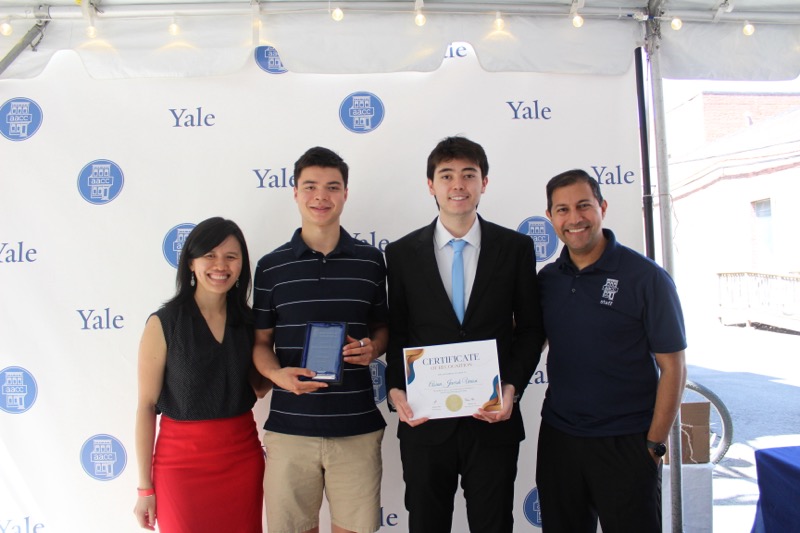
As I reflect on Asian American and Pacific Islander Heritage Month as an Asian Jew from Shanghai, China, I keep returning to one question: What does it mean to be an Asian Jew today?
I don’t have a simple answer. But over time, I have come to believe that identity is less a fixed definition and more an ongoing experiment, shaped through history, ritual, and the communities we build together.
Growing up in Shanghai, I was surrounded by Jewish history. The city had once been home to Baghdadi Jewish families, Russian Jews fleeing persecution, and later, German and Austrian Jews escaping Nazism. Even today, traces of those communities remain visible across the city.
But despite that history, my own experience of Jewish life often felt uncertain.
My father, who is Jewish, first brought me to services at Ohel Rachel Synagogue, a historic congregation, when I was very young. Through that community and through Chabad of Shanghai, I learned prayers, melodies, and the rhythms of Jewish communal life. But because my mother is Chinese and Buddhist, I often felt uncertain of my place in those communities. At the same time, restrictions on religious life in China were tightening, dictating who and how many people could participate in religious institutions. Eventually, under both legal and communal pressure, my family had no choice but to leave the community I grew up in.
Rather than stepping away from Judaism, my family helped create something new. Alongside several other mixed and interfaith families, we built Kehilat Shanghai, a grassroots Jewish organization that held seders in hotel conference rooms, Shabbat dinners in private homes, and classes in rented coworking spaces.
That experience shaped the way I understood Jewish community long before I arrived at Yale as a college student.
In fact, when I first came to the United States, I experienced a kind of Jewish culture shock. American Jewish life felt far more structured than anything I had known growing up. And as an Asian Jew, I suddenly found myself navigating spaces where people perceived me as unexpected or foreign.
But at Yale Hillel, I also began finding something I had not fully realized I was searching for: other Asian Jews and Asian American Jews.
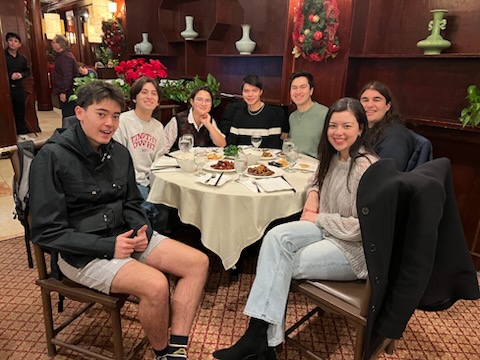
At first, these relationships started casually. A few conversations in the Stiles Buttery. Students comparing stories and realizing there were far more Asian Jews on campus than anyone expected. Eventually, those conversations grew into the Asian Jewish Union, which expanded from four undergraduate members, including me, into a community of roughly 50 students.
For many of us, it was the first time we had been in a space where we did not have to explain the coexistence of our identities.
With support from the Joseph Slifka Center for Jewish Life at Yale and Yale’s Asian American Cultural Center, we began creating programs that intentionally brought those identities into conversation with one another. We hosted Asian kosher meal gatherings, Lunar New Year celebrations, and Asian Jewish game nights at Slifka. Familiar pieces of Asian culture, from hawthorn flakes and seaweed rice crackers to Chinese checkers (跳棋) and Carrom, became part of Jewish communal spaces.
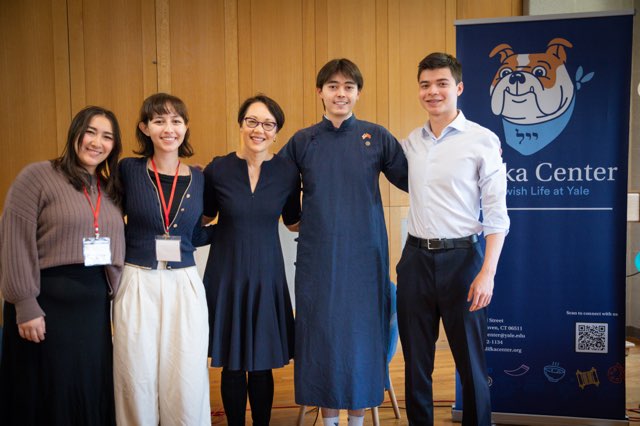
As the community grew, so did our ambition. We invited leaders like Central Synagogue’s Rabbi Angela Buchdahl and Judge Florence Pan to speak about navigating public life as Asian American Jews, and organized conversations with community leaders about Jewish communities across Asia.
Eventually, with support from Hillel International, those efforts culminated in the largest regional gathering of undergraduate Asian Jews to date: an Asian Jewish Shabbaton at Yale attended by more than 500 students, faculty, administrators, and community members. Undergraduate leaders from 13 universities came together not simply for a cultural event, but to begin building a broader national conversation about Asian Jewish identity.
For me, the Shabbaton felt deeply emotional.
Growing up in Shanghai, Jewish community felt small and homemade, something built carefully by a small group of families trying to create space for mixed heritage Jews and others with limited options for community. Sitting in a room filled with Asian Jews from across the country, I realized how many people carried similar questions about belonging, identity, and community.
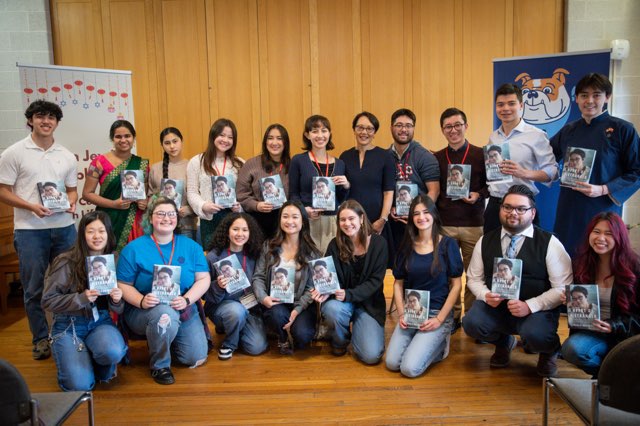
But even with those questions in common, what struck me most was how different all of our stories were.
There was no single “Asian Jewish experience.” Some students came from mixed families. Others were converts, immigrants, or descendants of long-standing Jewish communities across Asia. Some connected deeply to Judaism through religious practice, while others connected more culturally. What united us was not uniformity, but the shared experience of navigating identities that many people still assume cannot fully coexist.
To me, Asian Jewish identity is not about fitting neatly into a category. It is about embracing the possibility that identity can be layered, evolving, and pluralistic. It is about building communities where people do not have to fragment themselves in order to belong.
Perhaps most importantly, it is a reminder that identity does not always arrive fully formed. Sometimes it is built gradually through memory, ritual, conversation, and the spaces we create for one another.