The Virtual Hillel Leadership Institute Builds Student Leadership and Community
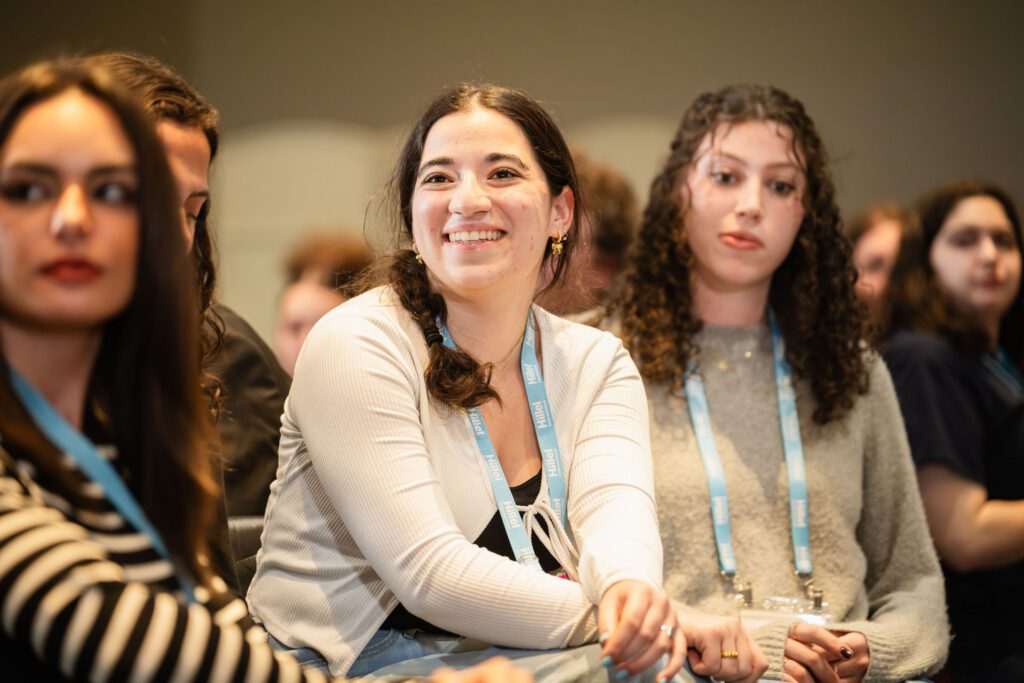
On a campus with just under two thousand students, finding Jewish community can sometimes feel challenging.
That is part of what drew Sam Scherzer, a student at Franklin & Marshall College, to Hillel International’s Virtual Hillel Leadership Institute (HLI) this spring.
“On a small campus, it can sometimes be difficult to find a strong Jewish community of people who share similar values and interests,” he said. “Joining HLI helped me build meaningful connections and feel part of something larger.”
Scherzer was one of 22 Jewish college students from 15 campuses across the United States who participated in the Virtual HLI pilot, a program designed to expand leadership development opportunities for students at student-led and small, professionally-led Hillels. Through four national cohort sessions focused on strengths-based leadership, collaboration, belonging, and leadership purpose, VHLI students built practical leadership skills while connecting with peers from across the Hillel movement.
Virtual HLI was created to bring the leadership development experience of Hillel International’s campus-based Hillel Leadership Institute to students who may not otherwise have access to a cohort experience on their campus. Since its launch in fall 2025, the campus-based HLI cohorts have engaged more than 350 students across 34 campuses. HLI is part of a broader effort from Hillel International to catalyze the largest-ever generation of Jewish leaders through programs, including the Leadership Passport initiative, that empower them to lead the Jewish people into a vibrant future.
“What makes the VHLI curriculum, and the HLI curriculum more broadly, particularly impactful, is that each session provides students with a practical leadership framework they can immediately apply on their campus,” said Hillel International Senior Director of Student Leadership and Engagement Corinne Janet. “Whether exploring strengths, collaboration and feedback, belonging, or leadership purpose, students develop skills that not only help them lead more effectively today, but also prepare them to thrive as professionals and community leaders long after graduation.”
For many VHLI participants, making connections with each other became one of the most valuable parts of the experience. Students from smaller Jewish communities often carry significant responsibility for creating engagement and building opportunities for belonging on their campuses. Meeting peers facing similar challenges helped them exchange ideas, build confidence, and realize they were not alone.
“The most valuable part of the experience for me was getting to meet and talk to leaders at other schools,” one student shared. “Learning that we face similar issues in planning events and growing engagement was super comforting and also gave us opportunities to talk about how we can all improve.”
The program also challenged students to think differently about leadership itself.
Rowan University student Holly Cowan said HLI transformed her understanding of what it means to lead. “Before this experience, I tended to think of leadership as something more external, like taking charge or guiding others,” she said. “But I’ve come to understand that effective leadership really starts with understanding yourself. And I’ve learned that leadership isn’t about having all the answers. It’s about being open, adaptable, and willing to grow. That shift in perspective has been the most meaningful takeaway for me so far.”
For Scherzer, the cohort taught him that leadership can mean focusing on building something simple but powerful: like creating more opportunities for connection and belonging.
“I plan to implement what I’ve learned by focusing on small, consistent improvements on my campus,” he said. One of those ideas is a regular Sunday bagel breakfast where students can gather before the stress of the week ahead.
“It [will be] a great way to connect and hang out before the craziness of upcoming exams,” he added.
The impact of the Virtual Hillel Leadership Institute pilot was clear. Every participating student reported feeling more confident leading others, nearly all said they felt more connected to Hillel as a result of the experience, and even more developed a stronger sense of Jewish purpose in their leadership.
For Janet, who helped facilitate the virtual cohort, those results were reflected in the students themselves.
“Developing and facilitating the Virtual HLI Cohort was one of the highlights of my year,” Janet said. “Getting to learn with student leaders from campuses with more limited staffing structures gave me a deeper appreciation for the creativity, determination, and heart they bring to their communities every day. Their commitment to creating meaningful Jewish experiences, building community, and leading through challenge left me feeling incredibly hopeful about the future of Jewish leadership.”
This year’s cohort experience may be ending, but students say the lessons will continue shaping how they show up for their communities. Hillel International also convened a parallel training for the advisors and Hillel professionals who support VHLI participants, creating a shared language and framework that will help students continue putting their learning into practice long after the program concludes.
“Through this program, I have learned that leadership is a process,” Scherzer said. “I want to keep building a space where everyone feels valued and excited to participate.”