Hillel’s Ripples of Resilience Grants Offer Connection, Community, and Support

Jewish tradition is rich in wisdom about wellbeing — how we show up for each other, how we anchor ourselves in what matters, and how we make space for rest, joy, and meaning. Hillel International’s Ripples of Resilience grants help campus Hillels tap into that wisdom and create programs that build connection, community, and support for their students. The guiding principle behind these initiatives is simple: small, meaningful moments can spark something lasting.
Check out some of the ways that campus Hillels in the United States, Canada, and Israel have turned Ripples of Resilience grants into moments of joy and care.
Nourished by Jewish Tradition at USC and Kansas State
Campus life often runs on dining halls, takeout, and stress. But Jewish tradition teaches us that food is more than fuel — it’s grounding, connective, and a foundational source of belonging.
That’s the inspiration behind Nourished by Tradition programs, which combine Jewish food traditions from across the world with practical cooking skills, inviting students to slow down, learn something new, and connect to an especially delicious part of Jewish culture.
At USC Hillel, staff and students took part in a four-session program designed to fit right into the demanding schedule of the semester. Created by Wellness Director Elli Rao and USC Hillel’s beloved Chef Viv, Nourished teaches Jewish students to cook on a budget, whipping up matzo ball soup, schnitzel, and other easy dishes for themselves and their friends.
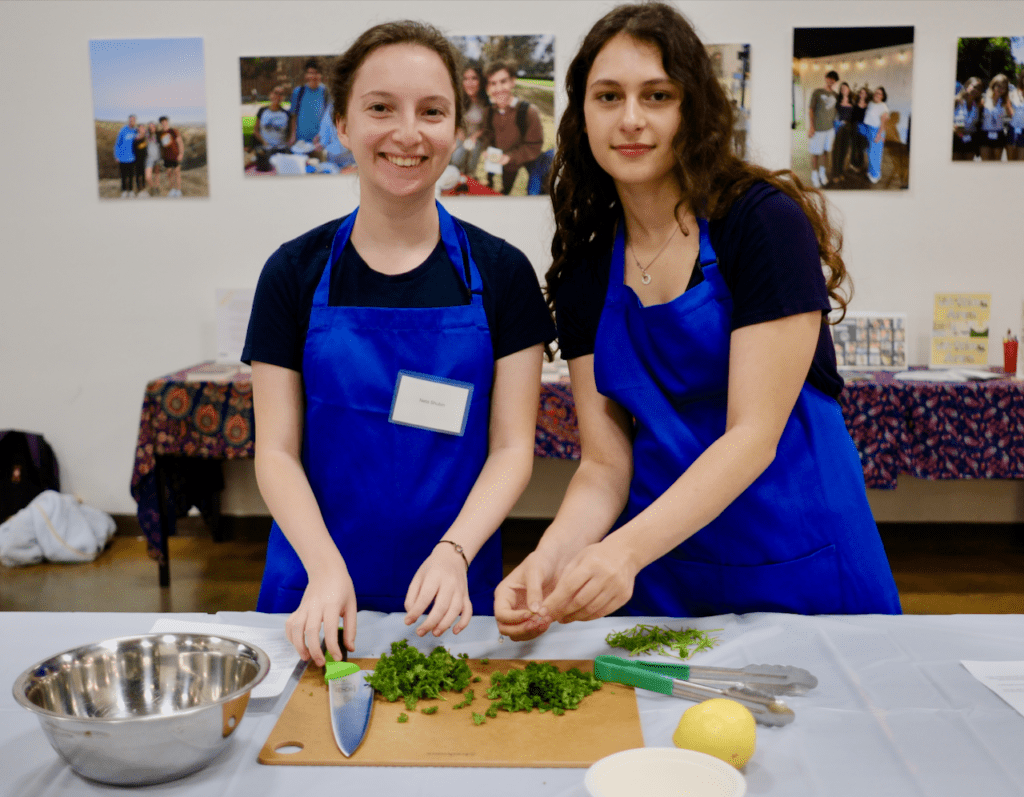
“Students who hadn’t known each other before became friends,” said Rao. “The skills, confidence, and community they created mattered even more than the menu.”
“Before Nourished, I really didn’t know how to cook for myself,” said student Blake Better . “Since taking this class, I’ve been cooking dinners for myself, and even cooked for my family over winter break!”
While Nourished at USC was an on-campus program, at Hillel at Kansas State University (KSU), students got a much-needed break from meal plans when they gathered in their Hillel advisor’s home for their Nourished by Tradition activity. Together, they cooked dishes from across the Jewish world including shakshuka and kugel, mixing delicious food with some welcome time away from the obligations of classes and extracurriculars.
“Cooking together was really healing,” said student Zev Furie, who acknowledged the unfortunate reality that many college students experience food insecurity. “A lot of us are probably not eating enough to begin with.”
For student Vanessa Sanders, this was her first program with KSU Hillel — but since participating, she’s started regularly coming to Hillel events. “I’d never met these people before, but they already feel like family,” she said.
In fact, there were a number of other students who had their first Hillel experience at Nourished by Tradition and have since become frequent participants. “It was really impactful,” said Dr. Lisa Rubin, KSU’s Hillel advisor.
Based on the success of Nourished by Tradition, the KSU Hillel student board is looking for even more ways to bring the more delicious aspects of Jewish community into their programming, including an upcoming challah-baking program that will segue into Shabbat.
Combating Antisemitism with Inclusion Across Canadian Hillels
At a time when Canadian Jewish students are facing unprecedented levels of hate and antisemitism, Ripples of Resilience programs offer tangible ways to build genuine relationships rooted in Jewish wisdom about mutual care.
At Queen’s University Hillel, their program started with a request from a non-Jewish member of the residence life staff, who attended a campus October 7th commemoration.
“When he learned about antisemitic graffiti in residence [halls], he reached out to ask how he could support Jewish students,” said Jennifer Grosz, wellness support specialist at Hillel Queen’s.
Together with student leaders, Queen’s Hillel ran a hamsa-decorating program, where attendees could create their own uniquely decorated version of this ancient protective symbol. Afterward, the hamsas were displayed throughout the residence hall as a visible reminder that all students belong.
“Most attendees had not been to a Hillel event yet, and many said that intentionally gathering in a Jewish space made them feel calm and safe,” said Grosz.

Similarly, at York University Hillel, the community combined two trademark Hillel ways to support students feeling demoralized by campus antisemitism — Jewish joy and great swag. Students created a limited line of “Unapologetically Jewish” sweatshirts, and proudly wore them around campus.
“One student wore their sweatshirt on a day when they felt isolated on campus,” said Hillel York’s Senior Campus Director Shoshi Lipschultz. “Multiple peers approached them, sparking conversations about Jewish identity and solidarity. That day, they felt seen, proud, and connected to a community that supports them.”
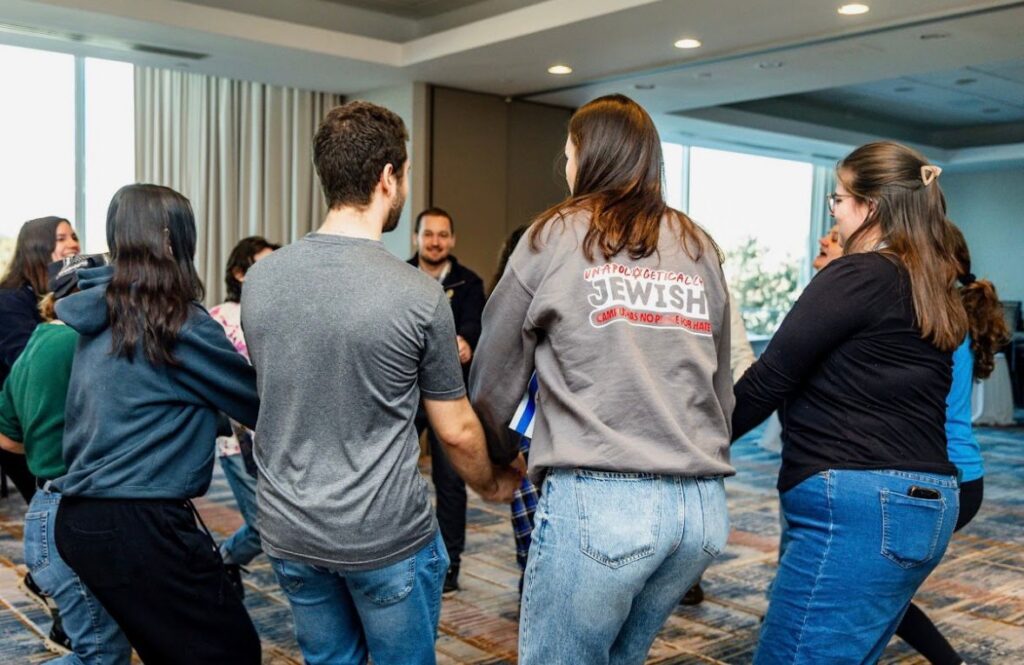
Programs like this are a reminder that Jewish community isn’t something that just happens — it’s something we create together. Showing up for one another is one of the most powerful expressions of Jewish life.
Reconnecting to Community and Reclaiming Joy Across Hillel Israel
In the wake of prolonged disruptions to daily life in Israel — ranging from the isolation of remote learning due to unsafe conditions to the return of students from extended military reserve duty — many college students are searching for communities they feel they’ve lost. As students re-establish relationships and support networks, Hillel Israel is working overtime to be a “home away from home” and meet a variety of student needs.
“This year, we are focused on creating a reliable, wellness-oriented space where students can decompress between classes and reintegrate into social life at their own pace,” said Maya Brown, director of Hillel Tel Aviv. “We keep our doors open, figuratively and literally.”
The programs created by Hillel Israel to support community-building, belonging, and resilience have been as diverse as Israel’s population itself. In Tel Aviv, Hillel hosted a bilingual Israeli-Ukrainian Hanukkah celebration focused on dance and movement — the kind of connection that goes beyond language. “Dance doesn’t need a spoken language,” said one student leader. “[Movement] bonds us together without words.” In Haifa, a Sukkot gathering held on the day the final living hostages were released used music and art to support reflection. At Tel-Hai College in Northern Israel, a shared music experience brought Druze musicians and Jewish students together.
One particularly meaningful initiative has been supporting students at Sapir College, which is located in the Gaza envelope, where the tragedy of October 7th was deeply personal: many students and faculty members suffered immediate losses, and members of the campus community were among those murdered in the terrorist attacks. Unlike larger urban campuses, Sapir has fewer social and communal organizations available to students. There is a palpable need for a safe, supportive framework where students can reconnect and find a semblance of normalcy.
Hillel has filled this critical gap by serving as a primary source of community, offering a space of belonging and a listening ear for those navigating the long road to recovery, as well as hosting programs designed to remind students that even in the wake of terrible grief, there are still opportunities to find joy. One such program was a Sigd celebration, offering an opportunity for the fuller Sapir community to experience this Ethiopian Jewish festival. “It helped me feel more comfortable, and proud of my heritage,” one student shared.
Israel has a long road of recovery ahead, but Hillel Israel has been determined to meet students where they are, in as many ways as possible.
“These initiatives reflect how thoughtfully campuses responded to distinct student needs,” said Grace Baker, director of development and communications at Hillel Israel. “We are so proud we were able to support staff and students across the country.”