Under the Sukkah: Hillel Students Worldwide Celebrate Sukkot
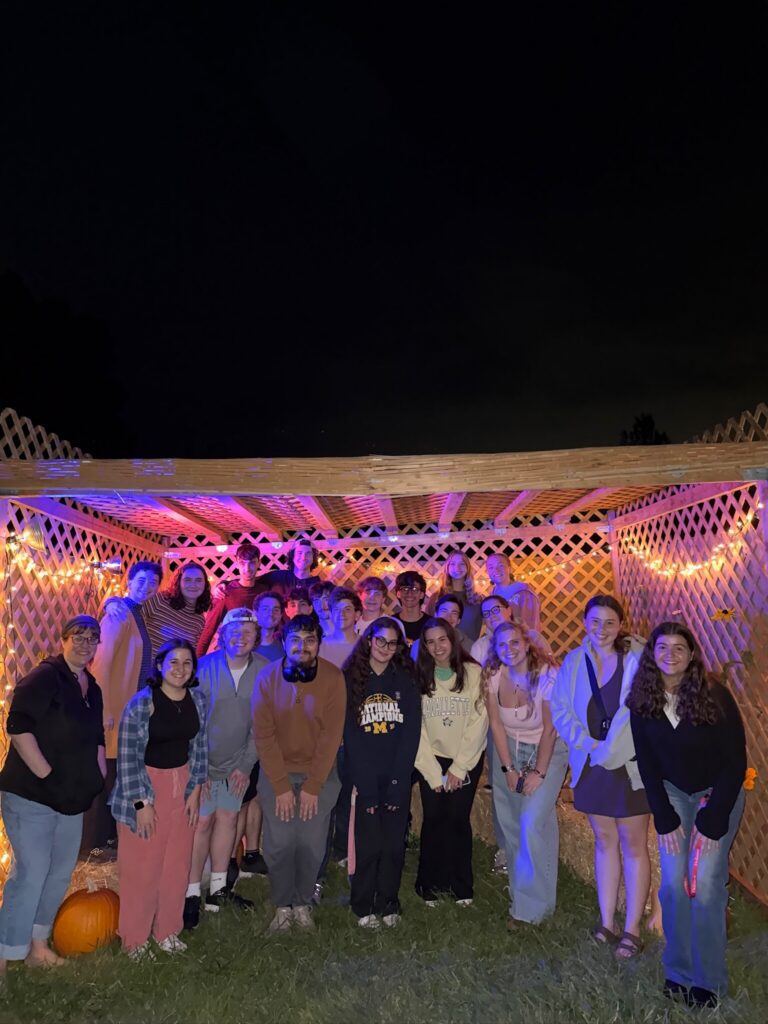
This Sukkot, thousands of Jewish students around the world gathered at Hillel to celebrate under the branched roof of a sukkah. They studied Jewish texts, shook the lulav and etrog, shared meals, sang, decorated, and spent time together. The celebrations looked different from campus to campus and country to country, but they shared a common thread: students transforming a temporary structure into a space for lasting connection and community.
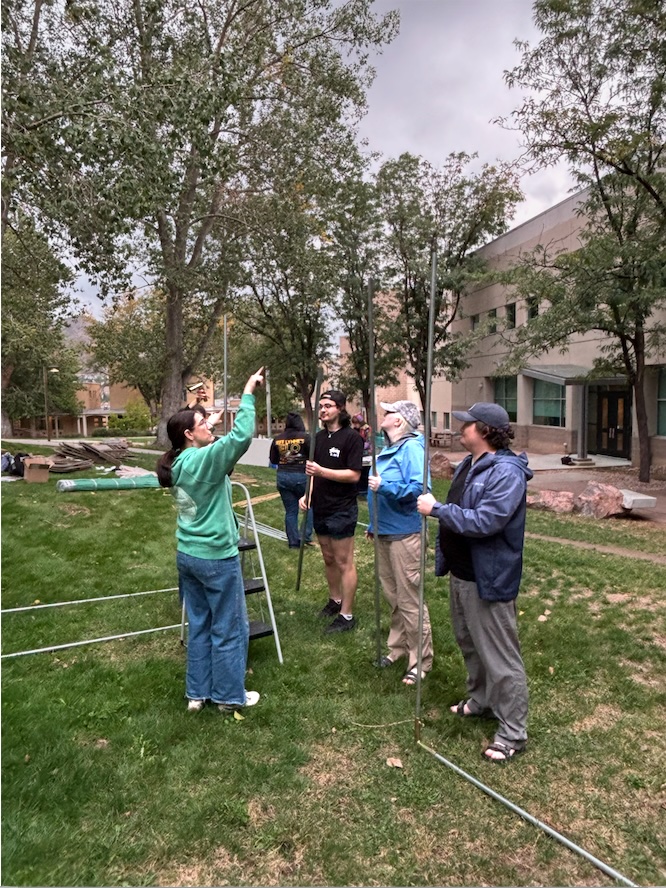
At Colorado School of Mines, a leading institution for engineering, students are accustomed to tinkering and building in classrooms and labs. During Sukkot, Jewish students took those skills outdoors with Hillel, constructing a sukkah large enough to welcome more than 50 people. Throughout the week, students gathered there for events including a sushi night and a hands-on activity making edible sukkahs out of pretzels, graham crackers, and other snacks.
Third-year student and CSM Hillel Co-President Morgan Rabinowitz said building the sukkah felt different from the projects that usually bring engineering students together.
“We aren’t in our well-equipped classrooms or labs, trying to complete a project for a grade or to add to our resumes,” she said. “Instead, we are outdoors, creating a space on campus where we are freely able to uphold our Jewish traditions while sharing a meal and celebrating with one another.”
Students at Hillel at Dickinson College also had many opportunities to gather outdoors, from bagel brunches to pizza making in the sukkah. Their most notable Sukkot event was held at Dickinson College Farm, an 80-acre organic farm near campus. There, students learned about renewable energy with a talk hosted by Adamah on Campus, spent time in the farm’s sukkah, and roasted marshmallows around a bonfire. Adamah on Campus Chair Zahavah Sterling said, “Sukkot on the Farm helps me connect to the ancient practices of the Jewish people and really embrace the value of hospitality. I love getting to learn and share with other students centered around Judaism’s deep connection to the earth while surrounded by the beautiful farm.”
Fourth-year student Lilith Greene-Friedman, who is a member of Hillel International’s Student Cabinet, said Sukkot has become one of her favorite holidays, bringing together what she appreciates most about Dickinson’s campus and its Jewish community. “I love that we incorporate the college farm into the celebration, giving us the opportunity to learn more about local agriculture while celebrating the holiday. I’m grateful for any moment I get to spend with the Jewish community here, but Sukkot always brings such a fun and welcoming energy to campus,” she said.
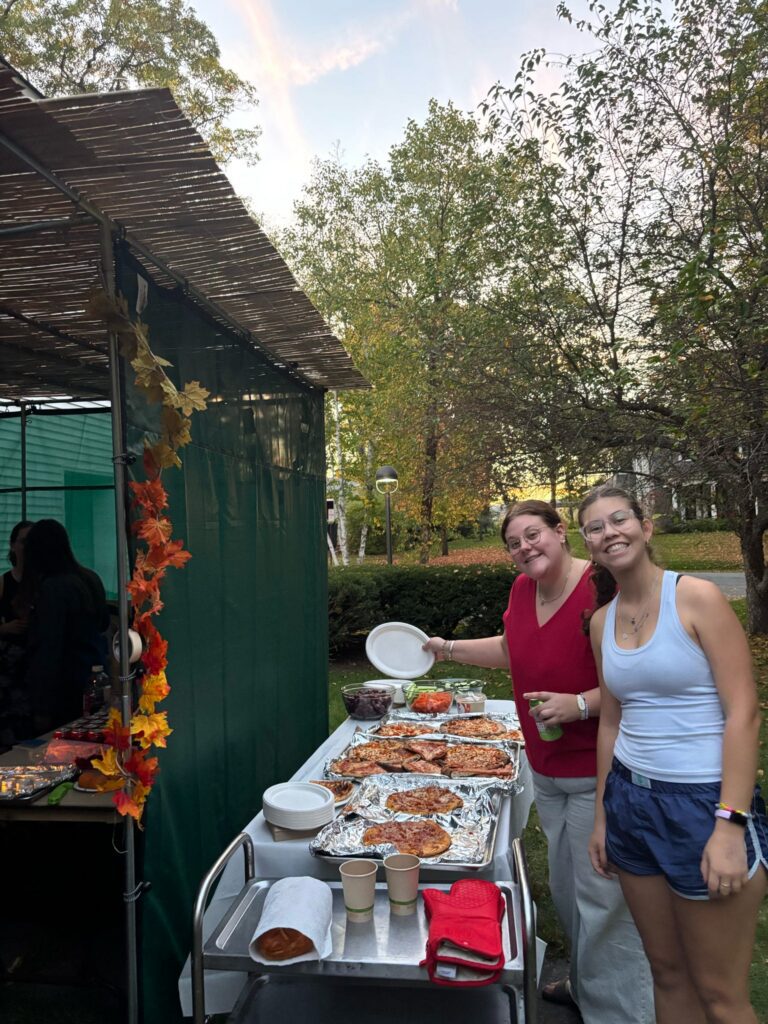
At Hillel at Dartmouth College, students made Sukkot their own, building and decorating the sukkah for a week of meals, services, Jewish learning, and spending time with friends.
“Because our students help build and decorate the sukkah themselves, they have a hand in creating the space that becomes the heart of our community throughout the holiday,” said Allyson Guertin, assistant director of Hillel at Dartmouth. “Our Sukkot programming is about creating a place where students can simply come together — to share a meal, grab a snack, celebrate Shabbat, or take a few minutes to shake the lulav and etrog.”
For many, the sukkah also offered something especially valuable amid the rush of campus life: a place to recharge.
“Some of my favorite moments during Sukkot are simply having coffee in the sukkah with friends and taking time to decorate it together,” said Darci Rochkind, a third-year student at Dartmouth. “It’s where we can slow down, spend time together, and enjoy being part of the Hillel community while celebrating the holiday.”
That idea — building something temporary that creates an enduring community — was at the heart of Sukkot celebrations across the Hillel movement.
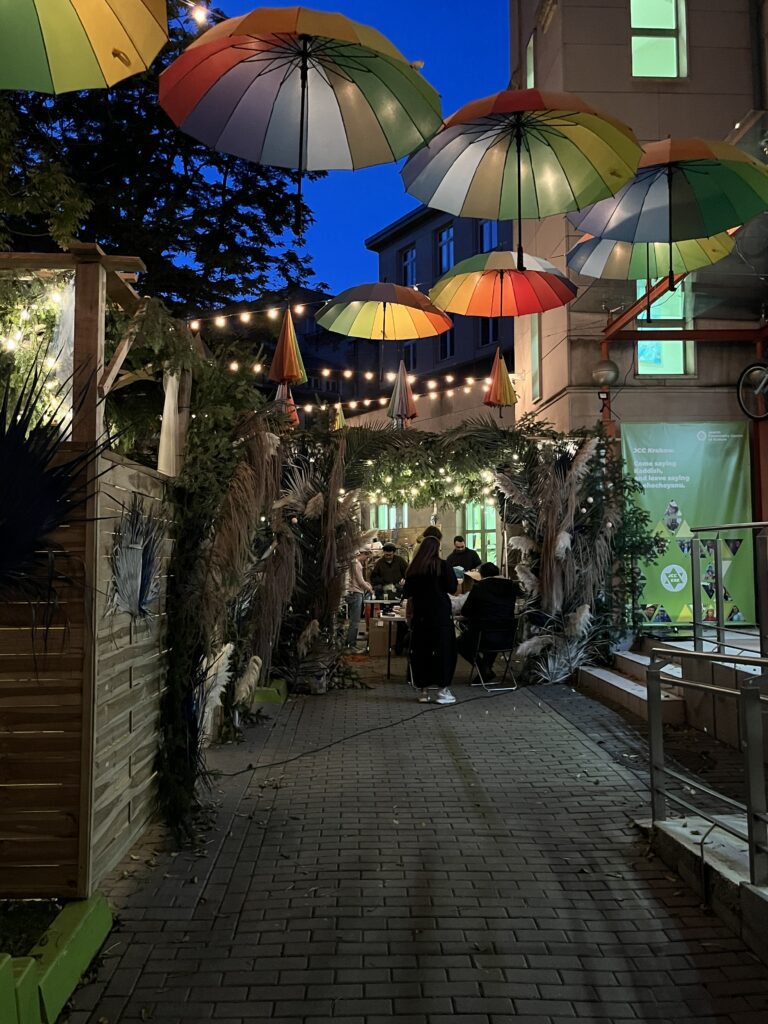
In Krakow, students at Hillel Poland gathered in the community sukkah for an annual karaoke night, taking turns at the microphone and singing favorite songs together. In doing so, they fulfilled the mitzvah of spending joyful time in the sukkah while strengthening the bonds of a small but vibrant Jewish community.
“Building a sukkah together, celebrating Sukkot, and sharing a meal remind us that being Jewish isn’t just about remembering the past — it’s also about actively building a vibrant, close-knit community,” said Aleksander Nowak-Burkiewicz, a fourth-year student in Krakow and member of the Hillel International Student Cabinet. “The sukkah is a symbolic, temporary home, but I believe the true value lies in the living, mutually supportive Jewish community it brings together.”
At Hillel Tel Hai College in Israel, students gathered in a sukkah in Moshav Sha’ar Yashuv. There, they took part in learning programs, including one exploring the symbolism of the arba minim, the four species used during Sukkot. They also discussed how to make room for difference and what it means to welcome others beneath a shared shelter of peace.
And in Ukraine, gathering together carried particular weight. Hillel Kharkiv, about 20 miles from the front line of the ongoing war with Russia, created opportunities for Jewish students and young adults to celebrate their heritage, reunite with friends, and support one another.
“Sukkot is a special opportunity to come together with other young Jewish people and celebrate our traditions as a community,” said Vaskes Valentina, a second-year student who coordinates Hillel programming for the High Holidays. “Our programs are a chance to meet friends and create a warm and welcoming space where everyone can feel connected to Jewish life.”
Across countries, campuses, and communities, the details of Sukkot looked different. Some students built and decorated. Others sang karaoke, studied, shared meals, or simply sat with friends over coffee. But each community used the sukkah in much the same way: as a place to pause, gather, and make proud Jewish life together.